Music Review: Duncan Browne, Planet Earth: The Transatlantic/Logo Years 1976-1979
Published on July 14th, 2017 in: Music, Music Reviews, Reissues, Retrovirus, Reviews |By Hanna

This year would have marked Duncan Browne’s 70th birthday, had he not died in 1993. It also marks the 40th anniversary of the Metro album. Extensive re-releases of Duncan Browne’s work are rare, and anyone looking for his music will be happy with this reissue containing all his late 1970s work for Logo/Transatlantic: his two solo albums The Wild Places and Streets of Fire but also the entire Metro album.
(more…)
Wes Craven’s The Hills Have Eyes Turns 40
Published on June 30th, 2017 in: Blu-Ray, DVD/Blu-Ray Reviews, Horror, Movie Reviews, Movies, Reissues, Retrovirus, Reviews |By Tim Murr
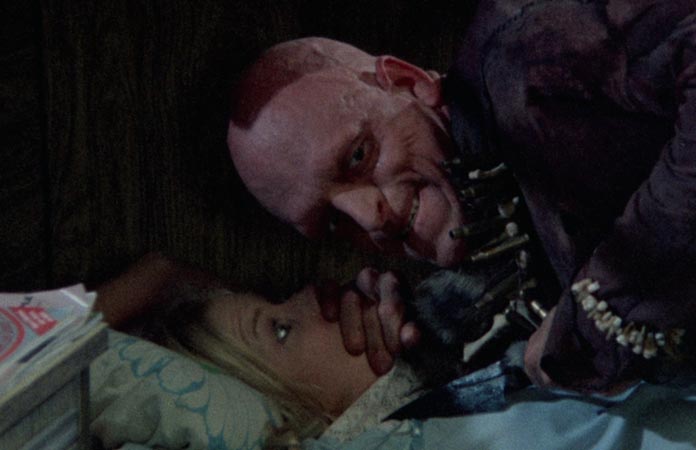
This July marks the 40th anniversary of Wes Craven’s landmark horror classic The Hills Have Eyes. It’s a story about an east coast American family taking a trip through the desert when they are besieged by a family of cannibals. The cannibals are loosely based on the real life Sawney Bean clan from the UK, known for attacking and eating travelers. Eventually, the Bean family was arrested and brutally put to death.
(more…)
Music Review: Honeybeat: Groovy 60s Girl-Pop
Published on May 5th, 2017 in: Current Faves, Feminism, Music, Music Reviews, Reissues, Retrovirus, Reviews |
There is no better mood raiser than a girl-group compilation. This is a scientific fact (that perhaps I have just made up). Finding long-lost girl groups, hearing those sweet harmonies, losing yourself in that “falling in love feeling”: it’s the best kind of bliss. A new compilation from ChaChaCharming and Real Gone Music, Honeybeat: Groovy 60s Girl-Pop, is an instant happy maker, with groups that are unfamiliar, groups that really should have made it, and some names that are a delightful surprise.
(more…)
Podcast: TV or GTFO Episode 14, “Dinosaurs”
Published on April 12th, 2017 in: Comedy, Podcasts, Retrovirus, Reviews, TV, TV Or GTFO, TV Reviews |
On TV or GTFO, we try to keep things pretty light, and never expect that things will take as dark a turn as they do on this week’s episode. If we’re not mistaken, this is the first show we’ve covered in which a baby dies! Is it another gritty police drama? No, it’s Dinosaurs, a “high” (because you pretty much have to be) concept sitcom about a family of prehistoric lizards, by way of Archie Bunker. It was the final project from Muppeteer Jim Henson, before his death in 1990. What were you smoking at the end there, Jim Henson?
For a show that delves into such heady topics as steroid abuse and body dysmorphia, racism and xenophobia, masturbation, corporate crime, and of course, environmental destruction, it’s easy to forget that these are actors in giant rubber suits, being voiced by the likes of Jessica Walter and Sally Struthers. Regardless, none of the heaviness of those episodes is adequate preparation for the pitch-black non-humor of the show’s final scenes.
And let’s talk about the Baby, shall we? My goodness, this creature makes Steve Urkel look like Don Draper. If you don’t want to strangle him by the end of this episode, I’ll eat my hat. And at the time of the show’s peak, such as it was, this fucker was everywhere. You could barely walk through a mall in the early 1990s without hearing the incessant wail of “NOT THE MAMA!”
So strap in and up your dosage of antidepressants, because things are about to get rough for a family of prehistoric predators as TV or GTFO does Dinosaurs!
Don’t forget to like and subscribe to TV or GTFO in iTunes, on your favorite podcast app, or check out the episode right here!
Music Review: The Creation, Action Painting
Published on March 17th, 2017 in: Current Faves, Music, Music Reviews, Reissues, Retrovirus, Reviews |
How is it that we don’t speak of The Creation in the same reverent tones as The Kinks, The Stones, and The Who? They made seemingly commercial, well-written songs with appealing melodies, and they were produced by Shel Talmy, who produced and arranged tracks by The Kinks and The Who. Guitarist Eddie Phillips ostensibly created guitar bowing (playing guitar with a violin bow), but Jimmy Page isn’t sending him royalty checks. They had a stage show that would incite fervor; they had the right look; they had the crunchy, chunky sounds that epitomized a very specific era of British rock. And yet, and yet, they’re maybe a footnote in rock history.
(more…)
“Lone Wolf And Cub” Now Available In A Triumphant Box Set
Published on March 17th, 2017 in: Blu-Ray, Current Faves, DVD/Blu-Ray Reviews, Movie Reviews, Movies, Reissues, Retrovirus, Reviews |By Tim Murr

Writer Kazuo Koike and artist Goseki Kojima’s manga epic Lone Wolf And Cub hit the stands in 1970. It was a massive success, with meticulous details, historical accuracy, and gorgeously realistic artwork. Lone Wolf And Cub would, and still does, have a strong influence across various artistic forms. By 1972, the series was already adapted into a film, a huge success itself which launched five sequels.
(more…)
Blu-Ray Review: Psychomania
Published on February 16th, 2017 in: Blu-Ray, DVD/Blu-Ray Reviews, Movie Reviews, Movies, Reissues, Retrovirus, Reviews |By Tim Murr

Psychomania has been on my list to watch for a long time, though I never knew anything about it outside of the trailer. It features troublemakers that return from the grave to wreak havoc on an unsuspecting English town; there are motorcycles, action, cool costumes, witchy undertakings, shades of A Clockwork Orange and The Wild One, a badass 1970s soundtrack. That’s what the trailer for promises. The film itself breaks most of these promises and is instead a dry, absurdly comic B-movie, that’s too slow and doesn’t play up any of its strengths.
(more…)
Music Review: Executive Slacks, Complete Recordings 1982-1986
Published on February 10th, 2017 in: Current Faves, Music, Music Reviews, Reissues, Retrovirus, Reviews |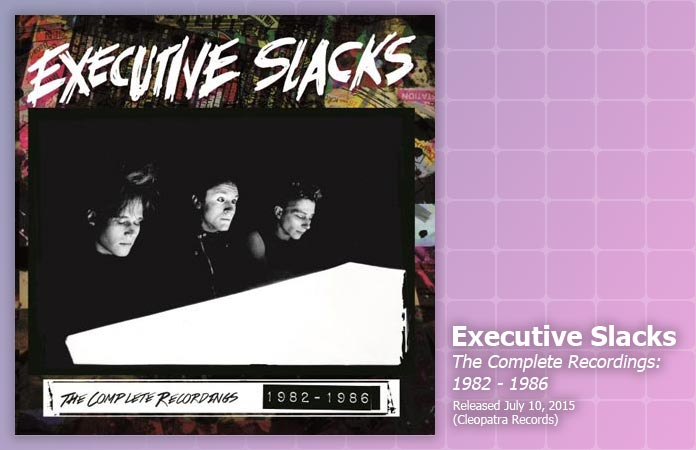
Fans of industrial music have likely heard all the heavy-hitters already: Throbbing Gristle, Test Dept., Einstürzende Neubauten, Cabaret Voltaire, Skinny Puppy, and beyond. Last year, Dark Entries re-released the eponymous debut EP from Philadelphia’s Executive Slacks, who are rarely mentioned in the same breath as those other seminal bands, if they are mentioned at all. Originally released in 1983 on Red Records, the release was an appetizer that contained just four songs.
(more…)
Riverdale: Stupid, Sexy Archie
Published on February 9th, 2017 in: Comics, Current Faves, Retrovirus, TV |By E.A. Henson

I am a fan of Archie Comics.
Now, I had never actually purchased an Archie comic up until 2015… but I’m still a fan.
(more…)
Blu-Ray Review: Hellraiser; The Scarlet Box Limited Edition Trilogy
Published on January 10th, 2017 in: Blu-Ray, Current Faves, DVD/Blu-Ray Reviews, Horror, Movie Reviews, Movies, Reissues, Retrovirus, Reviews |By Tim Murr
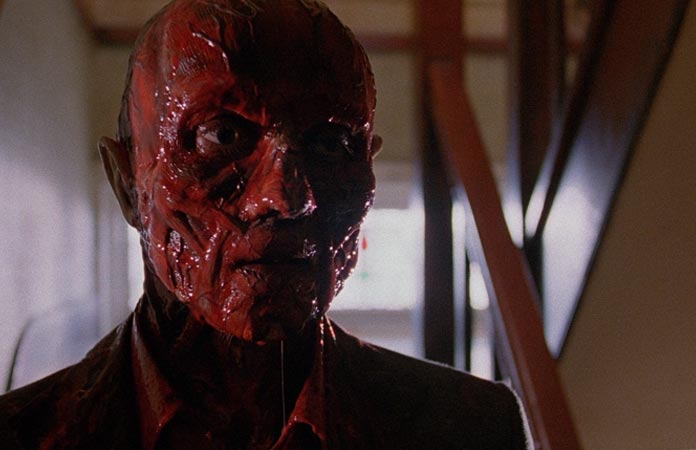
“The box. You opened it. We came. Now you must come with us, taste our pleasures.”
Those iconic words spoken by Pinhead in the directorial debut of Clive Barker are still chilling nearly 30 years after they were first heard. The film Hellraiser, based on Barker’s own novella The Hellbound Heart, is a harrowing, shocking, graphic slab of supernatural erotic body horror. It divided critics and thrilled horror aficionados and launched a franchise that still, for better or worse, survives today, not to mention the various comic book series and tie-in books from Barker and several others that continue to be published in regular intervals.
(more…)