Music Review: Matmos, The Marriage of True Minds
Published on February 21st, 2013 in: Current Faves, Music, Music Reviews, Reviews |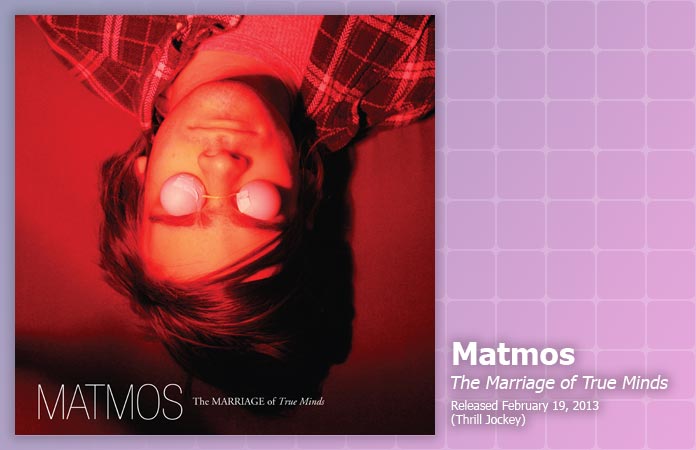
One of the best things about Matmos is their enduring sense of the wacky. It’s rare to find truly challenging and avant garde music, but rarer still to find some with a sense of humor. One of the ways that expresses itself is in their penchant for bizarre—almost gimmicky—methods of making music and collecting sounds.
This time this is focused less on the use of weird noises, but on the entire way of making the album. The buzzword for The Marriage of True Minds is telepathy, continuing from The Ganzfeld EP from last year (review). Both works were made using ganzfeld experiments; a pseudoscientific method of tapping into the psychic senses by limiting regular sensory perception and creating a ganzfeld effect; an effect similar to sensory deprivation. It’s characterized by the halved ping pong balls placed over the eyes, like the beginnings of a Crow from MST3K cosplay. By carrying out ganzfeld experiments on their friends over the years and recording the results, the basic structure of this album was formed.
Comments Off on Music Review: Matmos, The Marriage of True Minds
Music Review: French Horn Rebellion, Love Is Dangerous EP
Published on February 20th, 2013 in: Music, Music Reviews, Reviews |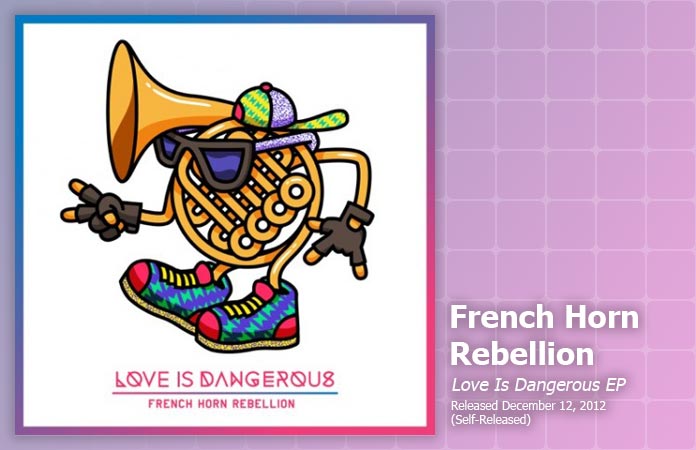
In 2011, French Horn Rebellion released The Infinite Music of French Horn Rebellion. The 14-song album was a schizophrenic mixture of EDM, disco, synthpop, guitar solos, smooth jams, stark piano pieces, feedback, radio interference, and I’m pretty sure I heard some humpback whales in there. For an album described as “an intergalactic narrative that tracks the physical and emotional journey of an unknown French horn player” this seems completely logical.
Yet French Horn Rebellion aren’t zany for the sake of it, as there are some beautiful moments on The Infinite Music, particularly the vocals of the hilariously named “Mawson’s Peak” (reminiscent of Martin Gore’s Depeche Mode songs) and the sweet, wistful ’80s pop of “Last Summer.”
French Horn Rebellion’s latest single, “Love Is Dangerous,” features The Knocks’ Jpatt, and is an unrelentingly hook-heavy disco stomper. The song—along with two remixes from Chrome Canyon and FHRekles—appears on the EP of the same name.
Love Is Dangerous includes another awesome track, “Cold Enough,” with the vocals of none other than Jody Watley. It’s got a more mellow groove, but is still a siren song to get asses on the dance floor.
Love Is Dangerous was released on December 12, 2012 and can be ordered from the French Horn Rebellion website.
Upcoming Shows:
March 21: Treefort Music Fest 2013 in Boise, ID
Thu Apr 18: Red Room, Cafe 939, Berklee College of Music in Boston, MA\
Comments Off on Music Review: French Horn Rebellion, Love Is Dangerous EP
Music Review: Iceage, You’re Nothing
Published on February 19th, 2013 in: Current Faves, Music, Music Reviews, New Music Tuesday, Reviews |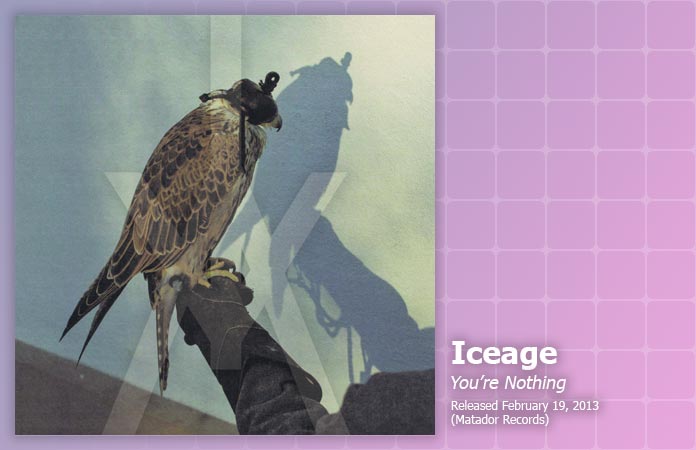
When we last heard from Iceage in 2011, they were causing quite a stir with their debut album New Brigade (review). Encapsulating yet confounding the parameters of post-punk and hardcore in this new millennium, critics and music fans took notice. Now Iceage has returned with You’re Nothing, which does all it can to beautifully obliterate New Brigade, while still retaining the spirit that made that album so good.
Comments Off on Music Review: Iceage, You’re Nothing
Music Review: Dawn McCarthy & Bonnie “Prince” Billy, What The Brothers Sang
Published on February 19th, 2013 in: Current Faves, Music, Music Reviews, New Music Tuesday, Reviews |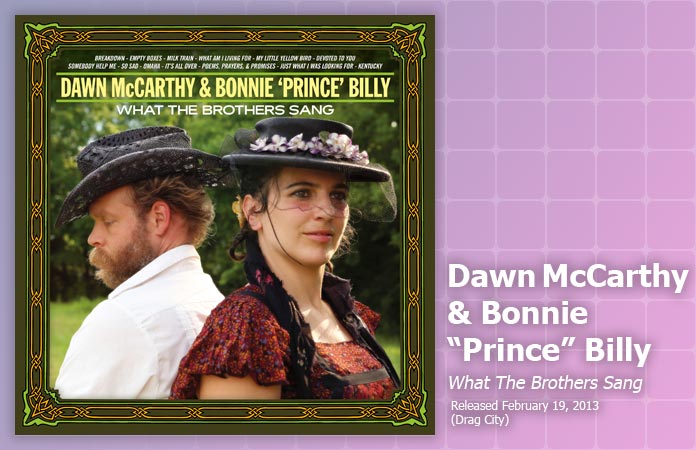
It could easily be argued that without The Everly Brothers, the history of rock & roll would be vastly different. When Don’s baritone and Phil’s tenor were combined in their unique, close harmony singing style, it provided an enormous influence on the vocals of Lennon and McCartney, Simon and Garfunkel, and countless others. Don’s open-G guitar tuning inspired no less a musical dignitary than Keith Richards, among others.
Their talents translated to the Billboard charts as well. “Wake Up Little Susie,” released in 1957, ascended to #1 on the Country, Pop, R&B, and Canadian charts, as well as #2 on the UK charts. Felice and Boudleaux Bryant, the Cadence Records songwriting team, wrote the track while the brothers were on the Nashville-based label. In the late ’50s, under the stewardship of music publishing house Acuff-Rose, the brothers would enjoy chart success with more Bryant-penned hits on Cadence like “Bird Dog,” “All I Have To Do Is Dream,” and “Devoted To You.”
However, feeling stifled by Rose’s demands, the brothers left for what they thought were greener pastures at Warner Bros. in 1960. Although they were no longer privy to Bryant compositions, Don’s composition “Cathy’s Clown,” released in 1960, reached #1. The brothers would enjoy success in the UK through the early part of the decade, but their appearances on US charts began to diminish. One-digit chart hits turned to three-digit ones and soon ceased altogether. By the time the Beatles were breaking chart records in 1964, the Everlys’ biggest successes were behind them, with the exception of their #2 UK hit “The Price of Love” in 1965.
The singles-based musical economy of the time meant that radio and incessant touring were part of the daily grind; this had begun to take its toll not long after the brothers left Cadence for Warner Bros. Drug addictions, suicide attempts, nervous breakdowns, broken marriages, and estranged children eventually dampened much of the youthful exuberance of the Everlys, who had been performing music nearly since birth, under the tutelage of their father, Ike. (The senior Everly had his own radio show in Iowa—on which his sons appeared—and his fingerpicking guitar style fostered a big influence of its own.)
Tensions escalated to a boiling point, culminating in a notorious alcohol-fueled spat during a 1973 Knott’s Berry Farm concert in which an enraged Phil smashed his guitar and stormed offstage, leaving a shattered Don to sober up and finish the set solo. It would be ten years before the brothers would even speak to each other, much less record or play together. They eventually made up, playing a reunion show at the Royal Albert Hall in 1983 and releasing two critically acclaimed albums later that decade, even continuing to tour together throughout the next two decades. Though their relationship remained cordial and at times, strained, the incandescence of their musical partnership has never dimmed.
Now to the present day, and a different pair of singers and musicians: Dawn McCarthy and Bonnie “Prince” Billy (a.k.a. Will Oldham). The duo, who have performed together and separately, enlisted the help of an impressive array of their own former collaborators as well as much-respected Nashville session musicians to create What The Brothers Sang, a tribute album to the Everly Brothers.
Comments Off on Music Review: Dawn McCarthy & Bonnie “Prince” Billy, What The Brothers Sang
Music Review: Parenthetical Girls, Privilege*
Published on February 19th, 2013 in: Current Faves, Music, Music Reviews, New Music Tuesday, Reviews |
“But hard as I’ve tried, I’m helpless to describe.”
—Parenthetical Girls, “The Pornographer”
If you’re not yet familiar with the unusual pop music of Parenthetical Girls, you’re in for an aural treat. Despite what connotations they may have intended for the title of their new album, it’s an apt descriptor for these 12 songs; experiencing them is indeed a privilege.
It’s not often that a band comes along so precisely indefinable as Parenthetical Girls, always a sure signifier of brilliance, with genius waiting in the wings. It makes categorizing their aesthetic troublesome, though no less enjoyable to attempt. “Chamber pop,” though appealing, has its origins in the mid-1960s, and Parenthetical Girls are far too modern for a term older than the average ages of its members.
“Indie rock” has its own negative connotations; despite the Girls’ decidedly independent means of releasing records (not to mention their seeming inability to serve any mistress but their own unique flights of fancy), that descriptor brings the word “twee” to mind, and Parenthetical Girls are much to daring to be considered twee.
I have chosen to dispense with such aspirations and simply review the album.
Comments Off on Music Review: Parenthetical Girls, Privilege*
Music Review: Lady Lamb the Beekeeper, RiPELY PINE
Published on February 19th, 2013 in: Current Faves, Feminism, Music, New Music Tuesday, Reviews |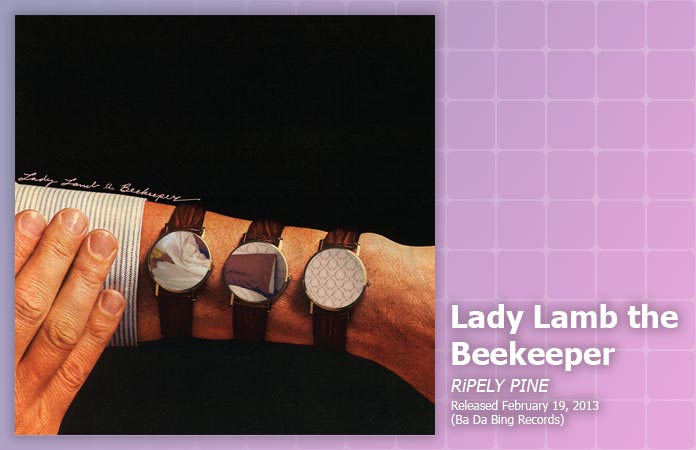
Over the past few years, singer/songwriter Aly Spaltro has beguiled New England audiences with her project Lady Lamb the Beekeeper. Her fractious, off-kilter songwriting is well-matched by a voice that seems to explode out of her. After releasing a series of demos, Lady Lamb the Beekeeper is poised to take over the indie world with her first studio album, RiPELY PINE.
While the sparely produced, independent Lady Lamb releases foregrounded Spaltro’s considerable talents, RiPELY PINE finds her experimenting with a more commercial sound. The clean production, with its new-found focus on the slow-burn dynamics of Spaltro’s songwriting, comes off like the aural equivalent of a leather-bound book with gilt-edged pages and four-color illustrations. Her minimal guitar riffs bristle with closely held emotion, as though she were denying herself a catharsis. The driving percussion and echoing violin that drive “Bird Balloons” emphasize the song’s theme of anger borne from love. The waltz-time instrumental break in “Mezzanine” pits a staccato prog-rock guitar solo against a mellifluous clarinet chart that, combined with the lyrics about ghosts and haunted houses, could break your heart. Spaltro’s dense arrangements and frequent use of odd time signatures, combined with Nadim Issa’s straightforward and pleasingly mid-range production, suggests the influence of Throwing Muses. Like Lady Lamb, songwriters Kristin Hersh and Tanya Donnelly negotiated a mid-point between their knotted, intuitive personal mythologies and the rewards of finding a wider audience, and as with Spaltro’s work, their albums had an appealing tension between these poles.
New Single From Upcoming Album: Big Black Delta, “Side Of The Road”
Published on February 18th, 2013 in: Current Faves, Music, Music Festivals, New Single, Upcoming Releases |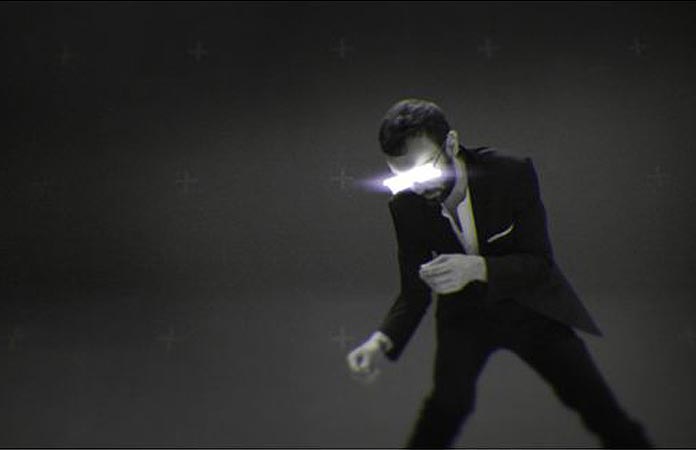
Big Black Delta‘s Tour EP was one of my Top Ten faves of 2012, so I’m thrilled to hear news of an upcoming album. The self-titled disc will be released on April 9 on CD, digital, and vinyl via Masters Of Bates.
The first single, “Side of the Road,” is fantastic and features the same Big Black Delta hallmarks that I loved on their EP. It’s a synthy, spacey, and surprisingly emotional track that proves Bates knows how to do Autotune the right way (in part because he can actually sing).
Big Black Delta, a.k.a. Jonathan Bates, will be performing at this year’s SXSW, on Wednesday, March 13, at Cedar Street Courtyard. For details, visit the SXSW schedule page. You can also listen to another track on the SXSW website.
For more on the band, check out the Big Black Delta website.
Comments Off on New Single From Upcoming Album: Big Black Delta, “Side Of The Road”
Assemblog: February 15, 2013
Published on February 15th, 2013 in: Assemblog, Film Festivals, Horror, Movies, Music, Science and Technology, Science Fiction, The Internets, Trailers |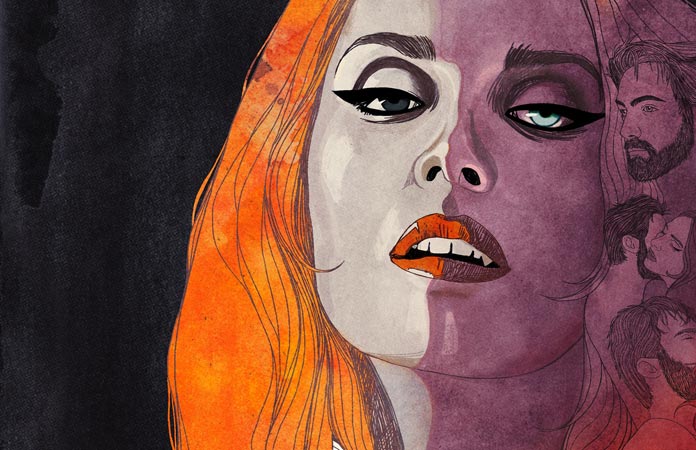
Kiss of the Damned (full poster)

New this week on Popshifter: I reveal a behind-the-scenes video on the making of the upcoming What The Brothers Sang album by Dawn McCarthy and Bonnie “Prince” Billy and weigh in on Suede’s new single and video; Paul praises Spotify but has stern advice for Prince; Cait has the scoop on the terrific new Omnivore Recordings George Jones United Artists singles compilation; and Elizabeth reassures us we can still call television “television.”
Comments Off on Assemblog: February 15, 2013
New Single/Video: Suede, “It Starts And Ends With You”
Published on February 14th, 2013 in: Music, New Single, New Video, Upcoming Releases, Video |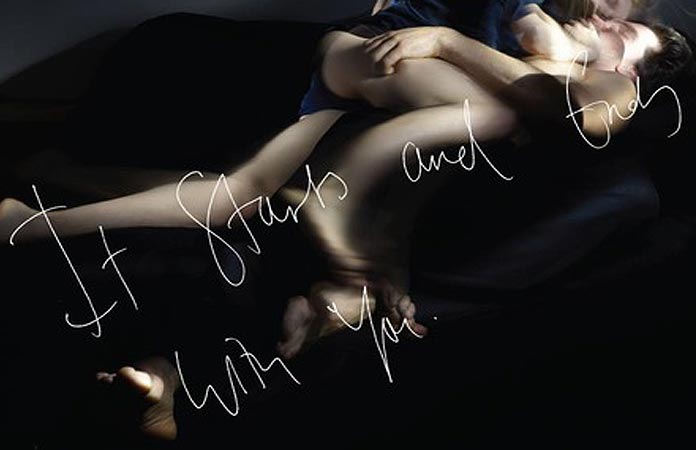
It was only last month that Suede released a track from their upcoming album Bloodsports and now the official single and video are out.
It’s Suede, all right. Monochromatic, smoky, everyone looking dour. No longer the pretty young things (except for Richard Oakes, perhaps), but that’s not only fine, it’s preferable. We always loved the music the most, anyway. The song is also very much a Suede single, and actually improves towards the end when they sort of let loose. I’m looking forward to analyzing the lyrics to this and “Barriers” when the album is released.
Now who’s going to make an animated GIF of Brett Anderson’s slow clap? Because I need that in my life. Bloodsports is out on March 18.
Comments Off on New Single/Video: Suede, “It Starts And Ends With You”
Prince And His Protégés
Published on February 13th, 2013 in: Music, Over the Gadfly's Nest |By Paul Casey

From the beginning of Prince Nelson’s career in music, he prided himself on being a one man band. With very few exceptions, he wrote, arranged, produced, and performed the music that appeared on his albums. He was famously prolific. As would be the case throughout most of his work with Warner Brothers, he quickly felt constrained by the limitations put on his recorded output. He produced more songs than he could possibly use. Prince needed a front: someone to record and perform his music the way he wanted. These protégés would be expected to follow his lead in all matters.
The tracks would be recorded by Prince, and these men and women would sing their parts. They would have no say in the kind of material they would record. They were to be an extension of Prince and nothing more. Anyone who forgot this would quickly find themselves without a job. These protégés would highlight a fatal creative and personal flaw: that Prince was ultimately driven by an ego that could not tolerate other talent. Today Prince surrounds himself with yet another group of musicians. It is worth looking at how a musician, who could have been the greatest hit producer of his generation, limited himself to those people he could dispose of.