DVD Review: Manborg
Published on April 30th, 2013 in: Current Faves, DVD, DVD/Blu-Ray Reviews, Movie Reviews, Movies, Reviews, Science Fiction |
There are two groups of people in the world: those who love Manborg and those who just haven’t seen it yet. (Too pompous?)
Let’s try this: anyone with only a cursory knowledge of Mystery Science Theater 3000 knows that there is an audience for bad movies. Although some of the most famously bad bad movies have escaped the comic commentary of MST3K (Troll 2, The Room), it doesn’t make them any less beloved in their awfulness. Yes, screenings are organized for fans to openly mock these movies, but if it brings people so much joy and it isn’t really harming anyone, is that necessarily a bad thing? Especially when it comes from the heart.
Music Review: Big Black Delta, Big Black Delta
Published on April 30th, 2013 in: Current Faves, Music, Music Reviews, New Music Tuesday, Reviews |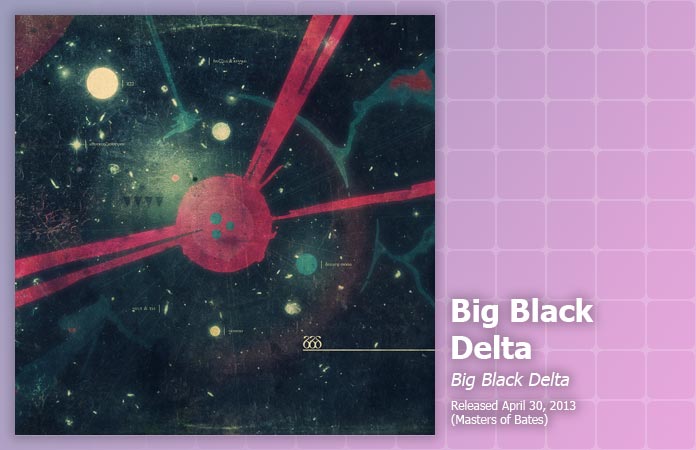
The claim that music with keyboards and synthesizers isn’t “real music” or is just crap has gone on long past its sell-by date. It was tired in the ’80s; now it’s just embarrassing. If music makes you feel something on a gut level—or hell, if it just makes you want to hit the dance floor—then who cares if it’s got synths, keyboards, or a didgeridoo?
The anti-keyboard bridge would probably break out the torches and pitchforks for Big Black Delta. Jonathan Bates has taken Phil Spector’s Wall of Sound to its most synthesized, processed extreme. It’s not just that Big Black Delta’s music features a preponderance of electronic sounds, it’s that the sounds include mountains, oceans, and skies.
Comments Off on Music Review: Big Black Delta, Big Black Delta
Music Review: Meat Puppets, Rat Farm
Published on April 29th, 2013 in: Current Faves, Music, Music Reviews, Reviews |
The Meat Puppets are not only icons of the alternative/punk/underground music scenes; they are like fine wines: The band and their music just keep getting better with age. The latest from the Kirkwood Brothers, Rat Farm, is perhaps their finest, the band’s most playful and diverse offering since releasing Up On The Sun in 1985.
Blu-Ray Review: Life Of Pi
Published on April 24th, 2013 in: Blu-Ray, Books, Current Faves, DVD/Blu-Ray Reviews, Movie Reviews, Movies, Reviews |
TM and © 2011 Twentieth Century Fox Film Corporation. All rights reserved. Not for sale or duplication.
Those who read Yann Martel’s Life of Pi towards the beginning of the last decade probably wondered how such a fantastic tale could ever be filmed. There were also those who, upon hearing that Ang Lee was tackling a film version of Life of Pi, felt elated and relieved that someone with such talent and commitment to a story was the one chosen.
Comments Off on Blu-Ray Review: Life Of Pi
Music Review: The Chapin Sisters, A Date With The Everly Brothers
Published on April 23rd, 2013 in: Current Faves, Feminism, Music, Music Reviews, New Music Tuesday, Reviews |
Like The Everly Brothers, The Chapin Sisters come from a musical family. Their father is Grammy-award-winning musician Tom Chapin; their uncle was folk singer and humanitarian Harry Chapin. This pedigree shows in their most recent release, A Date With The Everly Brothers, an album of 14 cover songs by the beloved duo.
A Date With The Everly Brothers focuses on the songs released by the siblings between 1957 and 1961, the most commercially successful period in their career. About half of the songs are Everly originals; most of the rest are Felice and Boudleaux Bryant compositions from the brothers’ tenure on Cadence Records in the late ’50s.
Comments Off on Music Review: The Chapin Sisters, A Date With The Everly Brothers
Music Review: Luke Winslow-King, The Coming Tide
Published on April 23rd, 2013 in: Current Faves, Music, Music Reviews, New Music Tuesday, Reviews |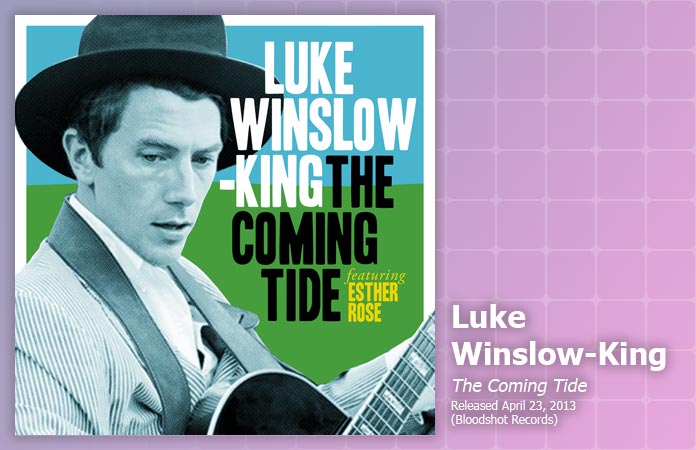
I once saw Luke Winslow-King perform a miracle. He was opening for Jack White, which is, of course, miraculous in and of itself, and Jack White’s audience was less than receptive to this man in a seersucker suit with a guitar, a woman playing a washboard, and a fellow with a standup bass. The most amazing thing was watching the audience’s attitude change. By the third song in his set, Luke Winslow-King had made fans. His performance was engaging, wickedly tuneful, and pretty much brilliant. The interplay between him and washboard player/backup singer Esther Rose was charming. By the time his set was over, the merch table was flooded with people buying his CD.
Comments Off on Music Review: Luke Winslow-King, The Coming Tide
Music Review: IO Echo, Ministry Of Love
Published on April 18th, 2013 in: Current Faves, Feminism, Music, Music Reviews, Reviews |
There are albums so good, the task of describing them seems overwhelming. Yet the glorious challenge of explaining why the songs are amazing can be a real honor, especially if even one person reads my paltry words, buys the album, and is thus transported.
So it is with Ministry of Love, the debut album from the duo of Ioanna Gika and Leopold Ross, who form IO Echo. They marry the proto-goth of early Cure and Siouxsie with the lushness of Cocteau Twins and School of Seven Bells in songs informed by the subtle yet strong undercurrents of Asian sonics. Despite what my descriptions might imply, Ministry of Love isn’t bleak. The euphoric pop of songs like the title track and “Ecstasy Ghost” ensure that the album never feels morose, although it skirts the edges of unsettling.
Concert Review: The Hives At House of Blues
Published on April 16th, 2013 in: Concert Reviews, Music, Reviews |Text and photos by Julie Finley
Cleveland, OH
March 10, 2013

The Hives recently tore through Cleveland and not a moment too soon, since there hasn’t been ANYTHING worth seeing live since . . . well . . . Firewater from last year. Otherwise, Cleveland is as bereft of culture and entertainment as ever (despite what various lame bloggers write about after visiting their loser friend that happens to live here over a weekend, that same loser friend that pretends like they live in a hip and up and coming place. No, it’s down and swirling!).
Comments Off on Concert Review: The Hives At House of Blues
Music Review: Lynsey de Paul, Sugar And Beyond/Into My Music Anthologies
Published on April 10th, 2013 in: Current Faves, Feminism, Music, Music Reviews, Retrovirus, Reviews |By Hanna
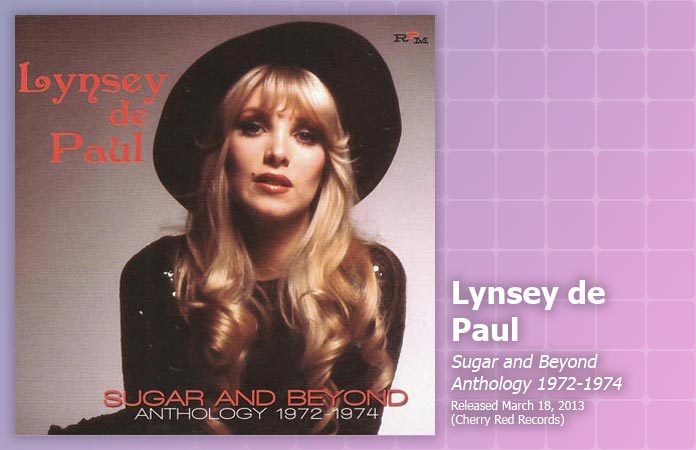
The entire ‘70s catalogue of pioneering female singer/songwriter Lynsey de Paul has finally been collected in two new anthologies: Sugar and Beyond 1972 – 1974 and Into My Music 1975 – 1979. Using exclusive material and information from Lynsey de Paul herself, this is a unique collection, signifying a new chance to discover her work and to grant it the recognition it deserves.
Music Review: Todd Rundgren, State
Published on April 8th, 2013 in: Music, Music Reviews, Reviews |
Todd Rundgren has been making music since before most of us were born. His first solo album came out in 1969. He was huge during the early Seventies, riding the wave of his radio hit “Hello, It’s Me.” He resurged during the early Eighties as not only a musician, but as a video software pioneer. The video for “Time Heals” was everywhere back then. He resurged again in the Nineties, re-inventing himself as the first interactive musician, inviting folks to remix his tracks and play his music with him in his interactive music pod at PepsiStock ’94.
Then he started recording Samba versions of his old songs. This seemed to be a lateral move.