Music Review: Big Country, The Journey
Published on May 15th, 2013 in: Current Faves, Music, Music Reviews, Reviews |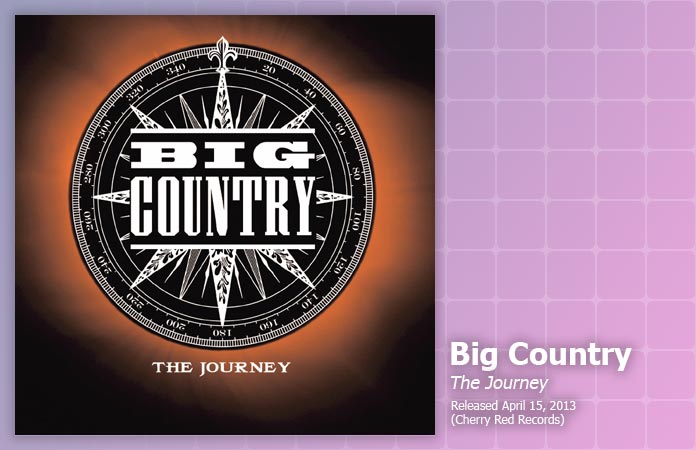
It’s difficult to talk about what the new Big Country album is without talking about what it isn’t. The Journey is the first album from the band in 14 years. It’s also the first studio album since original lead singer/songwriter Stuart Adamson took his own life in a hotel room in Hawaii in December of 2001. Bouncing back from a blow like that is difficult for any band. Look at the shambles INXS became after Michael Hutchence passed out and away.
Fronting Big Country now is Mike Peters, singer/songwriter for The Alarm, well-remembered for Eighties hits like “Sixty-Eight Guns” and “The Stand.” There are similarities between Peters and Adamson as songwriters. Adamson and Peters both created songs of epic scope, real sweepers. Listen to the guitars masquerading as bagpipes on “In a Big Country” and feel the cold grass of Scotland under your feet. Listen to the sweet high guitar trills of “Rain in the Summertime” and you really can almost feel the rain on your face.
Replacing Adamson’s vision with Peters’s panoramic view seems like the perfect match.
Music Review: Kermit Ruffins, We Partyin’ Traditional Style
Published on May 14th, 2013 in: Current Faves, Music, Music Reviews, New Music Tuesday |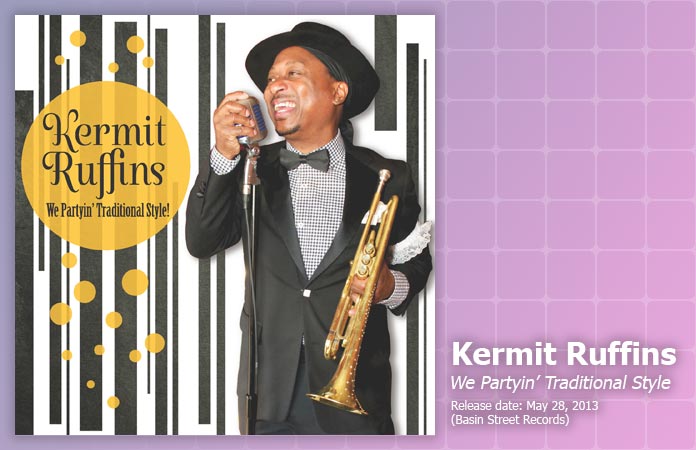
Kermit Ruffins co-founded The Rebirth Brass Band in high school. The Rebirth Brass Band revitalized the brass band community in New Orleans, and their success rejuvenated New Orleans’s Second Line culture. Kermit Ruffins is a great ambassador for that aspect of New Orleans. His extraordinarily distinctive, raspy voice paired with his virtuoso trumpet playing gives the casual listener a glimpse into the broad spectrum of New Orleans music.
His newest record We Partyin’ Traditional Style is like a time capsule, taking 20th-century classics and skewing them his own personal way and in the process, making an incredibly fun record. Partyin’ in the title? Not a coincidence.
Comments Off on Music Review: Kermit Ruffins, We Partyin’ Traditional Style
Music Review: Xenia Rubinos, Magic Trix
Published on May 13th, 2013 in: Current Faves, Feminism, Music, Music Reviews, Reviews |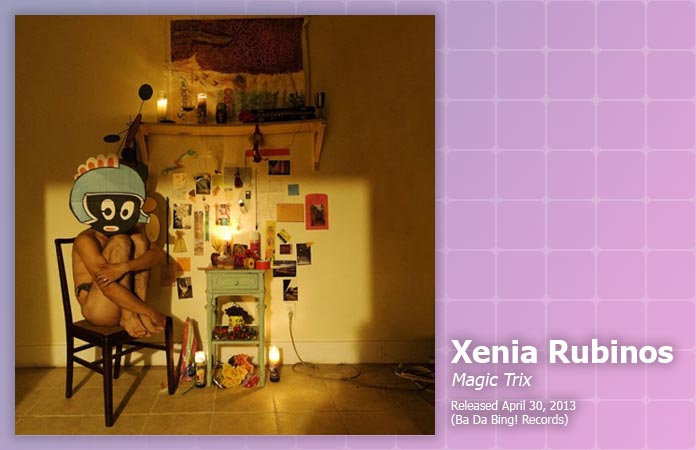
On Magic Trix, Xenia Rubinos sounds like a radio caught between two frequencies. The first station carries brassy 1930s show tunes, a capella field recordings of folk songs, multi-tracked choruses, and lushly melodic whispered confessions. On the other, psychedelic keyboard freakouts, skittering drums, thumping hardcore declarations, and a cacophony of characters rule the day. Binding the disparate styles together is a soupçon of feedback from an analog keyboard and Rubinos’s force of nature vocals.
Music Review: George Jones, Jones Country/You’ve Still Got A Place In My Heart (Reissue)
Published on May 2nd, 2013 in: Current Faves, Music, Music Reviews, Reviews |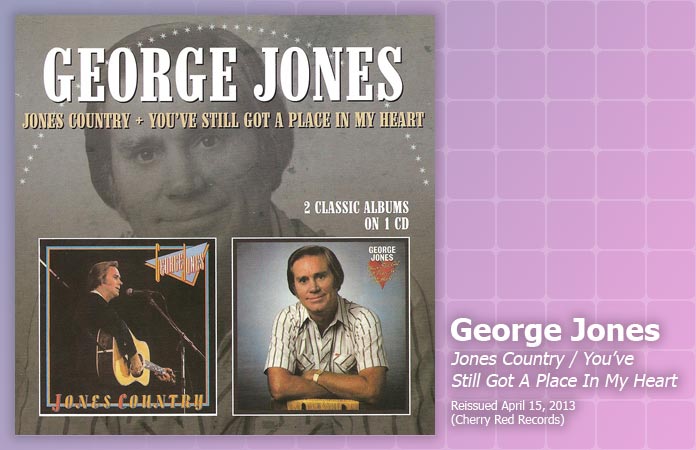
George Jones was called “the greatest voice in country music.” This is not hyperbole. He could make you feel so much with a crack of his voice, the swell or pull back on a phrase. He was masterful.
The liner notes for Jones Country/You’ve Still Got A Place In My Heart mention the miracle that he was alive and well in 2013 and planning a farewell show. I received this disc the day before he died. Irony is a wicked mistress.
Comments Off on Music Review: George Jones, Jones Country/You’ve Still Got A Place In My Heart (Reissue)
Music Review: Melvins, Everybody Loves Sausages
Published on May 1st, 2013 in: Current Faves, Music, Music Reviews, Reviews |
Melvins—the “the” is silent—are one of those bands who are permanently on the list of bands I’ve been meaning to get into. Everything of theirs I’ve heard I’ve enjoyed and I’ve seen them live twice (both times were outstanding). I even have a few of their albums. But I’ve never crossed over into the “must own everything” level of fandom. Although Everybody Loves Sausages is an album of cover songs, it may have finally pushed me over that precipice.
Cover songs are tricky. Why bother covering something unless you’re going to make it better or add something special? There is a third reason, though it’s not the most popular: introduce people to bands that they’ve never heard before. As an album, Everybody Loves Sausages hits all those marks.
Music Review: Big Black Delta, Big Black Delta
Published on April 30th, 2013 in: Current Faves, Music, Music Reviews, New Music Tuesday, Reviews |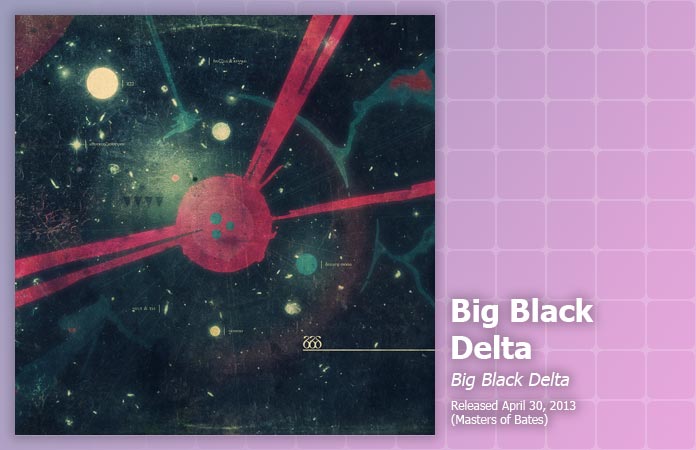
The claim that music with keyboards and synthesizers isn’t “real music” or is just crap has gone on long past its sell-by date. It was tired in the ’80s; now it’s just embarrassing. If music makes you feel something on a gut level—or hell, if it just makes you want to hit the dance floor—then who cares if it’s got synths, keyboards, or a didgeridoo?
The anti-keyboard bridge would probably break out the torches and pitchforks for Big Black Delta. Jonathan Bates has taken Phil Spector’s Wall of Sound to its most synthesized, processed extreme. It’s not just that Big Black Delta’s music features a preponderance of electronic sounds, it’s that the sounds include mountains, oceans, and skies.
Comments Off on Music Review: Big Black Delta, Big Black Delta
Music Review: Meat Puppets, Rat Farm
Published on April 29th, 2013 in: Current Faves, Music, Music Reviews, Reviews |
The Meat Puppets are not only icons of the alternative/punk/underground music scenes; they are like fine wines: The band and their music just keep getting better with age. The latest from the Kirkwood Brothers, Rat Farm, is perhaps their finest, the band’s most playful and diverse offering since releasing Up On The Sun in 1985.
Music Review: The Armoury Show, Waiting For The Floods (Reissue)
Published on April 29th, 2013 in: Current Faves, Music, Music Reviews, Retrovirus |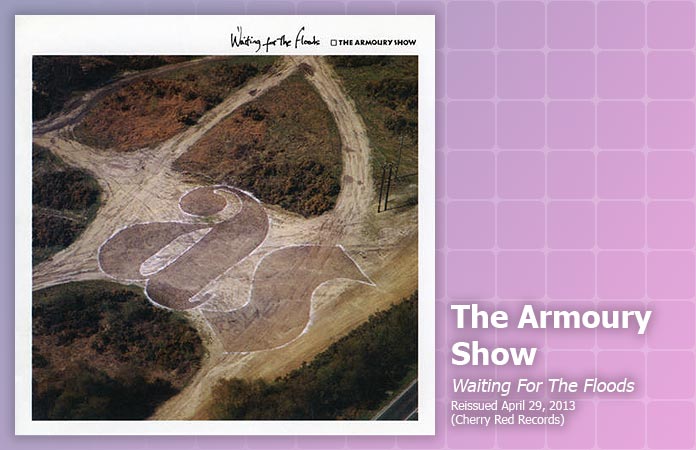
In 1985, The Armoury Show took Britain by storm, billed as the first punk supergroup. By 1987, they had fallen off the radar completely, leaving only one album behind. Cherry Red’s reissue of that album, Waiting For The Floods, is a beautiful shiny thing, a welcome rediscovery of a band that faded out far too quickly.
Consisting of former members of Magazine, The Skids, and Siouxsie & the Banshees (John McGeoch!), The Armoury Show served up gorgeously slick cathedral Goth with strangely danceable grooves. Theirs was not music for the stand and shuffle crowd. You could dress up in your funereal best and still sway your anthemic hips, maybe even crack a smile.
Music Review: The Chapin Sisters, A Date With The Everly Brothers
Published on April 23rd, 2013 in: Current Faves, Feminism, Music, Music Reviews, New Music Tuesday, Reviews |
Like The Everly Brothers, The Chapin Sisters come from a musical family. Their father is Grammy-award-winning musician Tom Chapin; their uncle was folk singer and humanitarian Harry Chapin. This pedigree shows in their most recent release, A Date With The Everly Brothers, an album of 14 cover songs by the beloved duo.
A Date With The Everly Brothers focuses on the songs released by the siblings between 1957 and 1961, the most commercially successful period in their career. About half of the songs are Everly originals; most of the rest are Felice and Boudleaux Bryant compositions from the brothers’ tenure on Cadence Records in the late ’50s.
Comments Off on Music Review: The Chapin Sisters, A Date With The Everly Brothers
Music Review: Luke Winslow-King, The Coming Tide
Published on April 23rd, 2013 in: Current Faves, Music, Music Reviews, New Music Tuesday, Reviews |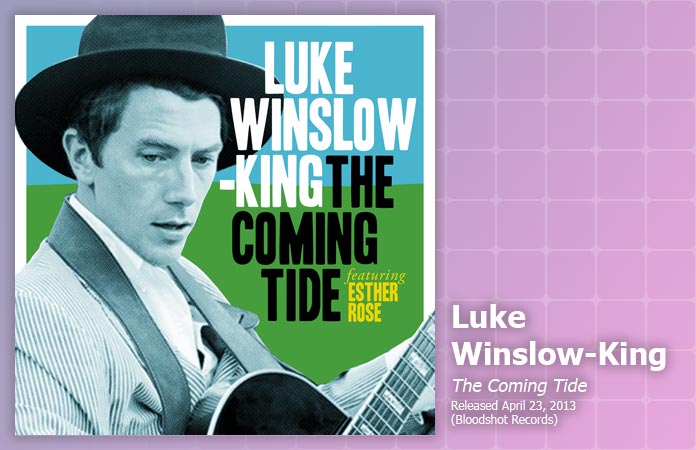
I once saw Luke Winslow-King perform a miracle. He was opening for Jack White, which is, of course, miraculous in and of itself, and Jack White’s audience was less than receptive to this man in a seersucker suit with a guitar, a woman playing a washboard, and a fellow with a standup bass. The most amazing thing was watching the audience’s attitude change. By the third song in his set, Luke Winslow-King had made fans. His performance was engaging, wickedly tuneful, and pretty much brilliant. The interplay between him and washboard player/backup singer Esther Rose was charming. By the time his set was over, the merch table was flooded with people buying his CD.
Comments Off on Music Review: Luke Winslow-King, The Coming Tide