Music Review: Big Country, The Journey
Published on May 15th, 2013 in: Current Faves, Music, Music Reviews, Reviews |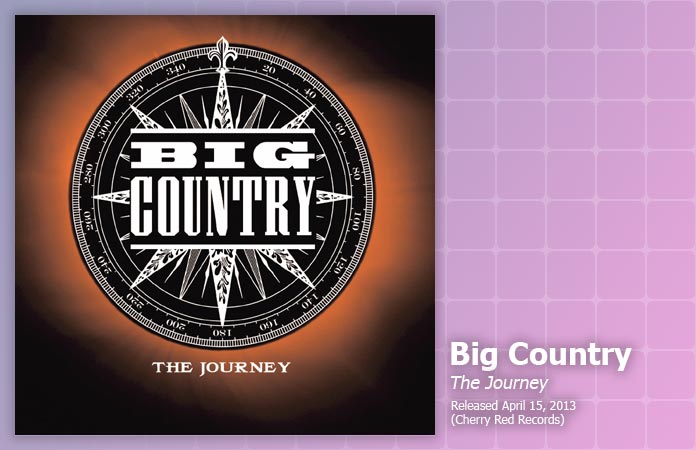
It’s difficult to talk about what the new Big Country album is without talking about what it isn’t. The Journey is the first album from the band in 14 years. It’s also the first studio album since original lead singer/songwriter Stuart Adamson took his own life in a hotel room in Hawaii in December of 2001. Bouncing back from a blow like that is difficult for any band. Look at the shambles INXS became after Michael Hutchence passed out and away.
Fronting Big Country now is Mike Peters, singer/songwriter for The Alarm, well-remembered for Eighties hits like “Sixty-Eight Guns” and “The Stand.” There are similarities between Peters and Adamson as songwriters. Adamson and Peters both created songs of epic scope, real sweepers. Listen to the guitars masquerading as bagpipes on “In a Big Country” and feel the cold grass of Scotland under your feet. Listen to the sweet high guitar trills of “Rain in the Summertime” and you really can almost feel the rain on your face.
Replacing Adamson’s vision with Peters’s panoramic view seems like the perfect match.
Music Review: Kermit Ruffins, We Partyin’ Traditional Style
Published on May 14th, 2013 in: Current Faves, Music, Music Reviews, New Music Tuesday |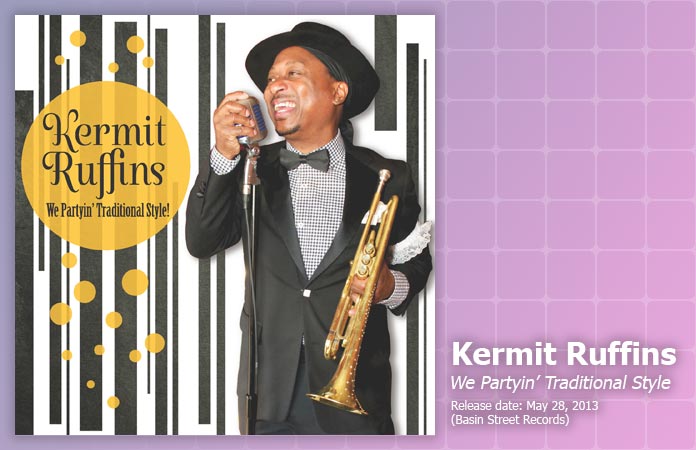
Kermit Ruffins co-founded The Rebirth Brass Band in high school. The Rebirth Brass Band revitalized the brass band community in New Orleans, and their success rejuvenated New Orleans’s Second Line culture. Kermit Ruffins is a great ambassador for that aspect of New Orleans. His extraordinarily distinctive, raspy voice paired with his virtuoso trumpet playing gives the casual listener a glimpse into the broad spectrum of New Orleans music.
His newest record We Partyin’ Traditional Style is like a time capsule, taking 20th-century classics and skewing them his own personal way and in the process, making an incredibly fun record. Partyin’ in the title? Not a coincidence.
Comments Off on Music Review: Kermit Ruffins, We Partyin’ Traditional Style
Music Review: Xenia Rubinos, Magic Trix
Published on May 13th, 2013 in: Current Faves, Feminism, Music, Music Reviews, Reviews |
On Magic Trix, Xenia Rubinos sounds like a radio caught between two frequencies. The first station carries brassy 1930s show tunes, a capella field recordings of folk songs, multi-tracked choruses, and lushly melodic whispered confessions. On the other, psychedelic keyboard freakouts, skittering drums, thumping hardcore declarations, and a cacophony of characters rule the day. Binding the disparate styles together is a soupçon of feedback from an analog keyboard and Rubinos’s force of nature vocals.
Movie Review: ChristCORE
Published on May 9th, 2013 in: Canadian Content, Culture Shock, Current Faves, Documentaries, Movie Reviews, Movies, Music, Reviews |
In the May 1989 issue of SPIN, born-again Christian evangelist Bob Larson followed the band Slayer on tour and presented his account in an article called “Desperately Seeking Satan.” By the end, Larson determined that Slayer’s “root of evil” was “rock’n’roll stardom” and that their “act of iniquity” was not with Satan, but with the “Billboard charts and T-shirt sales.” Still, he prayed that “both their eternal and artistic souls” would be saved.
Almost 25 years later, musician and filmmaker Justin Ludwig decided to follow two bands from perhaps an even more mystifying and misunderstood genre of music: Christian hardcore. As Ludwig explains in the beginning of the documentary, hardcore music helped him to break free from the shackles of organized religion and the oppression of conformist thinking.
If ChristCORE were a fictional Hollywood story, it’s easy to imagine that by the end, Ludwig will recant and become a born-again Christian. But, this is real life, or at least the documentary film version.
Comments Off on Movie Review: ChristCORE
Movie Review: I Declare War
Published on May 9th, 2013 in: Canadian Content, Current Faves, Movie Reviews, Movies |
Regardless of your gender, I Declare War will take you back to your childhood fantasies. The film opens with children playing a war game and the rules are quickly established. These two teams are deep in the woods playing Capture The Flag, but things change when some soldiers decide to take their lives in their own hands and defy their Generals.
During the film we are sucked into their world, becoming one of them, a solider. Hiding, crawling, always on the defense, and feeling like part of the squad. Waiting for the attack and watching your friends’ backs in hopes the enemy is not lurking behind you and trying to flank your troops. This is the level of realism I Declare War presents and it holds up until the end credits roll.
Comments Off on Movie Review: I Declare War
Game Review: Monaco: What’s Yours Is Mine
Published on May 7th, 2013 in: Current Faves, Game Reviews, Gaming |By Luke Shaw

There are few things as satisfying as planning and executing something that can afterwards be relished as “faultless” in its delivery. Pre-planning a bold and elegant display of awareness, intuition, and raw smarts rewards the schemers ten-fold, when all the disparate elements converge over the course of a few seconds. Trip wires are short-circuited, guards are subdued, guests are pickpocketed, and a safe full of jewels is opened by agile fingers. Monaco: What’s Yours Is Mine has enshrined this principle in its advertising:
“Get in, get out, get rich.”
Comments Off on Game Review: Monaco: What’s Yours Is Mine
Music Review: George Jones, Jones Country/You’ve Still Got A Place In My Heart (Reissue)
Published on May 2nd, 2013 in: Current Faves, Music, Music Reviews, Reviews |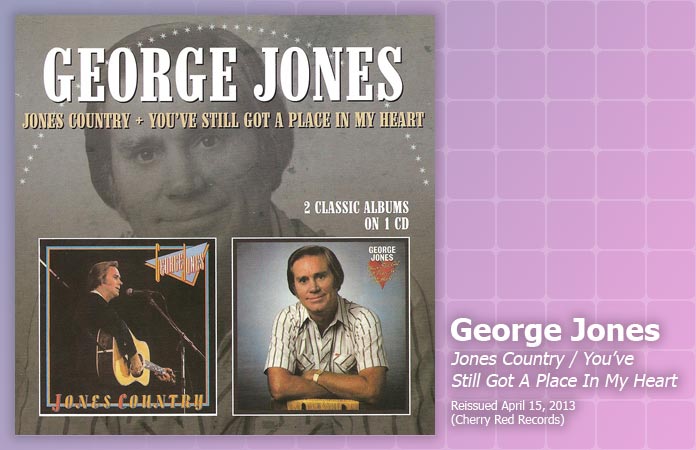
George Jones was called “the greatest voice in country music.” This is not hyperbole. He could make you feel so much with a crack of his voice, the swell or pull back on a phrase. He was masterful.
The liner notes for Jones Country/You’ve Still Got A Place In My Heart mention the miracle that he was alive and well in 2013 and planning a farewell show. I received this disc the day before he died. Irony is a wicked mistress.
Comments Off on Music Review: George Jones, Jones Country/You’ve Still Got A Place In My Heart (Reissue)
Music Review: Melvins, Everybody Loves Sausages
Published on May 1st, 2013 in: Current Faves, Music, Music Reviews, Reviews |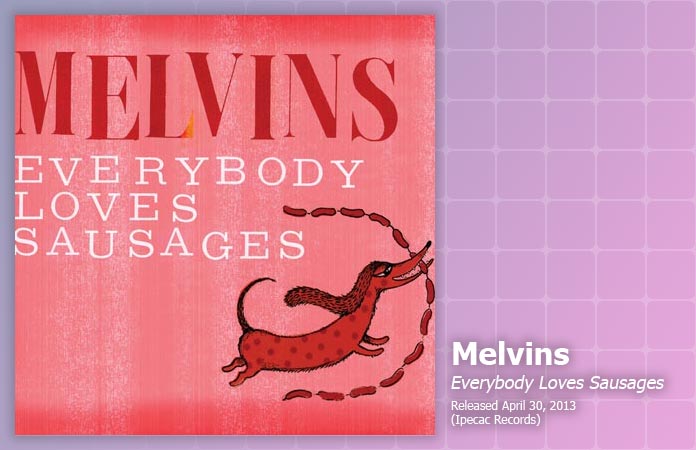
Melvins—the “the” is silent—are one of those bands who are permanently on the list of bands I’ve been meaning to get into. Everything of theirs I’ve heard I’ve enjoyed and I’ve seen them live twice (both times were outstanding). I even have a few of their albums. But I’ve never crossed over into the “must own everything” level of fandom. Although Everybody Loves Sausages is an album of cover songs, it may have finally pushed me over that precipice.
Cover songs are tricky. Why bother covering something unless you’re going to make it better or add something special? There is a third reason, though it’s not the most popular: introduce people to bands that they’ve never heard before. As an album, Everybody Loves Sausages hits all those marks.
Blu-Ray Review: A Royal Affair
Published on May 1st, 2013 in: Blu-Ray, Current Faves, DVD/Blu-Ray Reviews, Movie Reviews, Movies, Reviews |
Photo courtesy of Magnolia Pictures
The period romance implied in A Royal Affair‘s title is fulfilled in the film, but if you’re looking for Shakespeare In Love, you may be disappointed. Rather than another version of the “love conquers all” fairy tale, it presents a nuanced, complicated, and not always flattering portrayal of the titular threesome.
Comments Off on Blu-Ray Review: A Royal Affair
DVD Review: Manborg
Published on April 30th, 2013 in: Current Faves, DVD, DVD/Blu-Ray Reviews, Movie Reviews, Movies, Reviews, Science Fiction |
There are two groups of people in the world: those who love Manborg and those who just haven’t seen it yet. (Too pompous?)
Let’s try this: anyone with only a cursory knowledge of Mystery Science Theater 3000 knows that there is an audience for bad movies. Although some of the most famously bad bad movies have escaped the comic commentary of MST3K (Troll 2, The Room), it doesn’t make them any less beloved in their awfulness. Yes, screenings are organized for fans to openly mock these movies, but if it brings people so much joy and it isn’t really harming anyone, is that necessarily a bad thing? Especially when it comes from the heart.