Music Review: The Copper Gamins, Los Niños de Cobre
Published on August 27th, 2013 in: Current Faves, Music, Music Reviews, New Music Tuesday, Reviews |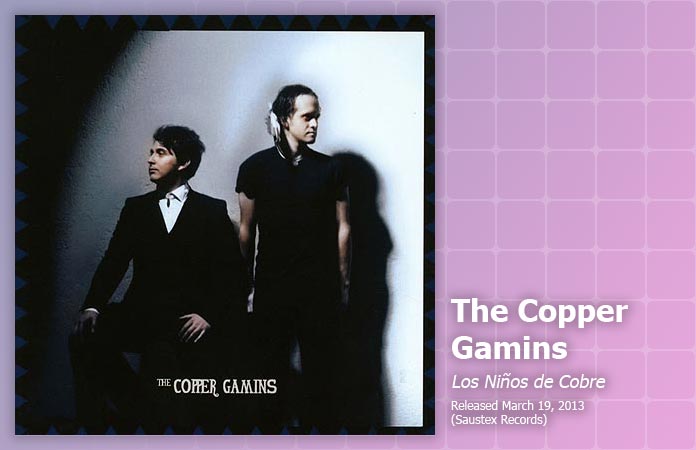
Critics sometimes use the phrase “more fun to talk about than to listen to” when describing an album that plays with new ideas and approaches to music. The inverse—that an album is more fun to listen to than to review or discuss—doesn’t come up as frequently. Los Niños de Cobre is an album that would live up to the inverse of that phrase. The qualities that make it compulsively listenable—its straightforward simplicity and the band members’ passion and skill—also make it an elusive subject for review. The Copper Gamins have created an album that makes an ideal soundtrack to long walks in the early-morning magic hour and humid, sleepless nights. When I listen to it, I feel as though I’m under a spell, but finding words to match the shimmering music on this disc is like chasing balls of mercury with my bare hands.
Comments Off on Music Review: The Copper Gamins, Los Niños de Cobre
Music Review: Various Artists, Loose Lips Might Sink Ships—Greasy Instrumental Magic From The Vault Of Lux And Ivy
Published on August 26th, 2013 in: Current Faves, Music, Music Reviews, Retrovirus, Reviews |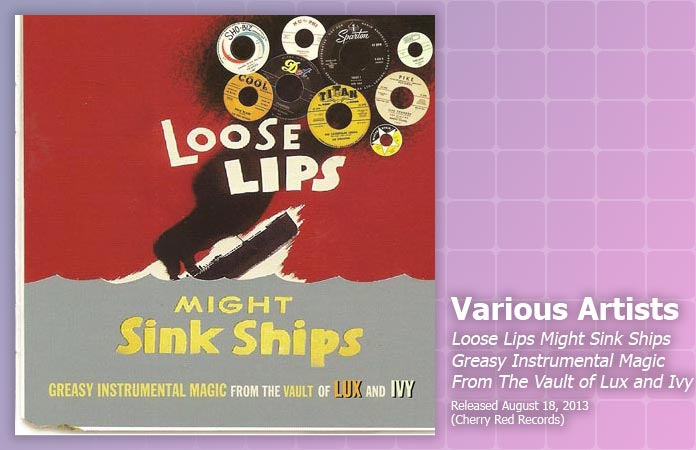
If you were to give Quentin Tarantino a copy of Loose Lips Might Sink Ships—Greasy Instrumental Magic From The Vault Of Lux And Ivy, he could probably pull a movie out of it, or the soundtrack to one at the very least. It’s a tidy, brief collection of pockets of unheralded instrumental awesome, and it may as well have been subtitled “All your guitar vs. sax needs are covered here.” Like it says on the tin, these are tracks culled from Lux Interior’s Purple Knife Show and they cover the gamut of early rock with twangy guitars, dirty sax, and surfy beats.
Comments Off on Music Review: Various Artists, Loose Lips Might Sink Ships—Greasy Instrumental Magic From The Vault Of Lux And Ivy
DVD Review: No One Lives
Published on August 21st, 2013 in: Current Faves, DVD, DVD/Blu-Ray Reviews, Horror, Movie Reviews, Movies, Reviews |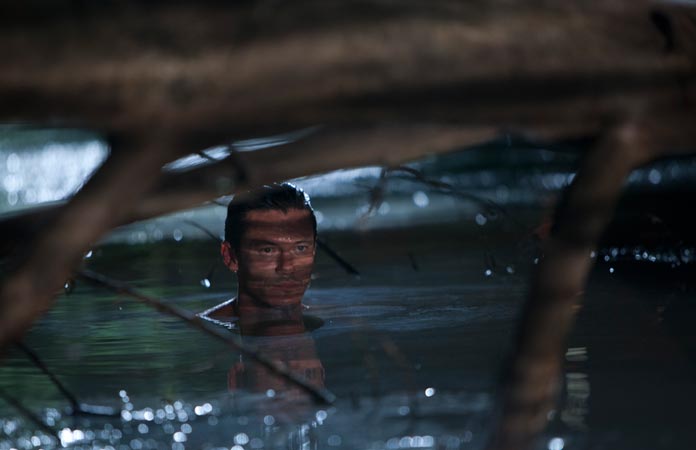
It’s surprising that horror movies and wrestling haven’t combined forces until recently, seeing as there is such a crossover between fanbases. No One Lives, a WWE Studios production, premiered at TIFF’s infamous Midnight Madness program last year and is now available on home video.
Comments Off on DVD Review: No One Lives
Music Review: White Lies, Big TV
Published on August 20th, 2013 in: Current Faves, Music, Music Reviews, New Music Tuesday, Reviews |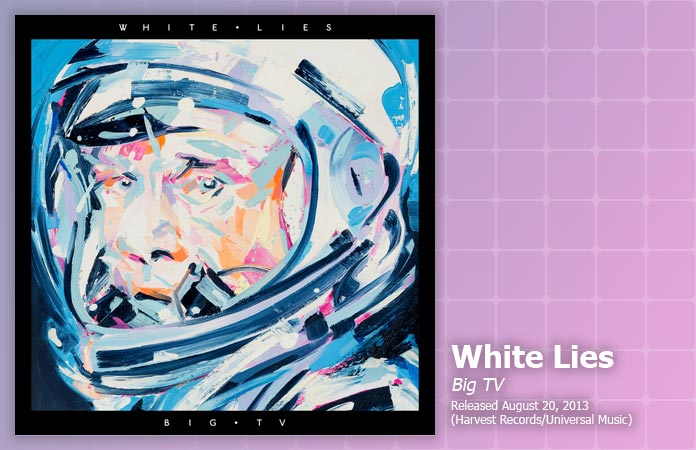
The critical and commercial success of White Lies over the last few years should come as no surprise to those who’ve followed the band’s career closely. For their newest album, Big TV, White Lies are once again working with Ed Buller, who produced their debut To Lose My Life . . . The production on Big TV is more restrained than it was on Ritual, but that only allows the songs to shine more brilliantly. It feels like both a blending of the band’s first two albums and a further development of the band’s signature sound.
Comments Off on Music Review: White Lies, Big TV
New Video: Big Black Delta, “Money Rain Down”
Published on August 16th, 2013 in: Current Faves, Music, New Video, Video |
The self-titled debut album from Big Black Delta, a.k.a. Jonathan Bates, is one of my favorites of 2013 thus far (review). The first single, “Side of the Road” had a cool video which I blogged about in February.
Now there’s another video from the band, this time for “Money Rain Down.” It’s one of the less bombastic tunes on the album, and that makes it even more interesting, as it shows just how much musical range Bates possesses. It’s incredibly danceable and wisely, the video includes lots of dancing. It’s whimsical and clever but not in a cutesy way. Check it out below.
Tour Dates:
August
15th The Fonda, Los Angeles, CA
17th Echo Park Rising, Los Angeles CA
September
7th Hopscotch Festival, Raleigh, NC
8th Boston Calling – City Hall Plaza, Boston MA
13th Lobster Fest at Port of LA, Los Angeles, CA
14th Summersalt Block Party, San Francisco, CA
21st The Courtyard @ The Getty, Los Angeles, CA
25th Bunk Bar, Portland, OR
26th Decibel Festival, Seattle WA
28th Festival Of Hope, Tulare CA
29th Adams Street Fair, San Diego, CA
Comments Off on New Video: Big Black Delta, “Money Rain Down”
Movie Review: A Band Called Death
Published on August 16th, 2013 in: Current Faves, Documentaries, Movie Reviews, Movies, Music, Reviews |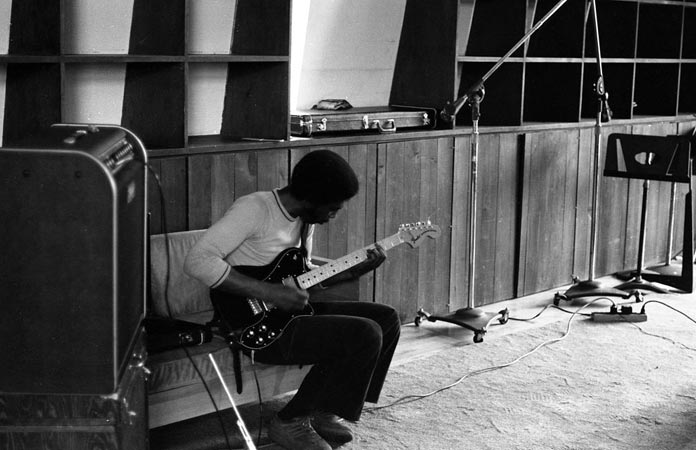
In an article on Film School Rejects, Scott Beggs points out the similarities between A Band Called Death and other recent music documentaries.
He notes that the trajectory of this film is similar to that of Searching For Sugar Man and Anvil! The Story of Anvil. Watching A Band Called Death, I was reminded of both Bad Brains: A Band In DC and also Nothing Can Hurt Me, the film about Big Star. The trajectory—unknown band, their individual and collective obstacles to fame, and their posthumous rediscovery and appreciation—is one that’s repeated in all of these films.
This is not to say that any of these films are formulaic or that music documentaries are repetitive. As Beggs argues, it just means that our preconceived notions of music history might be skewed.
Comments Off on Movie Review: A Band Called Death
Music Review: Serge Gainsbourg, Intoxicated Man 1958 – 1962
Published on August 15th, 2013 in: Culture Shock, Current Faves, Music, Music Reviews, Retrovirus, Reviews |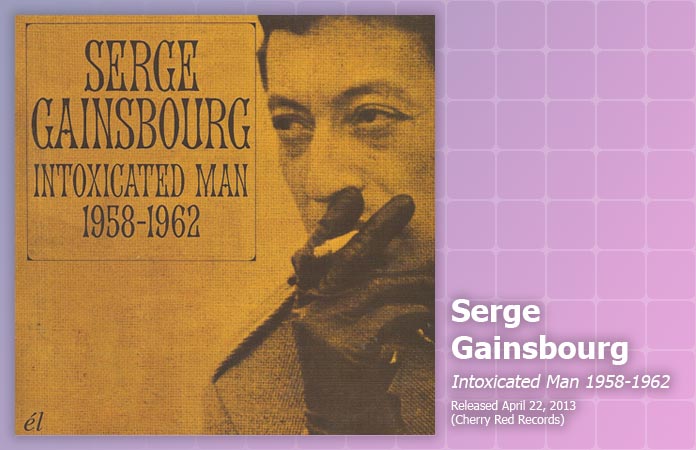
Serge Gainsbourg was a provocateur. That cannot be disputed. He wrote songs about subjects that raised the eyebrows of the world (Incest? Check. Sodomy? Check. Cigarettes? Heaven forefend, but check) and courted notoriety. Still, the man was a poet and a great wit.
Intoxicated Man 1958-1962 is a tantalizing glimpse into the origins of Serge Gainsbourg. A vast collection (66 tracks), it illuminates his early career as a chanteur, singing story-driven songs. Full disclosure: I know only the most rudimentary French. I could pick out the occasional word I understood (like window and love— he sings quite a bit about windows), so I missed some of the nuances of lyrics. It was a challenge.
Comments Off on Music Review: Serge Gainsbourg, Intoxicated Man 1958 – 1962
Music Review: Los Nuggetz: ’60s Garage and Psych From Latin America
Published on August 14th, 2013 in: Culture Shock, Current Faves, Music, Music Reviews, Reviews |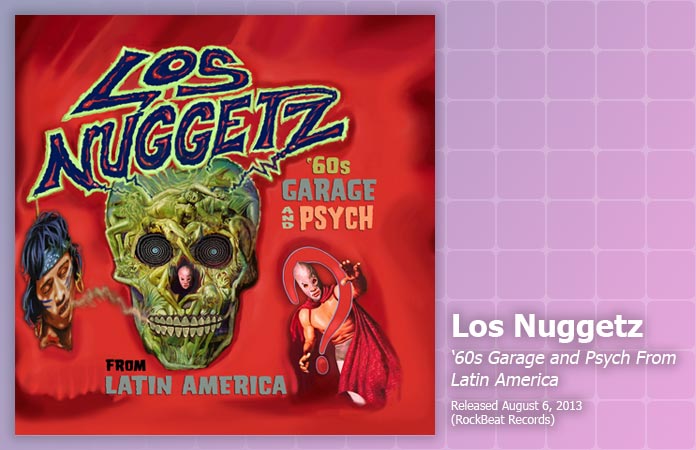
If music is the universal language, then garage rock was a generational dialect of rebellion. Bands like The Beatles and The Rolling Stones inspired an infinite number of teenagers to take to their garages and annoy their parents with three chords and ten decibels. While American and British garage bands have been exhaustively exhumed and cataloged, their peers in Spain and South America have not received the same treatment . . . until now. Los Nuggetz, a four-disc compilation, showcases almost 100 bands that put out singles during garage rock’s peak period of 1964-1968.
Comments Off on Music Review: Los Nuggetz: ’60s Garage and Psych From Latin America
Music Review: Demon Queen, Exorcise Tape
Published on August 13th, 2013 in: Current Faves, Music, Music Reviews, New Music Tuesday, Reviews |By Ricky Lima
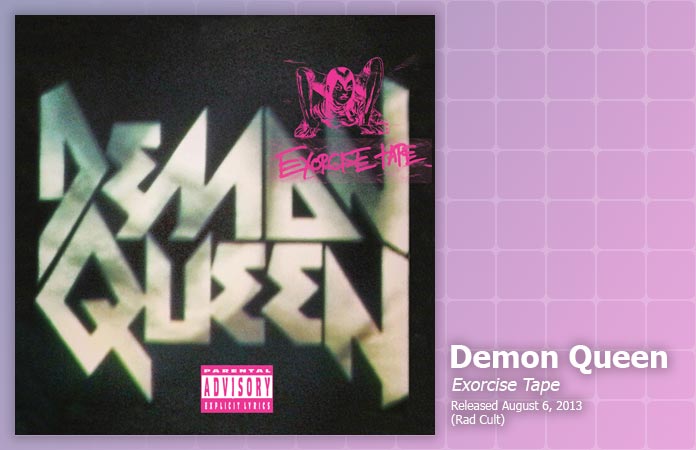
Demon Queen‘s first album Exorcise Tape has been officially described by lead vocalist Zackey Force Funk as “really about satanic stripper shit.” I don’t think I’ve heard a more accurate description of an album in my life. Exorcise Tape is dark, sexy, and super catchy. Zackey Force Funk is totally right; this is the kind of music they’d play in a strip club in Hell, and if that’s the case, that’s a place I want to go to. Zackey Force Funk and TOBACCO have knocked it out of the park in their first collaboration.
Comments Off on Music Review: Demon Queen, Exorcise Tape
DVD Review: Into The White
Published on August 13th, 2013 in: Current Faves, DVD, DVD/Blu-Ray Reviews, Movie Reviews, Movies, Reviews |
I won’t lie—I was interested in seeing this film because it’s one of the post-Harry Potter performances by everyone’s favorite snub-nosed ginger, Rupert Grint, now quite grown up and no longer shackled to the limitations of being good-guy sidekick Ron Weasley (who, admittedly, is a vastly more tolerable character on screen than in the novels, thanks to the talents of Mr. Grint). I have yet to see the other “adult” roles Rupert Grint has done, but he more than holds his own in this admirable historical European indie.
Comments Off on DVD Review: Into The White