Samantha Fox Reissues: Touch Me (1986), Samantha Fox (1987), I Wanna Have Some Fun (1989), and Just One Night (1991)
Published on August 1st, 2012 in: Music, Music Reviews, Retrovirus, Reviews |By Emily Carney

Who is Samantha Fox? She’s probably the most notorious “Page Three Girl,” having posed topless for the UK tabloid The Sun at age 16 (yeah, I know it’s gross). Her parents were even behind her entry into show business and ubiquity. In the last decade, she’s been known in her home country for being a reality TV star, having done some stints on Wife Swap and I’m a Celebrity . . . Get Me Out of Here!
However, in the US, many might remember her for her forays into the world of freestyle and dance pop. Cherry Pop Records has now reissued her first four albums, which will be essential to those who bopped their heads to Club MTV back in the late 1980s and early 1990s. (more…)
Jimbo Mathus, Blue Light EP
Published on July 31st, 2012 in: Music, Music Reviews, New Music Tuesday, Reviews |By J Howell
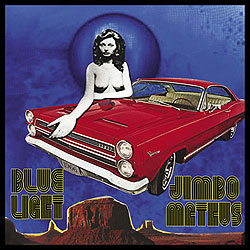
Listeners unfamiliar with Jimbo Mathus as a solo artist might be aware of his tenure as a member of Squirrel Nut Zippers, a band that for many is unfortunately and unfairly remembered as a one-hit novelty act. Or they may know him as the instigator at least partially responsible for Sweet Tea and Blues Singer, two albums that may well be bluesman Buddy Guy’s finest work since he was a young man; or perhaps as part of roots-music supergroup the South Memphis String Band; or maybe even as a member of the North Mississippi Allstars.
While Mathus has garnered plenty of attention—and at least one Grammy nomination—as a collaborator, it seems that he is often overlooked as a solo artist, which is a damned shame, as Mathus is a confirmed house-rocker live. (more…)
Comments Off on Jimbo Mathus, Blue Light EP
The Very Best of Sonny Rollins
Published on July 30th, 2012 in: Current Faves, Music, Music Reviews, Retrovirus, Reviews |By Paul Casey
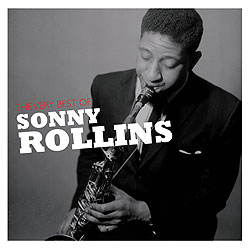
“What was beginning to happen to me was that I was being expected to really deliver great music all the time. In other words my name was bigger than I thought I could support with what I was doing. I remember one particular job that I had, when I just felt I wasn’t really playing well enough, you know? And everybody was really so excited to see me and I really felt I let the people down. I was really frustrated with myself, you know? That was really the genesis of this thing on the bridge. That’s what really it was all about.
I was out walking two blocks from where I lived at, actually, and I looked up and I saw these steps, you know, going up. And I walked over the street and I walked up those steps and there was this big beautiful expanse of bridge, you know? Nobody up there.
Usually I don’t pay too much attention to the trains. Usually absorbed in what I’m doing. But in a way it adds, you know it’s part of the atmospheric noise, and it adds to your playing in a way, you know? All these sounds, you see, because I’m sure subconsciously I change what I’m playing to blend with the sound of the train. It all has its effect.”
—Sonny Rollins from BBC Arena’s Beyond the Notes documentary
A striking image in the history of the 20th Century Jazz. A powerfully gifted man, having given up a professional life in music, plays his saxophone atop the Williamsburg Bridge, between Manhattan and Brooklyn, New York. Sonny Rollins, music, and the world. Moving with the trains, with the earth moving as they pass by, and the earth moving to the sounds of his saxophone.
Comments Off on The Very Best of Sonny Rollins
The Very Best of Wes Montgomery
Published on July 27th, 2012 in: Current Faves, Music, Music Reviews, Retrovirus, Reviews |By Paul Casey
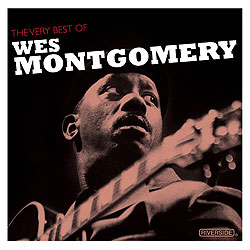
“His playing transcended the instrument. Other Jazz guitarists, you know they’re playing the guitar but Wes and his whole approach, the way he phrased, his sense of swing, you kind of lost a sense that he was playing the guitar. He played the guitar like a horn, for instance. He phrased like a horn player and it just really caught people’s imaginations. It was really different.”
—Jim Ferguson from NPR’s The Life and Music of Wes Montgomery
The guitar was rarely a dominant instrument in Jazz. Relegated to a back-up, or to flesh out a sound, the guitar did not have the sparkly flair of a lead instrument. With the exception of Benny Goodman Sextet member Charlie Christian, or the Gypsy Jazz of Django Reinhardt, there were few guitarists in Jazz who were considered to be serious figures in the genre. Through his recordings and performances, Wes Montgomery did much to legitimize the guitar in Jazz, as well as influence a whole heap of musicians. The fracturing of the genre into Free and Fusion guaranteed its place, as well as the legacy of Wes Montgomery.
Laetitia Sadier, Silencio
Published on July 24th, 2012 in: Current Faves, Music, Music Reviews, New Music Tuesday, Reviews |By Jemiah Jefferson

The chanteuse of compassionate socialism hasn’t changed much since the earliest days of legendary agit-pop group Stereolab, and this is a very good thing; Laetitia Sadier‘s cool, clear-eyed voice, alternately crisp and authoritative and velvety-dreamy, is one of the greatest resources in music. As a songwriter, too, she only develops further complexities while keeping the core characteristics intact. Sadier has always created intensely listenable tunes to transmit messages of the political and the personal, and Silencio is no exception. (more…)
Comments Off on Laetitia Sadier, Silencio
The Dark Knight Rises
Published on July 20th, 2012 in: Comics, Current Faves, Movie Reviews, Movies, Reviews |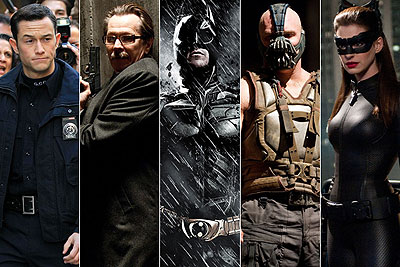
Photo © Warner Bros. via ScreenCrush
Let’s be honest: The Dark Knight Rises doesn’t need my review. People are going to see it anyway. But I need to write a review. After the midnight showing I felt overwhelmed, exuberant, humbled. I couldn’t stop talking and thinking about the movie. I got home after 3 a.m., exhausted but unable to sleep. That hasn’t happened since the first night I saw Fight Club in 1999. Before that, it was in 1998, because of the movie Velvet Goldmine, with none other than Christian Bale—but I’m getting ahead of (behind?) myself. You want to know about The Dark Knight Rises.
All You Got To Do Is Swing: Joe Jackson’s The Duke
Published on July 17th, 2012 in: Current Faves, Music, Music Reviews, New Music Tuesday, Reviews |By Cait Brennan
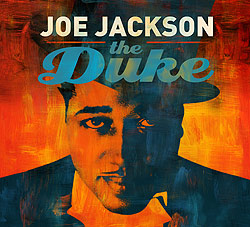
From the very beginning of his professional career, Joe Jackson has been one of the most driven, creative, and eclectic artists in popular music. His debut album, Look Sharp, was one of the New Wave’s first smash hits, and over his first three albums Jackson and his band ruled the airwaves with catchy, intelligent pop with strong punk, reggae and pub-rock influences. (more…)
Comments Off on All You Got To Do Is Swing: Joe Jackson’s The Duke
Cure for Pain: The Mark Sandman Story
Published on July 17th, 2012 in: Current Faves, Documentaries, DVD, Movie Reviews, Movies, Music, Reviews |By Chelsea Spear
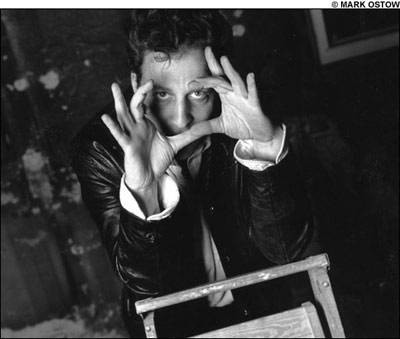
Photo © Mark Ostow
Throughout the 1980s and ’90s, Mark Sandman cut a wide swath through the Boston music scene. His first band, Treat Her Right, scored a local radio hit with the deadpan, eerie single “I Think She Likes Me.” The various bands with whom Sandman played—most notably Supergroup, Candybar, and Morphine—played two sets a night at the shoebox-shaped bar Plough and Stars. Even as Morphine ascended to a renowned trio with a devoted following, Sandman could be found playing at the annual Central Square World’s Fair, talking with elementary school classes about his handmade musical instruments, converting his loft apartment into a recording studio, or just hanging out in the back booth at the Middle East nightclub. His sudden, tragic death in Italy in 1999 left a huge hole, both in the music world where he made his mark, and within the Boston arts community. (more…)
Comments Off on Cure for Pain: The Mark Sandman Story
Thoughts On: The Band, STAGE FRIGHT
Published on July 16th, 2012 in: Music, Music Reviews, Retrovirus, Reviews |By Paul Casey
Part three in a continuing series on THE BAND’s discography.
To read the whole series, go here.
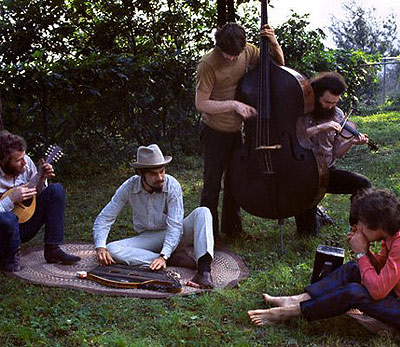
“Now deep in the heart of a lonely kid
Who suffered so much for what he did
Gave this plough boy his fortune and fame
And since that day he ain’t been the same.See the man with the stage fright
Just standing up there to give it all his might
And he got caught in the spotlight
But when it gets to the end
He wants to start all over again.”
—From “Stage Fright”
Comments Off on Thoughts On: The Band, STAGE FRIGHT
Movie Review: Red Lights
Published on July 13th, 2012 in: Current Faves, Movie Reviews, Movies, Reviews |This review also appears on The CillianSite.com.
At its most basic level, Red Lights is about two paranormal investigators who debunk cases of alleged psychic phenomena. Yet what the movie is really about is something more: Faith, and whether or not that faith can be shaken.
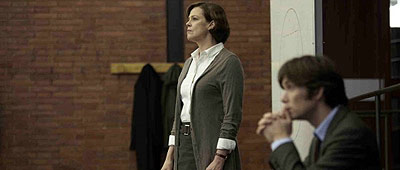
Sigourney Weaver plays Dr. Margaret Matheson, a psychologist who’s built her career on not just shaking, but also shattering, the faith of those who believe in the paranormal or supernatural. Cillian Murphy is her assistant, Tom Buckley, a physicist who in Matheson’s view is brilliant enough to be doing something more with his life than helping her. Early on in the film, Matheson asks Buckley why he stays with her. He doesn’t answer. Finding out the answer is part of what makes Red Lights so engaging.
Comments Off on Movie Review: Red Lights