Bad Lucy, Bad Lucy EP
Published on August 15th, 2012 in: Current Faves, Music, Music Reviews, Reviews |By Cait Brennan
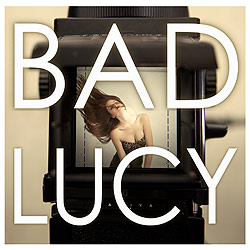
The Internet is a magical place. A few nights back, I muted Bob “Olympus Interruptus” Costas and took a random gander at the live web feed of one of my favorite watering holes—Tempe, Arizona’s historic Tempe Tavern. A suitably vibrant crowd was on hand to revel in the music of some fine local bands. It was all good stuff, but one band stood out so much that I had to track them down. The band is called Bad Lucy, and their gorgeous, melodic songs and energetic live show blasted right through the off-kilter webcam and livestream hiccups—and into my heart. Shut up, I’m serious.
Comments Off on Bad Lucy, Bad Lucy EP
Shoes, Ignition
Published on August 14th, 2012 in: Current Faves, Music, Music Reviews, New Music Tuesday, Reviews |By Cait Brennan
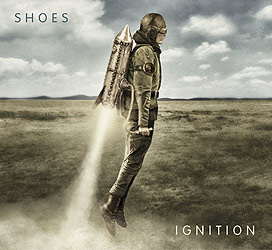
Zion, Illinois hardly seems like the kind of place to jumpstart a music revolution. But in the dark days of 1974, this tasty bit of spicy mustard in the middle of a Waukegan/Kenosha sandwich found itself with not one but two seemingly endless power sources. Say what you will about nuclear fission, but the Zion Nuclear Power Plant had nothing on the thousand-megawatt power pop of brothers John and Jeff Murphy and their high school pal Gary Klebe—the creative soul of Shoes. Pioneers of both power pop and DIY home recording, the band made their mark with 1977’s self-released Black Vinyl Shoes, released three gorgeous albums on Elektra from ’79-82, and over the next 30-plus years, blazed a fiercely independent trail with a series of critically-acclaimed albums (1984’s Silhouette, 1990’s Stolen Wishes, ‘94’s Propeller, and a ton of rarities and reissues).
Comments Off on Shoes, Ignition
Searching For Sugar Man
Published on August 13th, 2012 in: Current Faves, Movie Reviews, Movies, Reviews, Underground/Cult |Who is, or was, Sixto Diaz Rodriguez? A lifelong resident of Detroit, and the son of Mexican immigrants who moved to the Midwest to work for Ford. A “prophet, “a wise man”, and a “wandering spirit” in the eyes of his coworkers on construction crews. A social activist who ran for office in his hometown, and who brought his five daughters to protests. A man of modest means who lives an ascetic life.
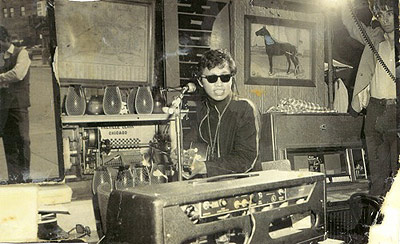
For a brief period in the 1970s, Rodriguez was a solo artist who released two remarkable albums—Cold Fact and Coming From Reality—that reached an audience so small, the cliché “cult hero” would overestimate it. While the albums sold an estimated six copies in America and quickly lapsed out of print, Cold Fact made it to South Africa not long after it came out here. Rodriguez’s anti-establishment lyrics, combined with his driving melodies and funky arrangements, made him a folk hero to South Africans bristling under apartheid. That Rodriguez was rumored to have committed a grisly suicide before a live audience only deepened his legend.
Comments Off on Searching For Sugar Man
Thor and Loki: Blood Brothers
Published on August 9th, 2012 in: Comics, DVD, Movie Reviews, Movies, Reviews |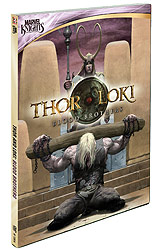
I have a confession to make: Until the movie Thor came out last summer, I didn’t know that Marvel comics had characters based (somewhat loosely) on Norse mythology. Like many people, I enjoyed Chris Hemsworth’s endearing portrayal of Thor, god of thunder, and Tom Hiddleston’s mesmerizing take on Thor’s brother Loki, the god of mischief. Their painful family history also added a layer of complexity to this summer’s Avengers, even if Loki was far less sympathetic the second time around.
Recently, I had the opportunity to see another interpretation of these characters. I watched Thor and Loki: Blood Brothers, a four-episode motion comic from Marvel Knights Animation. (For those who may not know, a motion comic is a slightly different style of animation, where the background is more static and the movements are less fluid.) It’s based on a 2004 storyline with no connection to the Marvel films.
Comments Off on Thor and Loki: Blood Brothers
Jezzy & the Belles, Compasses & Maps
Published on August 8th, 2012 in: Music, Music Reviews, Reviews |
One of the reasons why I got into music criticism was to discover and herald to the world up and coming artists. Thus, writing less than positive reviews of new artists’ self-released work causes me a small amount of pain. Someone took great time and expense to write, arrange, record, and press an album, and I don’t want to downplay their hard work by speaking ill of them in public. However, once in a while the dirty task of shrugging off a self-released album must be done.
And so it came to pass that Jezzy & the Belles‘ debut album, Compasses & Maps, came into my possession. I volunteered to review it on the strength of a few YouTube clips that established Jessica Eisenberg’s strong musical and lyrical abilities, and had looked forward to hearing a rising star for the first time. Sadly, the balance of the album’s nine tracks left a bland impression.
Comments Off on Jezzy & the Belles, Compasses & Maps
The Tubes, Young And Rich and Now
Published on August 7th, 2012 in: Current Faves, Music, Music Reviews, New Music Tuesday, Reviews |By Cait Brennan
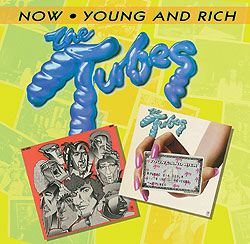
One of the most adventurous, imaginative, and irreverent bands of the 1970s and ’80s, The Tubes made a career—a whole new art form, really—out of being much too much.
The band existed in an alternate reality, almost inconceivable from our point of view, when bands could attack all different kinds of music, from every angle and attitude, in every genre now known or yet to be invented. In their time they were avant-garde madmen, merry pranksters, X-rated performance artists, art school punks, agents provocateurs, AOR gods, and—in a fitting twist of irony—actual Top 40 pop stars, becoming for a brief moment the very thing they were always sending up. Whether it was high concept or low pop, innovative composition and brilliant musicianship was the order of the day.
Now Real Gone Records has reissued two of the group’s essential yet long out-of-print early albums, Young And Rich and Now, the latter of which has never been issued on CD in the US, ever. It’s a welcome and wonderful addition to the Tubes’ catalog.
Paul Thorn, What The Hell Is Goin’ On?
Published on August 7th, 2012 in: Music, Music Reviews, New Music Tuesday, Reviews |By Paul Casey
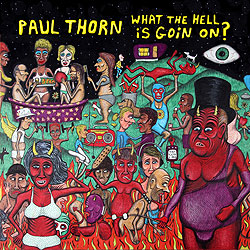
There were two barriers to my listening Paul Thorn‘s cover album, What The Hell Is Goin’ On? The first, I was not aware of Paul Thorn’s music. The second, I was not familiar with many of the songs he covered (and in some cases with the artists too). Quickly though these barriers turned to my advantage (aha!), finding a pleasant collection of Blues numbers and a new fellow who can turn it out a bit for money.
Comments Off on Paul Thorn, What The Hell Is Goin’ On?
Redd Kross, Researching The Blues
Published on August 7th, 2012 in: Current Faves, Music, Music Reviews, New Music Tuesday, Reviews |” . . . there’s nothing more comforting than being in a room with my brother where him and our drummer are just talking endlessly about Bob Dylan bootlegs and we have stupid inside jokes about public access shows from 1984. With them I can just turn my brain off and I don’t need to worry about the social aspect of this environment—that’s sorted.”
—Steven McDonald, interviewed in Stereogum, July 30, 2012
Disclaimer: Redd Kross has been an integral part of my life for almost 20 years, so I can’t promise that this review will be 100% objective. I can, however, promise that it will be 100% sincere.
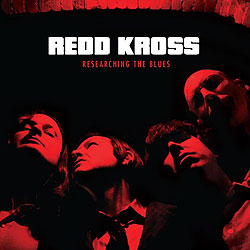
Redd Kross. Oh, where to start? So much history that I can’t cram it all into one review, but chew on this: The band has been around for more than 30 years. Despite various lineup changes, two members have remained steadfast—brothers Jeff and Steven McDonald, now both in their 40s. (Your math is correct; Jeff and Steven started the band at ages 15 and 11, respectively.) And yes, they have been integral to my life, something that can’t be overstated; after all, the name of this website was inspired by the name of one of their albums.
Throughout the band’s existence, Redd Kross may not have released as many “proper” albums as other bands, but they’ve been no less prolific, participating in various soundtracks, tribute albums, singles, EPs, and at least two alter egos (how else do you describe Anarchy Sixx or Tater Totz?). Although their sound has never been what purists might consider punk rock, their attitude has always been. Even the bubblegum pop of 1990’s Third Eye contains a metal tribute to Japanese girl group Shonen Knife. Thus, answering the question, “so what does Redd Kross sound like?” has always been tricky.
Comments Off on Redd Kross, Researching The Blues
Thoughts On: The Band, CAHOOTS
Published on August 6th, 2012 in: Music, Music Reviews, Retrovirus, Reviews |By Paul Casey
Part four in a continuing series on THE BAND’s discography.
To read the whole series, go here.
“Where do we go from here?”
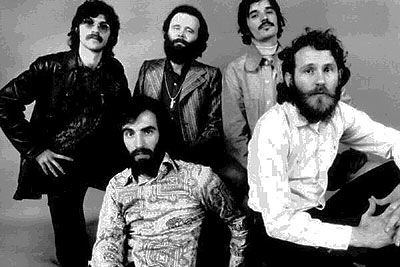
Cahoots was the last album of new material THE BAND would record until their last great work, Northern Lights – Southern Cross, in 1976. On the basis of the songs, and the disconnect between the constituents of THE BAND, it was a tough album to make. There is little thematic cohesion here. It is a leap around America in a manner—from the fairground to Chinatown—but it lacks the conceptual feeling of The Band or the personal confession of Stage Fright. It does have some of the eclectic feeling of Big Pink, if little of that album’s mood. It is when the burn out became an issue and when it became apparent that THE BAND could not muscle through their creative and personal issues. They do give it a hell of a try, though. Cahoots is not a classic, like the previous three, but it is a good record. (more…)
The Entity
Published on August 2nd, 2012 in: Blu-Ray, DVD, Horror, Movie Reviews, Movies, Reviews |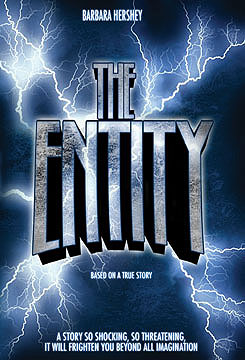
As The Entity begins, we watch a single mother named Carla Moran waiting for her shift as a receptionist to end. Then, she rushes off to night school and enters her typing class after it has already begun. Frustrated, she makes a few errors on the machine. Much later, she comes home to her modest house in the suburbs, where the lights are out. There are dirty dishes on the table, which she proceeds to wash. Her younger daughters are already asleep, but she argues with her teenaged son about the mess. Soon she is getting ready for bed. A mundane start to a horror movie? Perhaps, until we soon realize that we are not the only ones watching Carla Moran.
The unseen voyeur makes itself known with a slap to Carla’s face. Stunned by the blood and the pain, she is soon shoved onto her bed, pillow over her face, and sexually violated by this malevolent, invisible being.
Comments Off on The Entity