Music Review: Hirsute Pursuit, Tighten That Muscle Ring
Published on June 29th, 2013 in: Current Faves, LGBTQ, Music, Music Reviews, Reviews, Teh Sex |By Ann Clarke
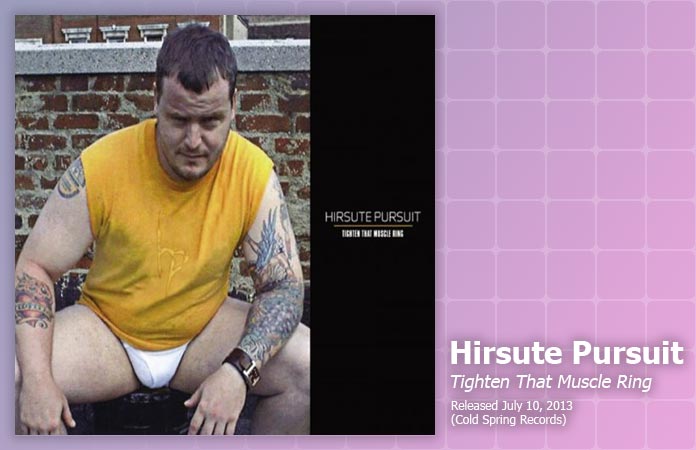
It’s been a while since I’ve written any reviews about anything, mainly because I can’t fucking stand new shit, because that is what it is—SHIT! However, sometimes you hear something and it compels you to expel your thoughts in a written context, basically excreting your reaction upon observation. In this particular case, that would be the album Tighten That Muscle Ring by Hirsute Pursuit. This might not be a brand new release (it came out in 2012, so it isn’t old, either), but it is new to my ears.
I wanted to publish this review during the month of June since it’s Pride Month and because I have NEVER heard anyone that is as proud to be gay as the fellas in Hirsute Pursuit! They take their pride to parts unknown. With the Supreme Court ruling on DOMA and Prop 8, the gay pride is at an all-time high, but for the two that are Hirsute Pursuit (Harley Phoenix and Bryin Dall), they clearly aren’t thinking about anything marital when composing their songs. In fact, these are the types of guys that would be out even if it meant the death penalty! Laws or not . . . these guys are going to cause some butt-hurt to someone!
Comments Off on Music Review: Hirsute Pursuit, Tighten That Muscle Ring
Blu-Ray Review: The Rambler
Published on June 27th, 2013 in: Blu-Ray, Current Faves, DVD/Blu-Ray Reviews, Movie Reviews, Movies, Reviews |
The Rambler is like a Jim Thompson science fiction novel adapted into a film. Its panoply of bizarre characters could be interpreted as either being influenced by David Lynch and Alejandro Jodorowsky or just pretentious. Yet, most of the seemingly random bits make a strange kind of sense in the world of an already nonsensical film. Everything is so specifically odd that it must mean something and not be an accident. There are only a few times when things appear to be weird for the sake of it. These scenes persist for so long they transform from disgusting to hilarious. Perhaps that’s the point.
Music Review: Big Star: Nothing Can Hurt Me Soundtrack
Published on June 27th, 2013 in: Current Faves, Documentaries, Music, Music Reviews, Retrovirus, Reviews, Soundtracks and Scores |By Cait Brennan
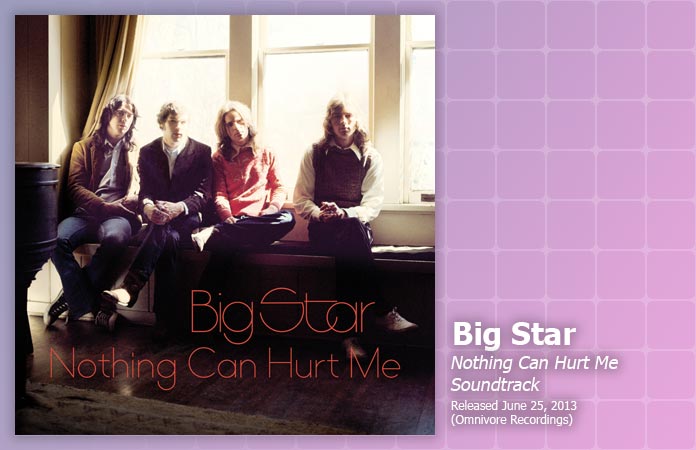
There’s a part of you that gets wistful sometimes when you see some secret treasure you love finally get its day in the sun. You think back to the day, seven worlds ago, when a friend of a friend handed you a cassette tape of some band you never heard of called Big Star, on an obviously fake record label called PVC Records. The friend gives you a knowing look and you don’t know; you don’t know you have a universe in your hand, that this grubby little tape is going to change your life, it’s going to detonate some ecstatic explosion inside you, and you will never be that person ever again. And a thousand miles later you chance across another copy in the cutout bin of some strip-mall record shop and you buy it for 49 cents and you put it in the hands of someone you love who’s never heard it, and you look at their uncomprehending expression and think “that was me, once upon a time.” And if you’ve chosen wisely and the quantum entanglement is aligned just so, the chain reaction goes on.
Comments Off on Music Review: Big Star: Nothing Can Hurt Me Soundtrack
Waxing Nostalgic Cover Albums: Styx, Big Bang Theory
Published on June 26th, 2013 in: Music, Music Reviews, Reviews, Waxing Nostalgic |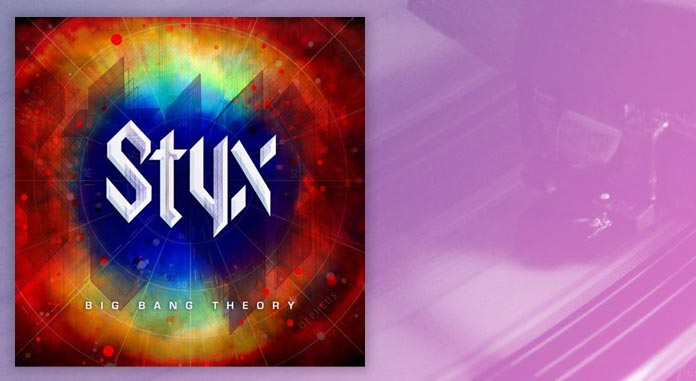
In retrospect, there weren’t too many corporate pop/rock bands quite as ballsy as Styx. They were great proponents of the concept album, managing to score hit after hit with singles that, taken out of their album’s context, gave no clue to the listener of what they were really about. While I was slow dancing with yet another girl who wouldn’t let me touch her butt to “The Best of Times” in Tracy White’s basement during another hormonally-interminable eighth grade party, I had no idea I was listening to a song about America, rising like a phoenix from the ashes of the Seventies and rushing headfirst into the Eighties. I just knew I was staying a virgin for another long weekend.
Styx’s biggest hits tended to be the namby-pamby Dennis DeYoung ballads. The rocking songs like “Heavy Metal Poisoning” never had quite the same popularity. It’s interesting, then, that for their covers album, Big Bang Theory, the band reaches out for the rockiest rock they can rock your rocks to. Even more interesting is how well it works.
Comments Off on Waxing Nostalgic Cover Albums: Styx, Big Bang Theory
Music Review: Bosnian Rainbows, Bosnian Rainbows
Published on June 25th, 2013 in: Current Faves, Feminism, Music, Music Reviews, New Music Tuesday, Reviews |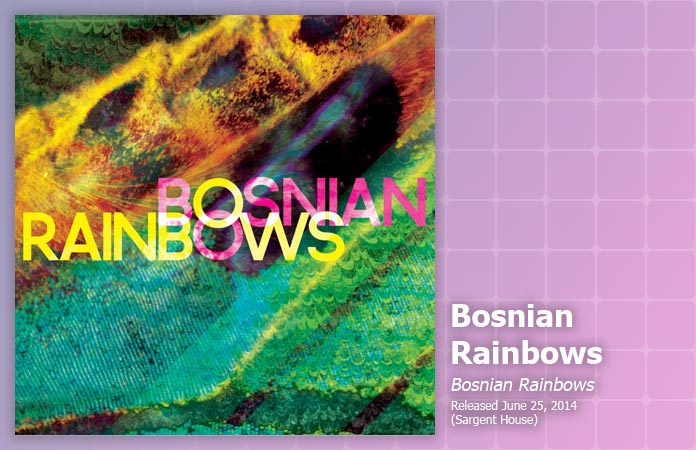
Remember the ’80s? Not the kitschified dayglo era of synthesizers and Patrick Nagel portraits, but the pre-Nirvana era of college radio, fly-by-night indie labels, and adventurous bands with eclectic influences. Bosnian Rainbows, a Latin alternative supergroup-of-sorts, exemplifies the magpie musical styles and willingness to experiment that made the previous generation’s proto-alternative bands so addictive.
Bosnian Rainbows trade in expansive, cinematic melodies, driven by curlicuing guitar riffs and strong arrangements. Omar Rodriguez-Lopez, the creative force behind the band, perfected these skills with his previous band, the Mars Volta. Reacting to what he saw as a dictatorial manner of producing and fronting a band, the guitarist opted for a more democratic experience with his next band.
Comments Off on Music Review: Bosnian Rainbows, Bosnian Rainbows
Music Review: Dream Affair, From Now On EP
Published on June 24th, 2013 in: Current Faves, Music, Music Reviews, Reviews |By Julie Finley

Dream Affair are a trio of musicians from various locales that started out in Philly, but are currently based out of Brooklyn. They have undergone a few line-up changes since their inception, but the primary figure has been Hayden Payne (vocals, guitar, and various electronics). The other members are Abby Echiverri (synths, violin, and vocals), as well as Bryan Spotlore (bass). I am not sure if they classify themselves in a genre per se, but their music tends to be filed under “post-punk,” “new wave,” “cold wave,” “Goth rock,” etc.
From the sound of their latest release, From Now On, those various genre labels wouldn’t be too far off the mark. The problem with those specific genre labels is that any band falling under that umbrella is inevitably going to be compared to Joy Division or The Sisters of Mercy. Yes, there are many newer bands that clearly take their cues from their forefathers, but this is what I find different about Dream Affair.
Comments Off on Music Review: Dream Affair, From Now On EP
Music Review: Dessa, Parts of Speech
Published on June 24th, 2013 in: Music, Music Reviews, Reviews |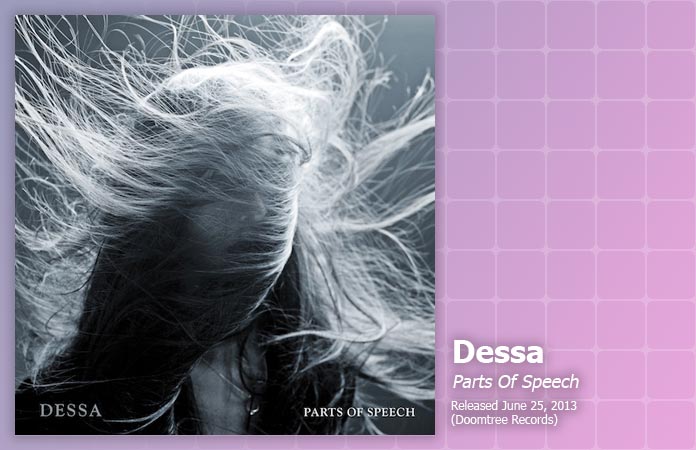
Performance poet Dessa burst on the scene in the mid-oughties with A Badly Broken Code, an inventive record that meshed the confrontational attitude of hip hop, the confessional qualities of poetry, and an appealingly rough-hewn production aesthetic. These seemingly disparate elements came together for an album that explored familial love, particularly Dessa’s relationship with her disabled younger brother. Her flow was unimpeachable, and she transitioned well between spitting triples and crooning verses. Her use of analog and toy instruments underscored these themes and gave the album a greater poignancy.
In the three years since A Badly Broken Code dropped, Dessa’s interest in exploring new genres and working with different styles of music is understandable. Parts of Speech represents a transition for Dessa: from the experimental rap style in which she made her name into a more traditional pop music idiom.
Comments Off on Music Review: Dessa, Parts of Speech
Movie Review: Nightmare Factory
Published on June 21st, 2013 in: Canadian Content, Current Faves, Documentaries, Feminism, Film Festivals, Horror, Movie Reviews, Movies, Reviews |
There’s a fantastic quote from the mother of special effects wizard Greg Nicotero in Nightmare Factory, a new documentary from filmmaker Donna Davies. When she was pregnant with her son, Mrs. Nicotero says, she read a lot of “blood-curdling” novels, all the ones she could find. “It was fun and exciting to be scared,” she adds. This is why horror junkies are horror junkies. The obsession with the craft of special effects is what’s explored in Nightmare Factory, but it’s clear that the fear factor is the spark that ignites the flame.
Comments Off on Movie Review: Nightmare Factory
Movie Review: iLL Manors
Published on June 20th, 2013 in: Culture Shock, Current Faves, Found Footage, Movie Reviews, Movies, Music, Reviews |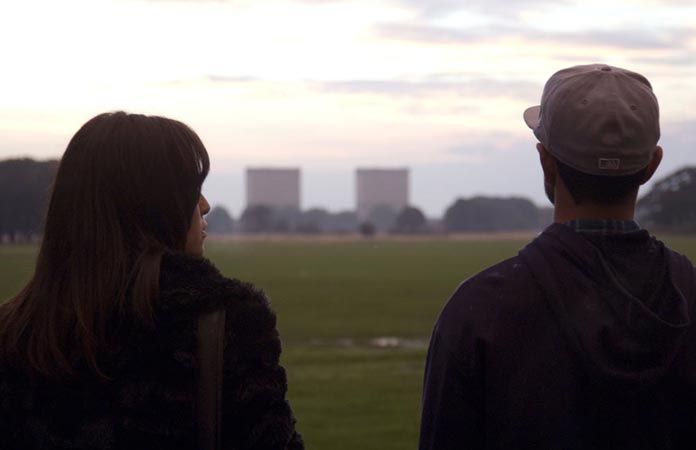
iLL Manors, the turbulent, invigorating debut film from Ben Drew (a.k.a. hip hop artist Plan B), begins with Drew rapping about the harsh realities of life in a council estate. It’s the kind of intro that will either suck you in or turn you off immediately, but it will definitely get your attention. You should stick with the film, though, because it reveals an incredible depth of insight into and sympathy for a segment of society that is so frequently misunderstood, ignored, or forgotten: kids who grew up in the social services/foster care system and whose lives have been shattered as a result.
Comments Off on Movie Review: iLL Manors
DVD Review: The ABCs of Death
Published on June 19th, 2013 in: Current Faves, DVD, DVD/Blu-Ray Reviews, Feminism, Horror, Movie Reviews, Movies, Reviews, Science Fiction |
D Is For Dogfight by Marcel Sarmiento
Even to a horror fan, the idea of a film omnibus devoted to death could seem a bit morbid. The ABCs of Death is a complex, thoughtful glimpse at not only death, but also the work of 26 filmmakers from 15 different countries. Each director was assigned a letter and given complete artistic freedom to pick a word from the alphabet and design his or her own cinematic interpretation of death.