Music Review: Tommy Boyce and Bobby Hart, I Wonder What She’s Doing Tonite
Published on July 18th, 2013 in: Current Faves, Music, Music Reviews, Retrovirus, Reviews |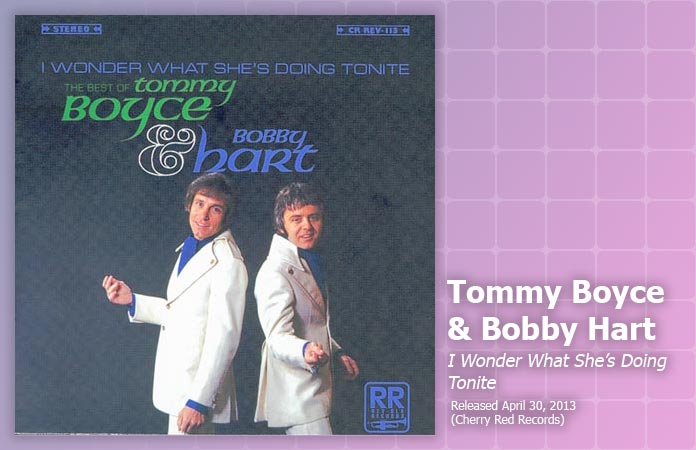
Both the liner notes and the back cover of I Wonder What She’s Doing Tonite posit that Tommy Boyce and Bobby Hart’s association with the Monkees hurt Boyce & Hart’s legacy—that by having written for a “made-for-TV” pop band somehow diminishes their songwriting credibility. Every Monkees album, save for the soundtrack to Head, had at least one Boyce and Hart song on it. And most of those songs were perfect little pop diamonds, carefully crafted and catchy as anything.
I Wonder What She’s Doing Tonite is a collection of the best of Boyce & Hart. Full of complex pop songs with amazing production, these songs will make you wonder just why they aren’t revered like Goffin/King or Mann/Weil. It’s pure joy in your ears.
Comments Off on Music Review: Tommy Boyce and Bobby Hart, I Wonder What She’s Doing Tonite
Waxing Nostalgic Cover Albums: Powerman 5000, Copies, Clones & Replicants
Published on July 17th, 2013 in: Music, Music Reviews, Reviews, Waxing Nostalgic |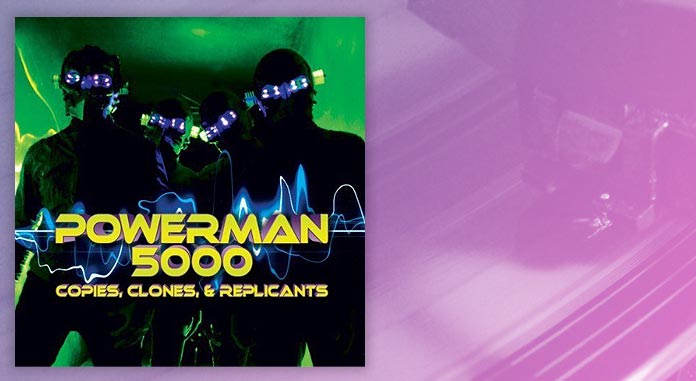
When you die and go to hell, and Satan forces you and the other souls doomed to eternal torment into an aerobics class, the only album your sadistic demon instructor will ever play will be Powerman 5000’s cover album, Copies, Clones & Replicants. You will scream in agony and beg for relief. It will not come.
Blu-Ray Review: The Fog: Collector’s Edition
Published on July 16th, 2013 in: Blu-Ray, Current Faves, DVD/Blu-Ray Reviews, Horror, Movie Reviews, Movies, Retrovirus, Reviews |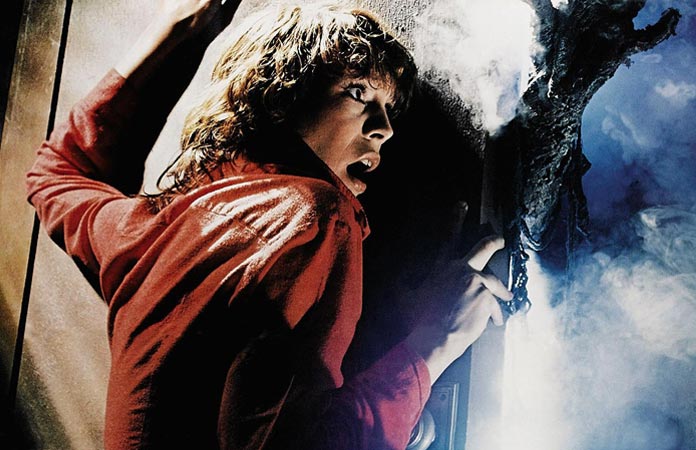
Many of you already know about a company called Shout! Factory. Some of you know that they now have a subgroup that specializes in horror, known as Scream Factory, which has been releasing films on their label since last year. Their horror catalog is growing, and hopefully will continue indefinitely. Their latest releases for the month of July are The Incredible Melting Man and The Fog, the latter a horror classic from the master of horror himself, John Carpenter.
The Fog is an original idea composed by Carpenter and Debra Hill, a simple story, yet pulled off with such finesse. Carpenter haunts you with his mesmerizing score and his beautiful, well-crafted shots.
Comments Off on Blu-Ray Review: The Fog: Collector’s Edition
Music Review: The Blow Monkeys, Feels Like A New Morning
Published on July 16th, 2013 in: Current Faves, Music, Music Reviews, New Music Tuesday, Reviews |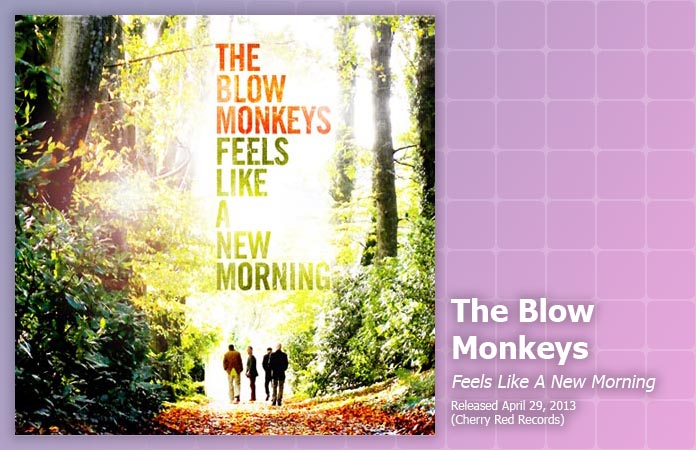
The Blow Monkeys have returned and I didn’t even know I’d missed them. The aptly titled Feels Like A New Morning is a collection of hopeful songs, sung by a man who is clearly at a crossroads, and who sounds pretty damn comfortable with himself. I dig it.
In the eighties, The Blow Monkeys were known for their jazzy, poppy confections with thought-provoking lyrics (and Dr. Robert’s hair, because that was amazing). Now older and wiser, Robert Howard is still writing thinky lyrics, and knows his way around a hook. But these songs aren’t confections; they’re a bit more savory.
Comments Off on Music Review: The Blow Monkeys, Feels Like A New Morning
Movie Review: Pacific Rim
Published on July 15th, 2013 in: Action Movies, Current Faves, Movie Reviews, Movies, Reviews, Science Fiction |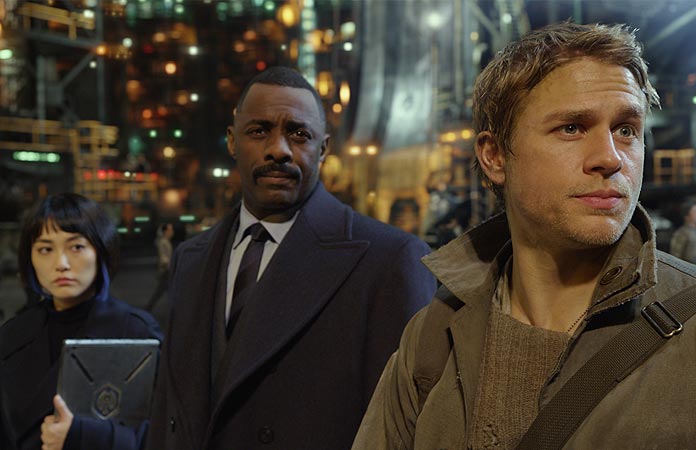
It’s summertime, which means some film fans are complaining that theaters are overrun with blockbusters, even though it’s a trend that’s existed since the ’90s and one that doesn’t seem to be losing any momentum. While it’s true that in many cases, Hollywood tentpoles focus more on big-budget effects than on a decent narrative, Pacific Rim is a delightful surprise that will remind you how enjoyable a truly well-done blockbuster film can be.
Comments Off on Movie Review: Pacific Rim
Music Review: Oblivians, Desperation
Published on July 12th, 2013 in: Current Faves, Music, Music Reviews, Reviews |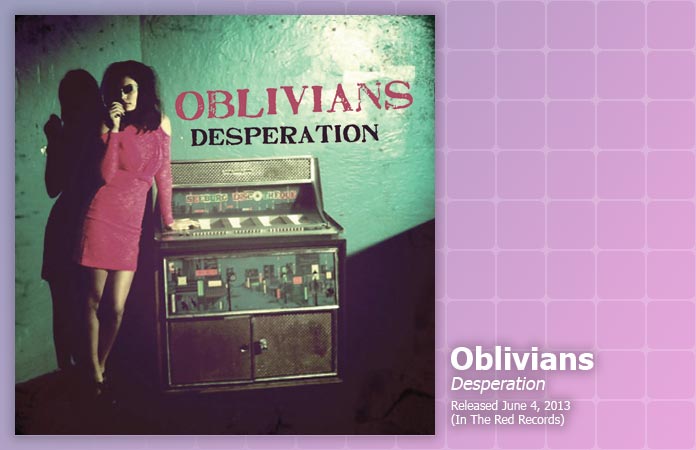
Although it was spectacular, the last Oblivians album was technically a collaborative effort with Mr. Quintron on nine tracks of cover versions and traditional songs. Desperation marks the first release from the band since 1997. The quality of the songs on the album reveals that the various musical endeavors of the trio (Eric Friedl, Greg Cartwright, and Jack Yarber) in the interim has paid off in a huge way.
Comments Off on Music Review: Oblivians, Desperation
Music Review: Preservation Hall Jazz Band, That’s It!
Published on July 9th, 2013 in: Current Faves, Music, Music Reviews, New Music Tuesday, Reviews |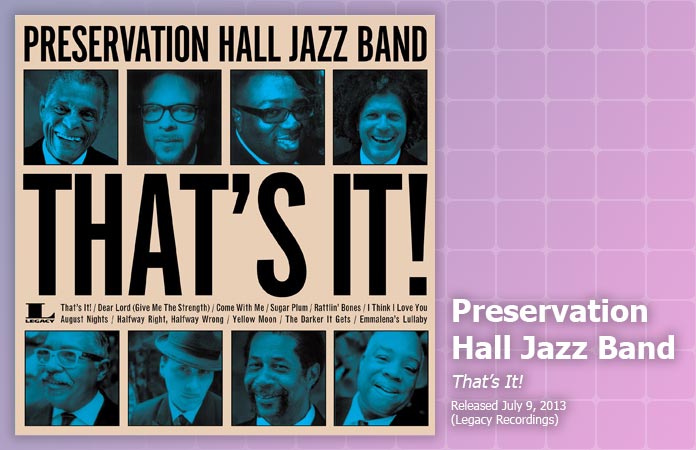
An important fact that not everyone knows is this: If a band has a tuba player in it, it is generally worth going to see live. This goes double for the Preservation Hall Jazz Band. The Preservation Hall Jazz Band was founded in 1961, dedicated to promoting traditional New Orleans jazz. Their new album That’s It! is their first album of entirely original music in their entire 50-year history. Produced by My Morning Jacket’s Jim James and Preservation Hall’s Creative Director, Ben Jaffe, That’s It! is an album of future standards.
Comments Off on Music Review: Preservation Hall Jazz Band, That’s It!
Movie Review: Big Star: Nothing Can Hurt Me
Published on July 3rd, 2013 in: Current Faves, Documentaries, Movie Reviews, Movies, Music, Reviews |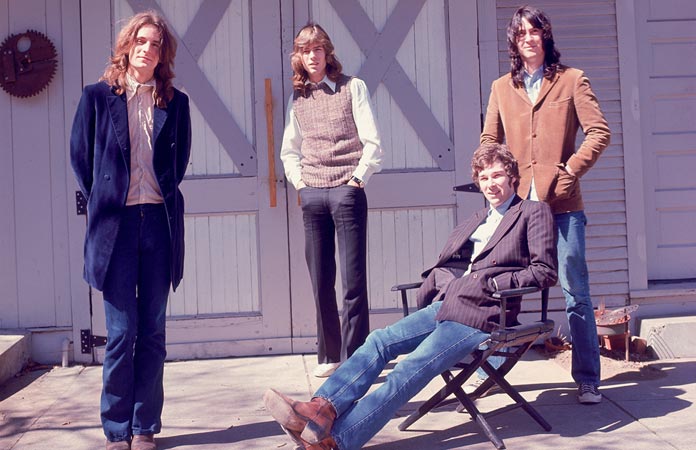
When I first heard Big Star, I wondered “Why weren’t these guys huge?” like all their other fans have been wondering for the last 40-plus years. Big Star: Nothing Can Hurt Me answers the why, but their lack of mainstream success still boggles the mind. When Brian Wilson sang “I Just Wasn’t Made For These Times,” he could have easily been singing about Big Star.
The story of Big Star is full of both good things—talent, camaraderie, ambition—and terrible ones—bad luck, personal demons, and death. This mixture of the bitter and the sweet is a good metaphor for Big Star’s music, which fuses the two in an unforgettable aural and emotional experience. This is what drew fans and critics to the band and what continues to characterize their legacy.
Comments Off on Movie Review: Big Star: Nothing Can Hurt Me
Music Review: The Three O’Clock, The Hidden World Revealed
Published on July 2nd, 2013 in: Current Faves, Music, Music Reviews, New Music Tuesday, Retrovirus, Reviews |By Cait Brennan
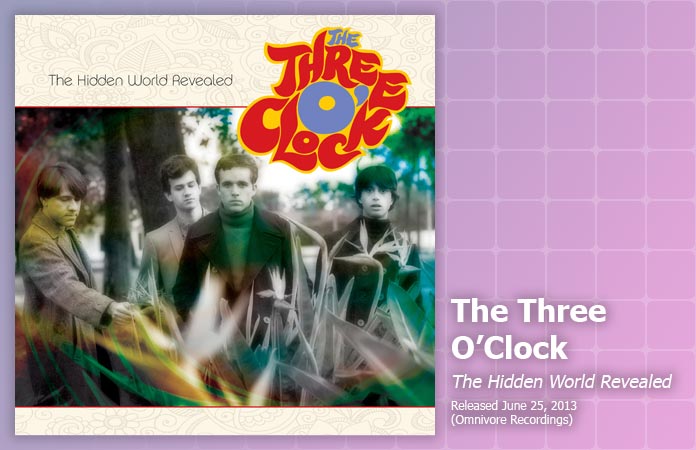
“You like pop, right?”
The grizzled, ancient record clerk—god, he had to be at least 28!—leaned over the counter.
“What, like Phil Collins?” I asked. Oh, it’s 1984 in Phoenix, by the way.
“God, no, that’s like—bubblegum or something,” he coughed, like he ate a big black bug. “Here,” he flips through the in-store play copies and pulls out a record with some weird pasty kids making kissy faces under a dilapidated pagoda. This crazy sugar-crash stomp comes storming out of the store speakers, swirling keys and guitars ringing in my head like the bells of Notre-Dame. And then the singer, with a voice like none other: “sitting complacent, are you there where I see you, with a cantaloupe girlfriend . . .” What?!
“They’re the Three O’Clock, man,” says he. “A little twee for my taste, but I kinda figured you’d dig it.”
The clerk got my $4.98 and I got Baroque Hoedown, the first EP by the Three O’Clock. It’s at least 20 years later before I even begin to suspect what a cantaloupe girlfriend might be, but I dive headlong into this “paisley underground” thing, rifling through record bins until I have all their stuff, which at that time included their album released as The Salvation Army, and their full-length LP, Sixteen Tambourines. They would go on to release great albums on IRS and Prince’s Paisley Park records, but for me, their stuff on the brilliant Lisa Fancher’s Frontier Records is still the greatest.
Music Review: Dave Davies, I Will Be Me
Published on July 2nd, 2013 in: Current Faves, Music, Music Reviews, New Music Tuesday, Reviews |By Julie Finley
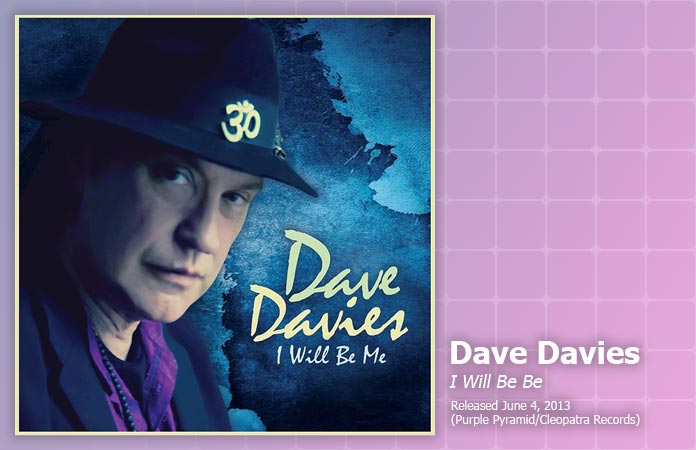
As a “lifer” in regards to being a Kinks fan, I felt that I should definitely review my childhood idol’s newest release, that idol being Dave Davies. I won’t give a history lesson on The Kinks (as there are enough online sources out there that could clue you in), but I do need to note that Dave’s relationship to his brother Ray has been well-documented as being unrestrained, to say the least. It is no mystery that Ray prefers that Dave live in his shadow, and that the competitive dysfunction between the two of them is one of the things that has led to both having a prolific output of work throughout both of their lives (even outside of The Kinks).
Quite honestly, though, Dave’s career is still often overlooked despite the fact he has been even more fruitful in his endeavors regarding the creation of new material. Ray hasn’t had that much solo material since The Kinks stopped recording in the mid-’90s, but the solo work he has put out is mostly rehashing his old catalogue with a few albums of brand new content. Dave has actually put out more original material than Ray since the ’90s! Yes, some of that has been re-releasing long-lost music that was never released as The Kinks, but the bulk of his output has been original material.