Blu-Ray Review: X-Ray (a.k.a. Hospital Massacre) and Schizoid
Published on September 12th, 2013 in: Blu-Ray, Current Faves, DVD/Blu-Ray Reviews, Horror, Movie Reviews, Movies, Retrovirus, Reviews |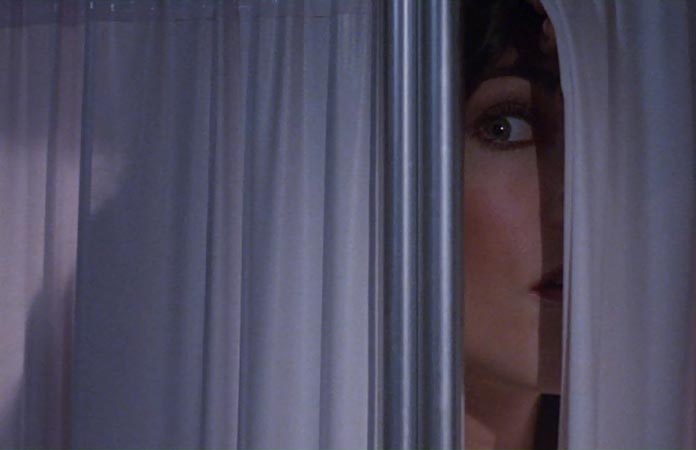
When I was younger, probably around the age of 14, I would help my mother at her job. She would pay me a hefty allowance and I could spend that on whatever I wanted. I used to save up my cash, go on Ebay, and buy box lots of VHS tapes of horror films (I still do this by the way). I would buy anything that I saw on there and spend my weekends staying up late to watch these movies.
One of those large lots I bought contained a cut VHS box fitted into a clear clamshell. It read Hospital Massacre. Upon pulling several titles to watch one night, it was first on my list. Not only was Barbi Benton in it, but Boaz Davidson also directed it. He also directed my favorite ’80s teen film of all time, The Last American Virgin (in the same year of 1982, I might add.)
Comments Off on Blu-Ray Review: X-Ray (a.k.a. Hospital Massacre) and Schizoid
Music Review: Holograms, Forever
Published on September 11th, 2013 in: Current Faves, Music, Music Reviews, Reviews |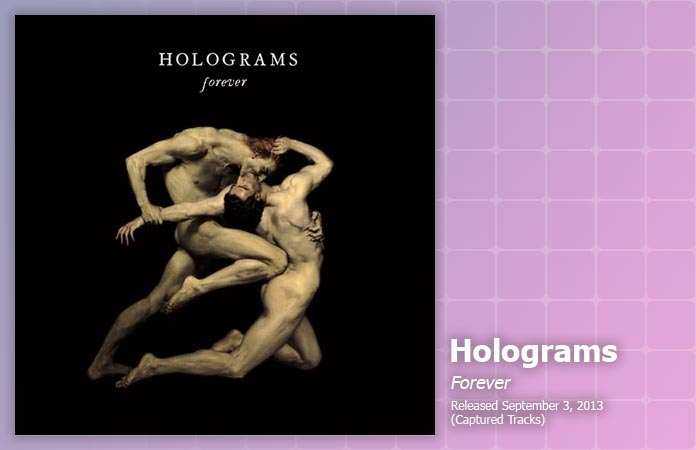
The first time I heard Holograms’ second album Forever, I got goosebumps. It was like being transported back to 1985, listening to college radio late at night, rushing to press the RECORD button on my stereo, waiting for the DJ to reveal the name of the band. But Holograms is not a post-punk ripoff.
The album takes off like a rocket with “Sacred State”: booming drums, bass dancing around the jagged guitar edges, and enormous vocals from singer Andreas Lagerström. The frenetic energy is undeniable. It’s tempered only slightly by a instrumental bridge towards the end that prepares you for a melodic assault of guitar slowly building to an intense emotional peak before the vocalized chorus joins in again. And that’s just the first song.
Comments Off on Music Review: Holograms, Forever
Blu-Ray Review: Frankenstein’s Army
Published on September 10th, 2013 in: Blu-Ray, Current Faves, DVD/Blu-Ray Reviews, Found Footage, Horror, Movie Reviews, Movies, Reviews, Science Fiction |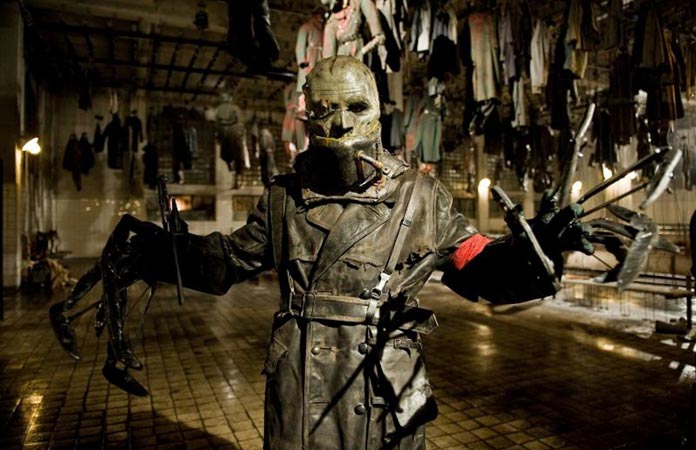
Frankenstein’s Army is the feature debut of director Richard Raaphorst, who’s worked as a concept artist and visualizer. A few years ago, he released some impressive teaser trailers for a planned film called Worst Case Scenario, which unfortunately never came to fruition because his financing fell through. Fortunately for us, he used many of those ideas in Frankenstein’s Army.
Frankenstein’s Army is less like a straight-up horror film and more like a home movie of a haunted house or a survival horror video game, but don’t let that scare you away, because then you’d be missing out on some incredible visuals.
Music Review: Glen Campbell, See You There
Published on September 10th, 2013 in: Current Faves, Music, Music Reviews, New Music Tuesday, Reviews |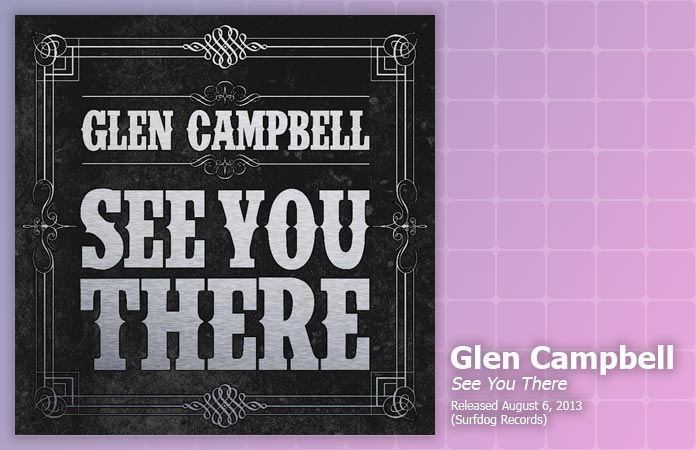
There’s debate on the Internets regarding whether releasing Glen Campbell’s See You There is exploitative. Campbell is suffering from Alzheimer’s disease, and some say this album—stripped down versions of his greatest hits—is just an attempt to cash in. I disagree, utterly. See You There is touching and triumphant—and painful to hear, but in a good way.
Comments Off on Music Review: Glen Campbell, See You There
Music Review: San Fermin, San Fermin
Published on September 10th, 2013 in: Current Faves, Music, Music Reviews, New Music Tuesday, Reviews |
San Fermin‘s self-titled debut is wildly ambitious. Full of songs that are like journeys, but journeys that end up in an entirely different place than you thought you might go, it’s a challenging, interesting listen. San Fermin is the brainchild of Yale-educated composer Ellis Ludwig-Leone, and he is ably backed by vocalists Jess Wolfe and Holly Laessig (of Lucius) and Allen Tate.
Comments Off on Music Review: San Fermin, San Fermin
TIFF 2013 Review: Brazilian Western
Published on September 9th, 2013 in: Current Faves, Film Festivals, Movie Reviews, Movies, Reviews |“Rich people design it; poor people build it.”
—João in Brazilian Western
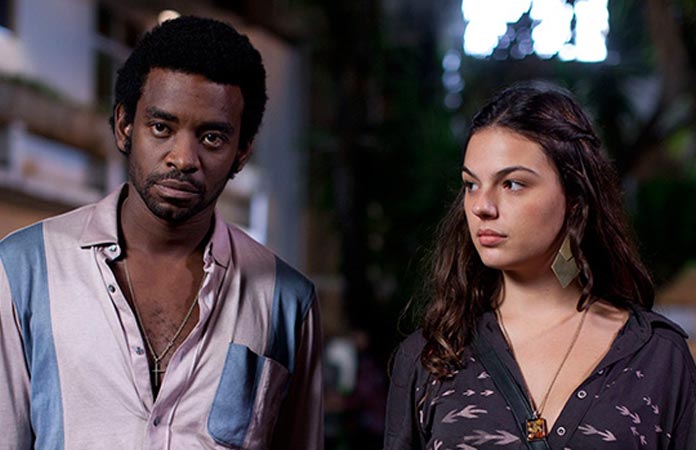
If you’ve heard the song “Faroeste Caboclo” by Legião Urbana, the storyline of Brazilian Western will be familiar to you. For those who haven’t, it follows the song’s same storyline: a poor young man named João moves to the city for a better life, becomes a drug dealer, and falls in love, only for his life to end in tragedy.
Revealing this information won’t ruin your enjoyment of the film. From the opening scenes—which are very much in the style of a Western—we already know the ending is a sad one. Watching the events unfold is what makes Brazilian Western worth seeing.
Blu-Ray Review: I Come In Peace (Dark Angel)
Published on September 9th, 2013 in: Action Movies, Blu-Ray, Current Faves, DVD/Blu-Ray Reviews, Movie Reviews, Movies, Retrovirus, Reviews, Science Fiction |
Just when I thought Scream Factory has outdone themselves, they have the balls to release Dark Angel (a.k.a. I Come In Peace). I honestly don’t know where to begin with a film like this. First, it has Dolph Lundgren. Second, it has Dolph Lund . . . wait. It doesn’t matter what else it has; this film is insanely badass.
Comments Off on Blu-Ray Review: I Come In Peace (Dark Angel)
Music Review: Various Artists, Mutazione: Italian Electronic & New Wave Underground 1980 – 1988
Published on August 31st, 2013 in: Culture Shock, Current Faves, Music, Music Reviews, Retrovirus, Reviews, Underground/Cult |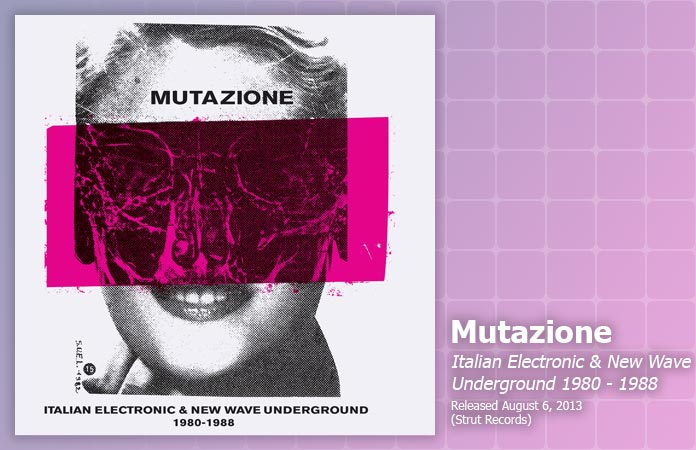
For those of us who still listen to much of the same post-punk music we listened to in the ’80s, discovering new bands from that time is as exciting as hearing those new bands who are obviously influenced by those same sounds. The recent release of Mutazione by Strut Records is cause for celebration. Mutazione is a fabulous, two-disc compilation with 26 tracks of Italian post-punk music from 1980 – 1988. The arrangement of the songs is superb, like an excellent mixtape made by a music-savvy friend. For that we can thank Alessio Natalizia of Walls, who curated the collection.
Comments Off on Music Review: Various Artists, Mutazione: Italian Electronic & New Wave Underground 1980 – 1988
Music Review: Ty Segall, Sleeper
Published on August 31st, 2013 in: Current Faves, Music, Music Reviews, Reviews |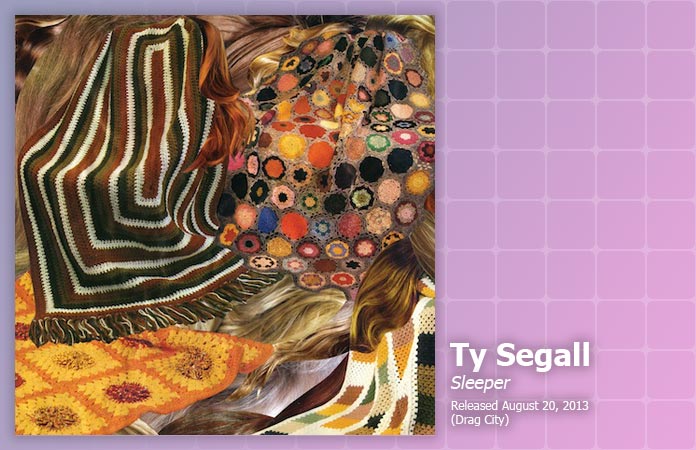
Ty Segall‘s music frequently shreds, so one wonders what the contingent of stage divers at his shows must think of his newest release Sleeper. Perhaps it’s the sonic antithesis to Fuzz, the upcoming project from Segall, guitarist Charlie Moothart, and bassist Roland Cosio, whose name describes the band accurately. Sleeper is mostly acoustic, but “Ty Segall Unplugged” it is not. There are amps and distortion, although both are kept to a minimum.
Comments Off on Music Review: Ty Segall, Sleeper
Music Review: The Copper Gamins, Los Niños de Cobre
Published on August 27th, 2013 in: Current Faves, Music, Music Reviews, New Music Tuesday, Reviews |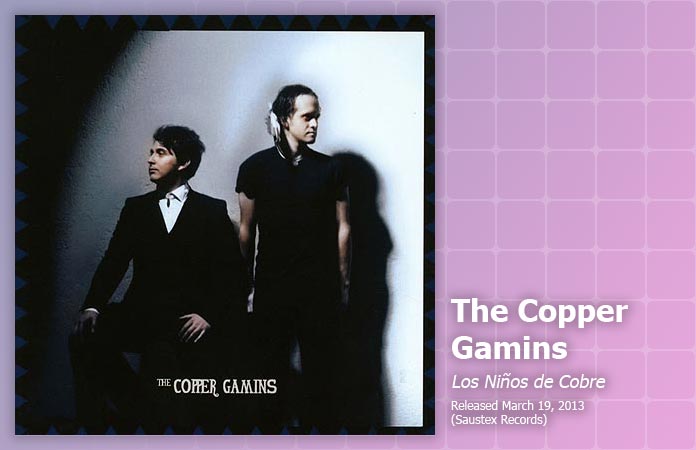
Critics sometimes use the phrase “more fun to talk about than to listen to” when describing an album that plays with new ideas and approaches to music. The inverse—that an album is more fun to listen to than to review or discuss—doesn’t come up as frequently. Los Niños de Cobre is an album that would live up to the inverse of that phrase. The qualities that make it compulsively listenable—its straightforward simplicity and the band members’ passion and skill—also make it an elusive subject for review. The Copper Gamins have created an album that makes an ideal soundtrack to long walks in the early-morning magic hour and humid, sleepless nights. When I listen to it, I feel as though I’m under a spell, but finding words to match the shimmering music on this disc is like chasing balls of mercury with my bare hands.
Comments Off on Music Review: The Copper Gamins, Los Niños de Cobre