Music Review: Tom McDermott, Bamboula
Published on September 24th, 2013 in: Current Faves, Music, Music Reviews, New Music Tuesday, Reviews |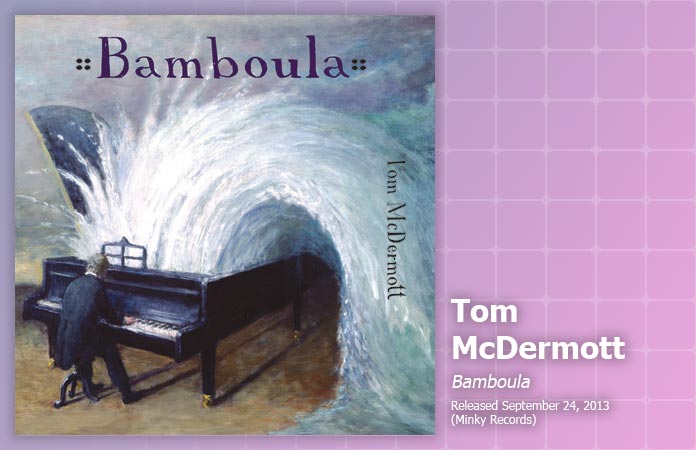
The veritable Van Dyke Parks has curated a collection culled from New Orleans-based piano god Tom McDermott’s previous albums. Bamboula is pure sonic pleasure from the first note.
Parks elaborates on just what makes McDermott’s playing and composing so astonishing: “As a composer, Tom’s compositions each read like a good short story, filled with motifs, anecdotes, and suspended sub-plots that all resolve in conclusion.” As I listened to Bamboula, I was struck by the visual nature of Tom McDermott’s music. Each song became the music for a movie I wanted to see or possibly be in, richly layered and fascinating. It’s transporting in a way that you long for music to be.
Comments Off on Music Review: Tom McDermott, Bamboula
DVD Review: Gimme The Loot
Published on September 23rd, 2013 in: Current Faves, DVD, DVD/Blu-Ray Reviews, Movie Reviews, Movies, Reviews |
“If you say in the first chapter that there is a rifle hanging on the wall, in the second or third chapter it absolutely must go off. If it’s not going to be fired, it shouldn’t be hanging there.”
—Anton Chekhov, 1904
Chekhov would probably find Gimme The Loot a frustrating venture. If he stuck it out through the final reel, unfazed by the colorful vernacular of working-class Brooklyn youths and their attempts at petty crime, he would probably gnash his teeth at writer/director Adam Leon’s failure at resolving many of the enticing leads promised in the film’s opening scenes. At a closer glance, however, the set-ups Leon has created for his protagonists serve as excuses to tail some teenagers through the New York boroughs and take a closer look at graffiti culture.
Comments Off on DVD Review: Gimme The Loot
Instantly The Worst: Ulli Lommel’s Black Dahlia
Published on September 23rd, 2013 in: Horror, Movie Reviews, Movies, Reviews |By LabSplice
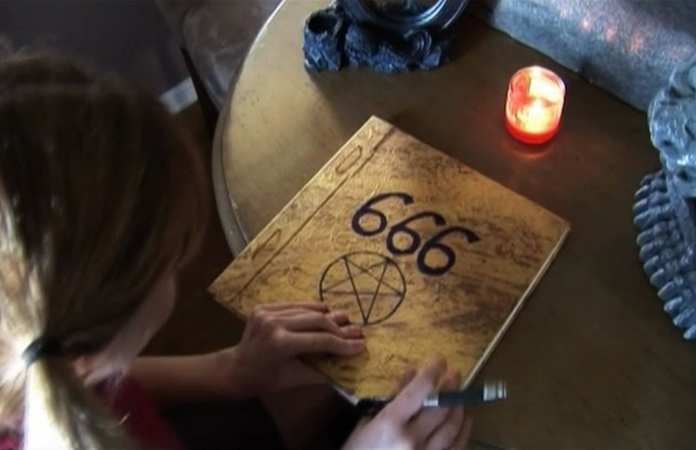
One of the inevitable outcomes of Video on Demand services is that they tend to monopolize our conversations about film. Many people—and I do not exclude myself from this—would rather seek out a new title on Netflix Instant or Amazon Prime than spend the extra money to rent something not available through those channels. This creates something of a cinematic echo chamber, where a smaller selection of titles is given preferential treatment. We want to share experiences and recommend films to others so we focus on a platform that we know many people have in common.
Still, even accounting for the smaller sample size, there are still many interesting conversations to be had about the catalogue of Netflix films. Thousands of films across all genres and nationalities currently vie for our attention, waiting in the cloud for us to press a single button and bring them down to our devices. There are films that can educate, films that can move, and even titles by some of the greatest and most talented filmmakers of each generation. And thanks to the data algorithms and crowdsourcing efforts of Netflix, each title is provided with a handy numerical score to give us a quick snapshot of its quality.
And one of them has to be ranked last.
Blu-Ray Review: Two Men In Manhattan
Published on September 21st, 2013 in: Blu-Ray, Current Faves, DVD/Blu-Ray Reviews, Movie Reviews, Movies, Retrovirus, Reviews |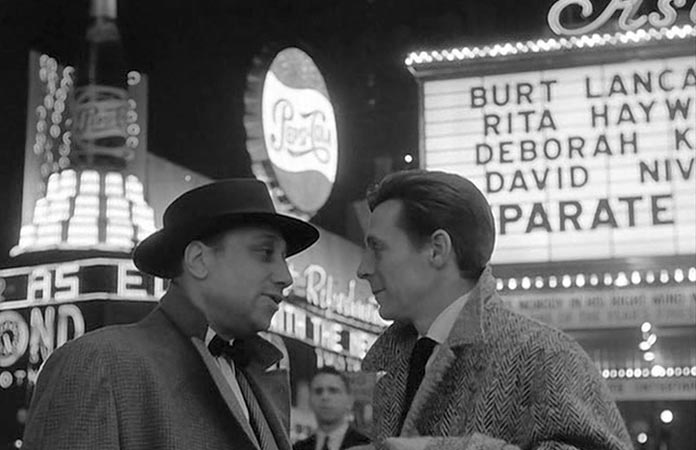
There’s a quote from Quentin Tarantino on the Blu-Ray case for Two Men in Manhattan: “Jean-Pierre Melville is to the crime film what Sergio Leone is to the western.” Those who’ve not yet heard of the French filmmaker might expect his films to be as brash and blood-soaked as Tarantino’s. Although Melville’s milieu was far more restrained, it’s no less exciting to watch.
Comments Off on Blu-Ray Review: Two Men In Manhattan
DVD Review: Simon Killer
Published on September 21st, 2013 in: Current Faves, DVD, DVD/Blu-Ray Reviews, Movie Reviews, Movies, Reviews |
How long has it been since you’ve come across the term “”mise-en-scène” (film students excepted). If most of the film reviews you read come from websites and blogs, it’s probably been a while. Although mise-en-scène, which “refers to everything that appears before the camera and its arrangement—composition, sets, props, actors, costumes, sounds, and lighting” is applicable to every film, it’s the gestalt of these individual aspects that differentiate a regular movie from the work of an artist in full command of the medium. Simon Killer belongs, wholeheartedly, in the latter category.
Comments Off on DVD Review: Simon Killer
Music Review: Various Artists, The Exquisite Corpse Game
Published on September 19th, 2013 in: Current Faves, Music, Music Reviews, Reviews |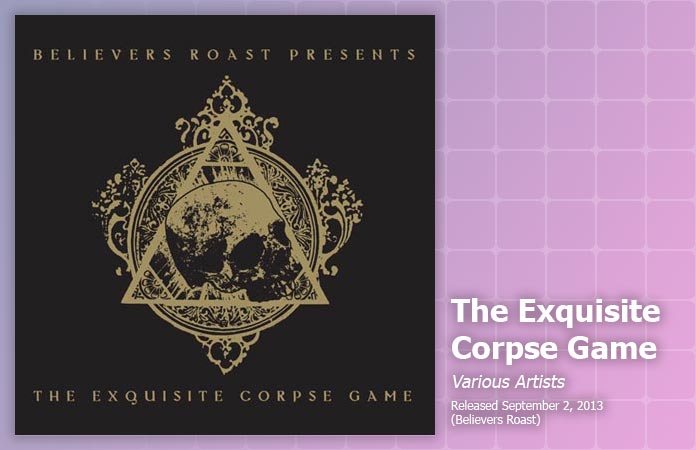
I first head the term “Exquisite Corpse” in the Bauhaus song of the same name, but I didn’t know what it meant or about its history. Popularized by the Surrealists, it is “a method by which a collection of words or images is collectively assembled. Each collaborator adds to a composition in sequence, either by following a rule or by being allowed to see only the end of what the previous person contributed” (Wikipedia).
This method seems perfect for a variety of artistic collaborations, particularly music, where it can be utilized to create a textured mixtape quality. Musician Kavus Torabi decided to embark on an exquisite corpse project through his own label, Believers Roast, and the results—two years in the making—are remarkable and intoxicating. Each artist was only allowed to hear the final 20 seconds of the previous installment and was not allowed to hear the entire collection until it was completed.
Comments Off on Music Review: Various Artists, The Exquisite Corpse Game
Music Review: Ha Ha Tonka, Lessons
Published on September 17th, 2013 in: Music, Music Reviews, New Music Tuesday, Reviews |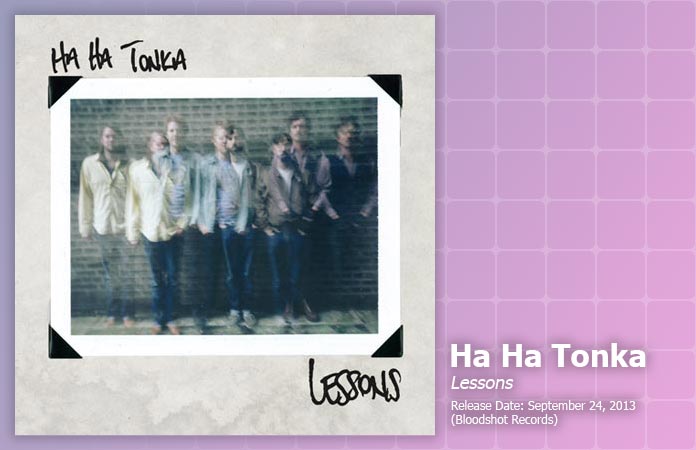
The delightfully named Ha Ha Tonka (named after a gorgeous state park in Missouri, replete with a crumbling mansion/hotel) are clearly at a crossroads. Their latest effort, Lessons, is a departure from their previous more stripped-down records, and is chock full of soul-searching, thinky lyrics. I’m not sure the change in direction was a good move.
Comments Off on Music Review: Ha Ha Tonka, Lessons
Music Review: Kenny Feinstein, Loveless: Hurts To Love
Published on September 17th, 2013 in: Music, Music Reviews, New Music Tuesday, Reviews |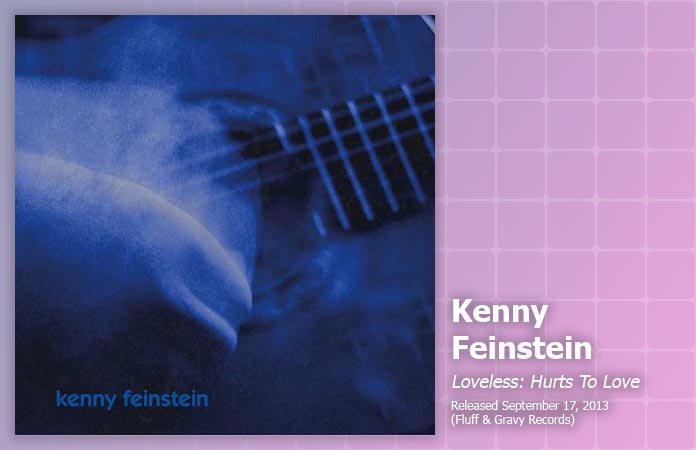
It became a cliché, nearly a joke, the reverence that rock critics had for My Bloody Valentine’s Loveless album, a singular document of noisy, sexy, melodic weirdness that loomed large in reputation for the 20-plus years since its release. This year has seen several tribute albums to it, somehow all of them excellent, but this latest from Portland-based Kenny Feinstein wins additional points for freshness, sincerity, and an obsessive attention to detail that would undoubtedly please the notoriously perfectionist MBV frontman, Kevin Shields.
Comments Off on Music Review: Kenny Feinstein, Loveless: Hurts To Love
Various Artists, ZZK Sound Volume 3
Published on September 13th, 2013 in: Music, Music Reviews, Reviews |
When I got a copy of ZZK Sound to review, I felt pulled in opposite directions. Many of the Latin alternative blogs and podcasts from which I get the latest music news cite the Argentine label ZZK Records as an innovative new label that marries the traditional folk idiom cumbia to more contemporary forms of music, particularly EDM. ZZK’s adventurous perspective piqued my interest, but their concentration in dance music gave me pause. I don’t go to the clubs enough to hear dance music the way it was meant to be heard, and if you asked me to tell you what EDM sounded like, I’d throw out the following words: amelodic, beat-heavy, high-endy, compressed production, “bricked” sound.
Comments Off on Various Artists, ZZK Sound Volume 3
TIFF 2013 Review: iNumber Number
Published on September 12th, 2013 in: Current Faves, Film Festivals, Movie Reviews, Movies, Reviews |
iNumber Number is a thoroughly enjoyable heist film from writer/director Donovan Marsh. There’s not a bit of flab to be found in its taut 96 minutes, all of which crackle with tension.
Comments Off on TIFF 2013 Review: iNumber Number