Music Review: Big Star: Nothing Can Hurt Me Soundtrack
Published on June 27th, 2013 in: Current Faves, Documentaries, Music, Music Reviews, Retrovirus, Reviews, Soundtracks and Scores |By Cait Brennan
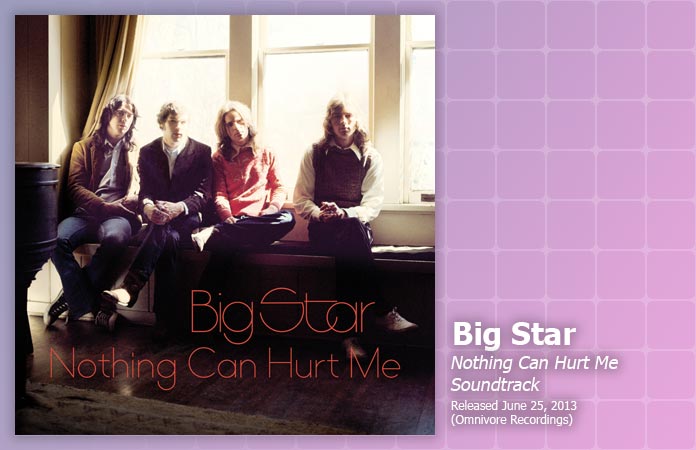
There’s a part of you that gets wistful sometimes when you see some secret treasure you love finally get its day in the sun. You think back to the day, seven worlds ago, when a friend of a friend handed you a cassette tape of some band you never heard of called Big Star, on an obviously fake record label called PVC Records. The friend gives you a knowing look and you don’t know; you don’t know you have a universe in your hand, that this grubby little tape is going to change your life, it’s going to detonate some ecstatic explosion inside you, and you will never be that person ever again. And a thousand miles later you chance across another copy in the cutout bin of some strip-mall record shop and you buy it for 49 cents and you put it in the hands of someone you love who’s never heard it, and you look at their uncomprehending expression and think “that was me, once upon a time.” And if you’ve chosen wisely and the quantum entanglement is aligned just so, the chain reaction goes on.
Comments Off on Music Review: Big Star: Nothing Can Hurt Me Soundtrack
Waxing Nostalgic Cover Albums: Styx, Big Bang Theory
Published on June 26th, 2013 in: Music, Music Reviews, Reviews, Waxing Nostalgic |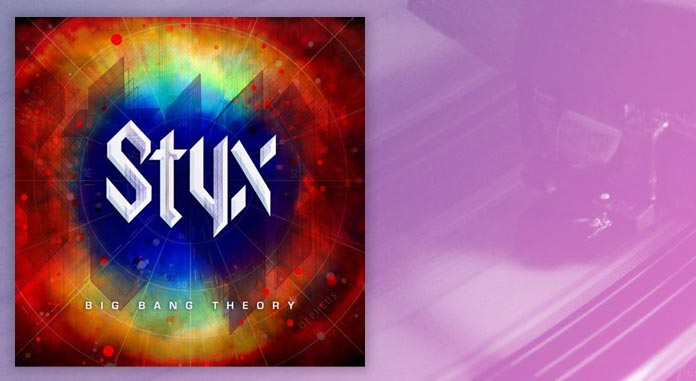
In retrospect, there weren’t too many corporate pop/rock bands quite as ballsy as Styx. They were great proponents of the concept album, managing to score hit after hit with singles that, taken out of their album’s context, gave no clue to the listener of what they were really about. While I was slow dancing with yet another girl who wouldn’t let me touch her butt to “The Best of Times” in Tracy White’s basement during another hormonally-interminable eighth grade party, I had no idea I was listening to a song about America, rising like a phoenix from the ashes of the Seventies and rushing headfirst into the Eighties. I just knew I was staying a virgin for another long weekend.
Styx’s biggest hits tended to be the namby-pamby Dennis DeYoung ballads. The rocking songs like “Heavy Metal Poisoning” never had quite the same popularity. It’s interesting, then, that for their covers album, Big Bang Theory, the band reaches out for the rockiest rock they can rock your rocks to. Even more interesting is how well it works.
Comments Off on Waxing Nostalgic Cover Albums: Styx, Big Bang Theory
Random Rant: Delerium Tremens
Published on June 25th, 2013 in: Culture Shock, Music, Random Rant |By Paul Casey

If I could speak for my nationality, I would say this: Christy Moore’s song “Delirium Tremens” and the differences between its live and studio versions account for all significant space between the assumptions about Ireland and the realities which are suffered from living here. A look at the differences between these songs also gives insight into the nature of the man who created them. It displays the capacity of Traditional Irish music to express a more complex reality than craic and stompy dancing.
Comments Off on Random Rant: Delerium Tremens
Music Review: Bosnian Rainbows, Bosnian Rainbows
Published on June 25th, 2013 in: Current Faves, Feminism, Music, Music Reviews, New Music Tuesday, Reviews |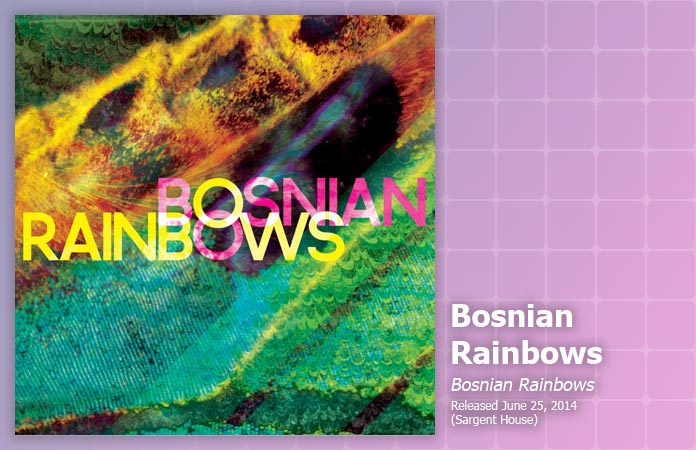
Remember the ’80s? Not the kitschified dayglo era of synthesizers and Patrick Nagel portraits, but the pre-Nirvana era of college radio, fly-by-night indie labels, and adventurous bands with eclectic influences. Bosnian Rainbows, a Latin alternative supergroup-of-sorts, exemplifies the magpie musical styles and willingness to experiment that made the previous generation’s proto-alternative bands so addictive.
Bosnian Rainbows trade in expansive, cinematic melodies, driven by curlicuing guitar riffs and strong arrangements. Omar Rodriguez-Lopez, the creative force behind the band, perfected these skills with his previous band, the Mars Volta. Reacting to what he saw as a dictatorial manner of producing and fronting a band, the guitarist opted for a more democratic experience with his next band.
Comments Off on Music Review: Bosnian Rainbows, Bosnian Rainbows
Music Review: Dream Affair, From Now On EP
Published on June 24th, 2013 in: Current Faves, Music, Music Reviews, Reviews |By Julie Finley

Dream Affair are a trio of musicians from various locales that started out in Philly, but are currently based out of Brooklyn. They have undergone a few line-up changes since their inception, but the primary figure has been Hayden Payne (vocals, guitar, and various electronics). The other members are Abby Echiverri (synths, violin, and vocals), as well as Bryan Spotlore (bass). I am not sure if they classify themselves in a genre per se, but their music tends to be filed under “post-punk,” “new wave,” “cold wave,” “Goth rock,” etc.
From the sound of their latest release, From Now On, those various genre labels wouldn’t be too far off the mark. The problem with those specific genre labels is that any band falling under that umbrella is inevitably going to be compared to Joy Division or The Sisters of Mercy. Yes, there are many newer bands that clearly take their cues from their forefathers, but this is what I find different about Dream Affair.
Comments Off on Music Review: Dream Affair, From Now On EP
Music Review: Dessa, Parts of Speech
Published on June 24th, 2013 in: Music, Music Reviews, Reviews |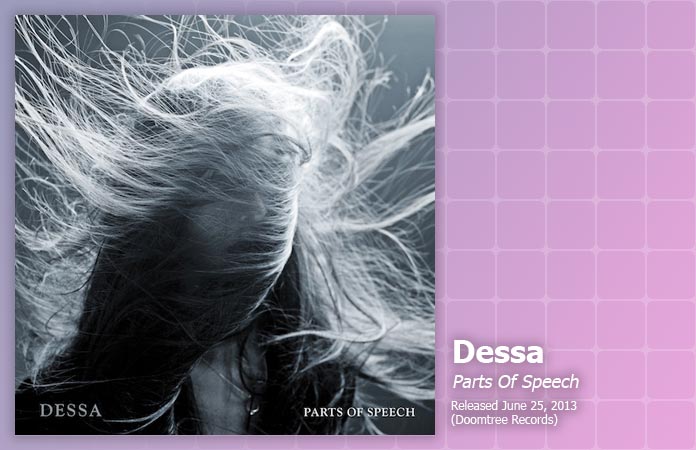
Performance poet Dessa burst on the scene in the mid-oughties with A Badly Broken Code, an inventive record that meshed the confrontational attitude of hip hop, the confessional qualities of poetry, and an appealingly rough-hewn production aesthetic. These seemingly disparate elements came together for an album that explored familial love, particularly Dessa’s relationship with her disabled younger brother. Her flow was unimpeachable, and she transitioned well between spitting triples and crooning verses. Her use of analog and toy instruments underscored these themes and gave the album a greater poignancy.
In the three years since A Badly Broken Code dropped, Dessa’s interest in exploring new genres and working with different styles of music is understandable. Parts of Speech represents a transition for Dessa: from the experimental rap style in which she made her name into a more traditional pop music idiom.
Comments Off on Music Review: Dessa, Parts of Speech
Movie Review: iLL Manors
Published on June 20th, 2013 in: Culture Shock, Current Faves, Found Footage, Movie Reviews, Movies, Music, Reviews |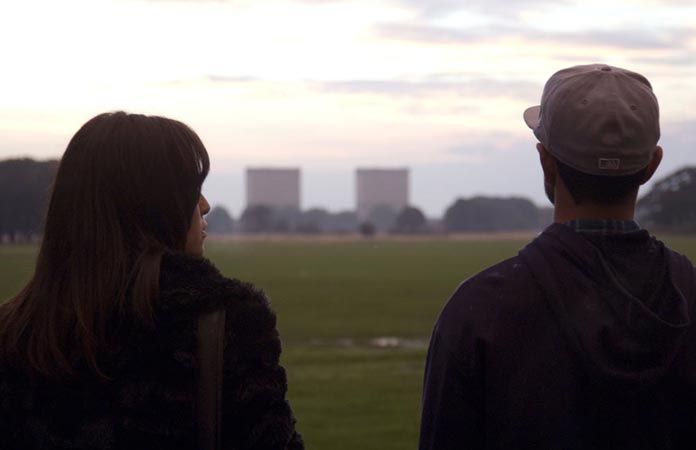
iLL Manors, the turbulent, invigorating debut film from Ben Drew (a.k.a. hip hop artist Plan B), begins with Drew rapping about the harsh realities of life in a council estate. It’s the kind of intro that will either suck you in or turn you off immediately, but it will definitely get your attention. You should stick with the film, though, because it reveals an incredible depth of insight into and sympathy for a segment of society that is so frequently misunderstood, ignored, or forgotten: kids who grew up in the social services/foster care system and whose lives have been shattered as a result.
Comments Off on Movie Review: iLL Manors
Waxing Nostalgic Cover Albums: Ozzy Osbourne, Under Cover
Published on June 19th, 2013 in: Music, Music Reviews, Reviews, Waxing Nostalgic |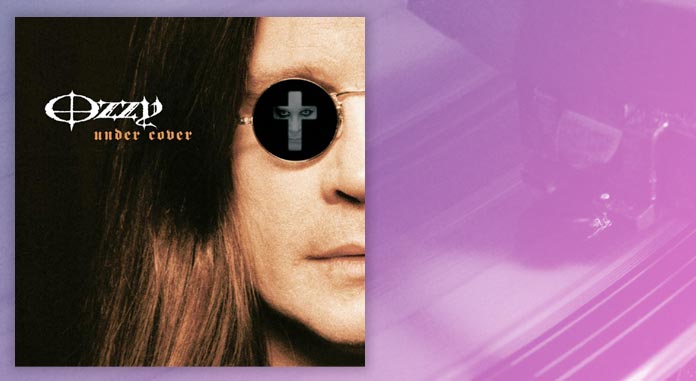
Ozzy Osbourne has been around since, what, the Dark Ages? Has he ever not been somewhere, skulking around a stage with one hand in the air and one hand on his stomach, like he’s about to do a drunk trick? He has done it all, seen it all, and even if reality television success did spoil Ozzy Osbourne for a while, he still has the respect of musicians and metalheads alike. It’s not a surprise to find three generations of Ozz-heads at a show. He has become transcendent.
Comments Off on Waxing Nostalgic Cover Albums: Ozzy Osbourne, Under Cover
Music Review: Piñata Protest, El Valiente
Published on June 18th, 2013 in: Current Faves, Music, Music Reviews, New Music Tuesday, Reviews |
When I hit play on my demo copy of El Valiente, a series of brostep-style drops came out of my speakers. My heart sank. Had “los muy chingóns de Norteño Punk” gotten sidetracked by that most loathsome of EDM subgenres? One second and a long yip later, I realized I didn’t have to worry.
For the uninitiated, Piñata Protest has mastered a sound that blends the buzzing cacophony and shout-along choruses of punk with Norteño, an accordion-driven form of traditional Mexican music. While the two genres may seem at odds with one another, the fast tempos and slyly political lyrics for which Norteño is known play well with the exuberant energy of punk. It’s a wonder other bands haven’t tried this kind of you-got-your-peanut-butter-in-my-chocolate crossover.
Comments Off on Music Review: Piñata Protest, El Valiente
Assemblog: June 14, 2013
Published on June 14th, 2013 in: Assemblog, Canadian Content, Copyright/Piracy, Legal Issues, Movies, Music, Science Fiction, Trailers, TV, Upcoming Events |
Xanadu, 1980
New this week on Popshifter: Emily reviews Dark, the latest from the British Electric Foundation; Chelsea appreciates the “exuberant energy” of CSS’s Planta; Melissa thinks Gap Band VII has “moments of brilliance” and enjoys the “invariably perfect” Volume 4 of Music from True Blood; Jeff introduces us to his next Waxing Nostalgic series on cover albums; and I review the new film Peaches Does Herself from the inimitable Peaches and the “remarkably original” John Dies At The End, now on DVD.
Comments Off on Assemblog: June 14, 2013