Music Review: Serge Gainsbourg, Intoxicated Man 1958 – 1962
Published on August 15th, 2013 in: Culture Shock, Current Faves, Music, Music Reviews, Retrovirus, Reviews |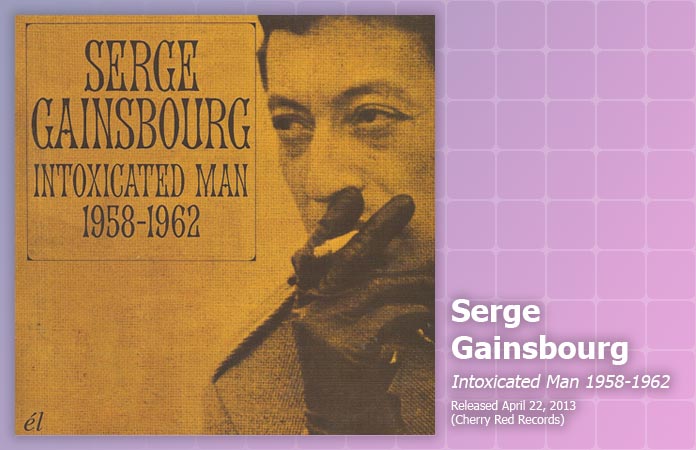
Serge Gainsbourg was a provocateur. That cannot be disputed. He wrote songs about subjects that raised the eyebrows of the world (Incest? Check. Sodomy? Check. Cigarettes? Heaven forefend, but check) and courted notoriety. Still, the man was a poet and a great wit.
Intoxicated Man 1958-1962 is a tantalizing glimpse into the origins of Serge Gainsbourg. A vast collection (66 tracks), it illuminates his early career as a chanteur, singing story-driven songs. Full disclosure: I know only the most rudimentary French. I could pick out the occasional word I understood (like window and love— he sings quite a bit about windows), so I missed some of the nuances of lyrics. It was a challenge.
Comments Off on Music Review: Serge Gainsbourg, Intoxicated Man 1958 – 1962
Music Review: Los Nuggetz: ’60s Garage and Psych From Latin America
Published on August 14th, 2013 in: Culture Shock, Current Faves, Music, Music Reviews, Reviews |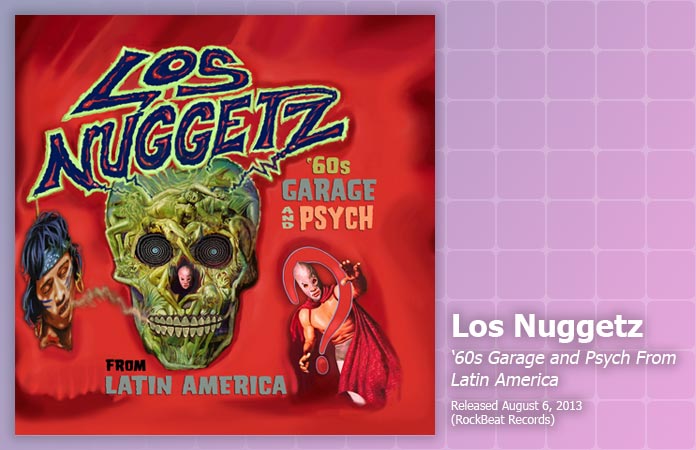
If music is the universal language, then garage rock was a generational dialect of rebellion. Bands like The Beatles and The Rolling Stones inspired an infinite number of teenagers to take to their garages and annoy their parents with three chords and ten decibels. While American and British garage bands have been exhaustively exhumed and cataloged, their peers in Spain and South America have not received the same treatment . . . until now. Los Nuggetz, a four-disc compilation, showcases almost 100 bands that put out singles during garage rock’s peak period of 1964-1968.
Comments Off on Music Review: Los Nuggetz: ’60s Garage and Psych From Latin America
Music Review: Demon Queen, Exorcise Tape
Published on August 13th, 2013 in: Current Faves, Music, Music Reviews, New Music Tuesday, Reviews |By Ricky Lima
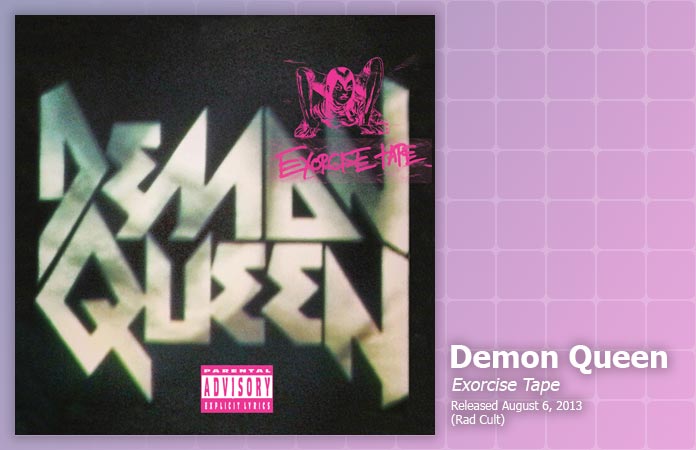
Demon Queen‘s first album Exorcise Tape has been officially described by lead vocalist Zackey Force Funk as “really about satanic stripper shit.” I don’t think I’ve heard a more accurate description of an album in my life. Exorcise Tape is dark, sexy, and super catchy. Zackey Force Funk is totally right; this is the kind of music they’d play in a strip club in Hell, and if that’s the case, that’s a place I want to go to. Zackey Force Funk and TOBACCO have knocked it out of the park in their first collaboration.
Comments Off on Music Review: Demon Queen, Exorcise Tape
Music Review: Minks, Tides End
Published on August 9th, 2013 in: Current Faves, Music, Music Reviews, Reviews |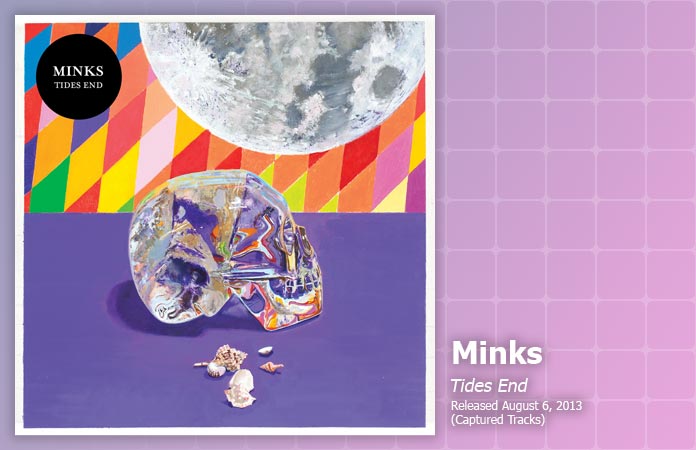
On their second album, Tides End, Minks have created a distinctively ’80s UK-pop feeling. But they’re not Depeche Mode or Duran Duran (not that there’s anything wrong with that). On these ten songs Minks are more reminiscent of bands like The Korgis or Close Lobsters, with the quirky synth sounds of pre-Different Class era Pulp adding a unique element of modernity. There’s also no shortage of New Order-esque guitar. Oddly, Sonny Kilfoyle, who is Minks on this album for all intents and purposes, lives in Long Island.
Comments Off on Music Review: Minks, Tides End
New Millennium R&B: A Listener’s Guide
Published on August 7th, 2013 in: Music, Top Twenty Lists |By Paul Casey

The-Dream
“DJ you know you wrong, enough with the motherfucking dance songs. You gotta slow it down.”
—The-Dream, “Slow It Down”
Music Review: The Fun Boy Three, The Fun Boy Three
Published on August 6th, 2013 in: Current Faves, Music, Music Reviews, New Music Tuesday, Retrovirus, Reviews |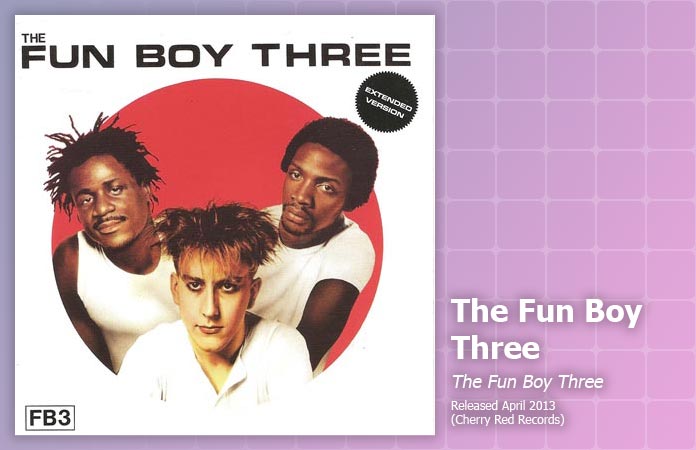
The re-release of The Fun Boy Three’s eponymous debut album makes for fascinating, exhausting listening. A mix of musical styles—ska, rocksteady, jazz, dancehall—primitive percussion, sharp horns, and smart harmonies, it all seems so light and pleasant. Until you listen to the lyrics. Politically aware and a capsule of the fear and paranoia of Thatcher’s Britain in the early 1980s, these are not songs for a blithe singalong. Which is good.
Hatching fully formed from the forehead of The Specials after feeling creatively stifled, Terry Hall, Lynval Golding, and Neville Staples created something bold. These songs didn’t need to be arranged for horns and female vocalists (though on several tracks they are joined by Bananarama, to great effect) and the result is stripped down and innovative. The Fun Boy Three sounds immediate still.
Comments Off on Music Review: The Fun Boy Three, The Fun Boy Three
Music Review: Scared To Get Happy: A Story of Indie-Pop 1980 – 1989
Published on August 5th, 2013 in: Current Faves, Music, Music Reviews, Retrovirus, Reviews |
Scared To Get Happy takes on the daunting task of documenting the evolution of indie-pop in the 1980s. Given the diversity of styles that can fall under the indie-pop umbrella, a comprehensive study of all facets of the genre would be nearly impossible, especially in the span of five discs. But the compilation makes things more manageable by limiting its scope. Focusing exclusively on British artists and evoking a particular time and place in musical history, it endeavors to tell a story rather than be a definitive guide.
Comments Off on Music Review: Scared To Get Happy: A Story of Indie-Pop 1980 – 1989
Bill Doss: The Man Who Defined A Transparent Dream
Published on August 1st, 2013 in: Music |By John Lane

Detail of cover art for Black Foliage: Animation Music Volume One by William Cullen Hart
It’s hard to believe that a year has passed since the death of Bill Doss, the co-captain of the late-’90s band, The Olivia Tremor Control. He died at age 43 (terribly young), and if you believe the rumor, with a guitar in his hand. Cause of death was not revealed to the public, which was probably for the best as The Olivia Tremor Control (and their cohorts in The Elephant 6 Collective, Athens’ own musical and larger equivalent of the Algonquin Round Table) possessed a certain absurdist magic that would be too sad to spoil with grim reality.
I discovered The Olivia Tremor Control in the late ’90s, when a fellow Beach Boys enthusiast wholeheartedly recommended them to me—the usual drill: “If you like harmonies and . . . ” then you’ll love OTC. Their two albums (which included the then-just-released Black Foliage) accompanied me on a long journey from the center of Iowa to Minneapolis, and it can be safely said that these two albums were game changers in every sense of the word for me.
Waxing Nostalgic Cover Albums: Replicants, Replicants
Published on July 31st, 2013 in: Music, Music Reviews, Reviews, Waxing Nostalgic |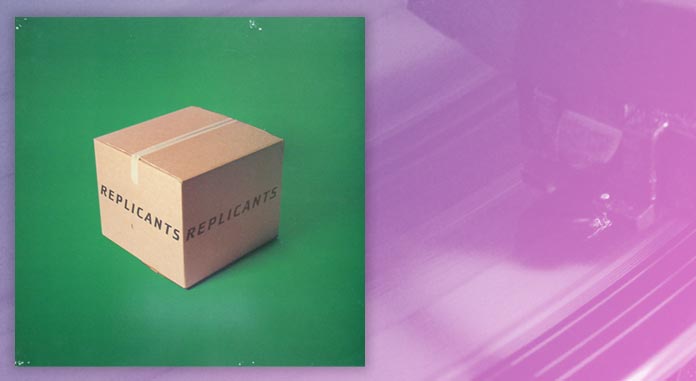
Take the guys from space-rock band Failure, Tool’s first bassist, and a kick-ass keyboardist and set them to deconstructing and rebuilding some of the finest rock songs of the 1970s and 1980s. The result is the band (and their eponymous 1995 release), Replicants.
It’s, well, a little weird. Therefore, I love it.
T (more…)
Comments Off on Waxing Nostalgic Cover Albums: Replicants, Replicants
Random Rant: No, Being Average Isn’t Worse Than Being Bad
Published on July 31st, 2013 in: Critics/Criticism, Gaming, Music, Over the Gadfly's Nest |By Paul Casey

If you have been reading music publications for any length of time, you will be familiar with the following:
“Much like the worst direction you can go in is no direction, so is inoffensiveness worse than taking a stand, and thus the boring album is in a way worse than even a terrible album. An album that is full-on awful will always get minimal scores, but an album that is accomplished but boring is going to attract the dreaded three-star review—so often the calling card of the most inessential music of all (if your album is best described as “pleasant” then you’re in serious trouble). A one-star album can’t be boring, because even if the music is godawful, it’s WHY it’s awful that is itself entertaining—a one-star review is inherently entertainment, which is why you’ll always read one when you’re skimming the reviews column. But who the hell wants to read the three-star reviews, particularly as they’re all identical (“IT’S NOT TERRIBLE, BUT IT’S LACKING. IT FALLS SHORT, BUT IS A STEP IN THE RIGHT DIRECTION”). And boring as fuck.
The opposite of enjoyment is not disgust; it’s tedium, because in a life so cruelly short, there’s nothing worse than being forgettable. The most disgusting pizza I’ve ever had was the one that accidentally had dish soap in it (SECRET FAMILY RECIPE), yet of all the ones I’ve eaten, it alone has survived the years as an amusing anecdote. It’s the middling three-star stuff you won’t remember. The albums from artists you respect that you’ve had forever but played once (REM are like your parents—you know they’re good, but you never listen to them). A reworking of ratings systems might help, but if we’ve gone this far without rating entertainment based on how entertaining it is, then why start now? The accepted method of rating albums isn’t terrible, of course, it’s just lacking. It falls short, but it’s a step in the right direction. I’d give it . . . 3 stars out of 5, let’s say.”
—”The 5 Worst Kinds of Album Every Music Fan Has Bought,” Cracked