Book Review: Comfort Foods: This Ain’t Your Momma’s Cooking!
Published on October 21st, 2013 in: Book Reviews, Books, Current Faves, Horror, Reviews |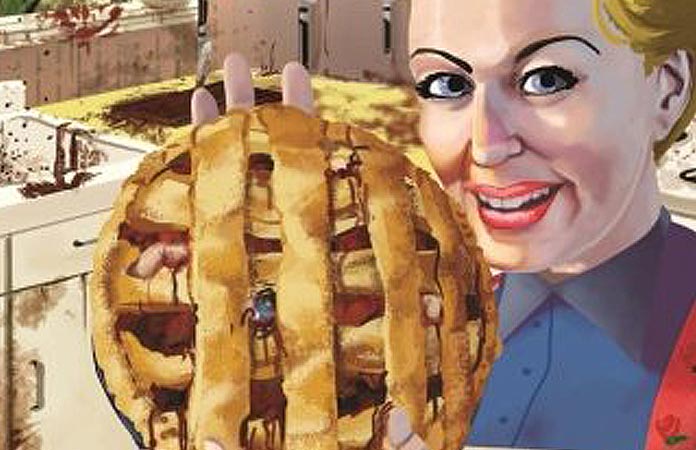
October is here! And just in time for Halloween, the Nashville Writer’s Group presents Comfort Foods, a horror anthology edited by Nashville author Nikki Nelson-Hicks. The collection includes 13 short stories from local writers, many of which have distinctly Southern, if not uniquely Nashville, flavor to them. Some of these tales offer new takes on classic chills such as ghosts or zombies, and others invent entirely new nightmares for the reader.
Comments Off on Book Review: Comfort Foods: This Ain’t Your Momma’s Cooking!
TADFF 2013 Movie Review: The Battery
Published on October 17th, 2013 in: Current Faves, Film Festivals, Horror, Movie Reviews, Movies, Reviews |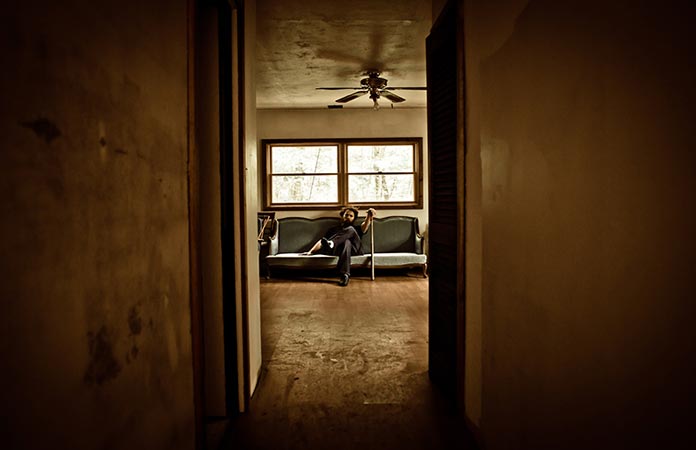
What would happen if the only other person remaining after the apocalypse was your annoying co-worker who always had his headphones on? What if the only other person smelled terrible? It may sound comical, but these are the hard questions you have to ask yourself when watching The Battery. Despite taking place after an apocalypse (of the Z-word variety), there are definitely funny moments, but on the whole, The Battery is a brutal movie. Things get fucked up and people die.
Comments Off on TADFF 2013 Movie Review: The Battery
Assemblog: October 11, 2013
Published on October 11th, 2013 in: Assemblog, Critics/Criticism, Horror, Movies, Trailers, TV |
Open Grave
New this week on Popshifter: I am somewhat confounded by The English Teacher (now out on DVD), rather addicted to Thick Snow Magic, the new EP from After The Ice, caught in the throes of Mustang, Electric Six’s latest, and delighted by The Walking Dead Season 3 on DVD; Melissa is on a roll with reviews of a Joe Tex reissue, the latest album from Seasick Steve, and a much-loved Alex Chilton bootleg; Chelsea loves Rookie Yearbook Two, the print counterpart to Tavi Gevinson’s popular website; Jeff is terrified of Al Stewart’s “Year of the Cat” but urges everyone not to miss Goblin on their current tour; and Julie brings us a hysterically funny recap of 15 laughably horrible videos.
DVD Review: The Walking Dead, Season Three
Published on October 11th, 2013 in: Current Faves, DVD, DVD/Blu-Ray Reviews, Feminism, Horror, Reviews, TV |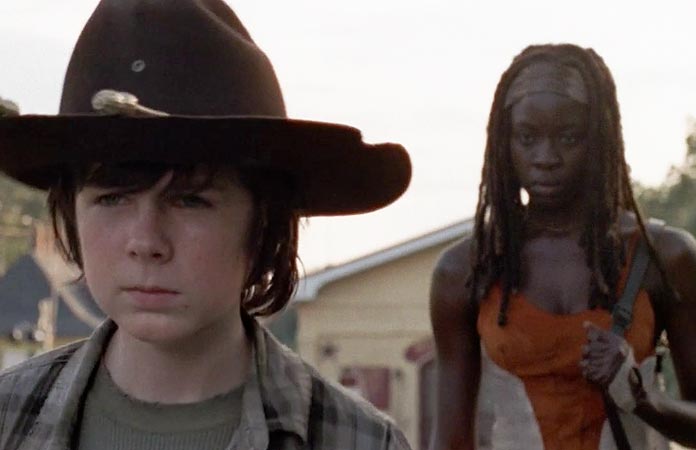
For a while, it seemed like The Walking Dead was dead to me. While Season Two had its good points, an overall sense of frustration with the static nature of the narrative made me leery of staying loyal to the show. Cutting the cord a couple of years ago meant that I couldn’t watch The Walking Dead air in real time nor on the Internet (and I’m not into torrents). The third season of the show, however, has reminded me of everything I loved about it in the first place and also managed to surprise me in ways I did not expect.
Concert Review: Goblin with Secret Chiefs 3 at The Orange Peel
Published on October 9th, 2013 in: Concert Reviews, Horror, Movies, Music, Obituary, Reviews, Soundtracks and Scores |By Jeffery X Martin
All photos by Hannah Martin
Asheville, NC
October 3, 2013

It takes a special kind of nerd to drive to a different state to see a band best known for their soundtracks for horror movies directed by one guy, mostly, and they’re all Italian. This is a niche, you understand. It isn’t like saying, “Oh, we’re going to see Lynyrd Skynyrd.”
Being a Goblin fan takes commitment.
When Goblin played the Orange Peel in Asheville, NC on October 3, it was the second night of their first North American tour ever. This is a band that’s been around over 40 years. For horror score fans, this was Geek Zeppelin.
Comments Off on Concert Review: Goblin with Secret Chiefs 3 at The Orange Peel
Electric Lady (Kiss) Land: Blade Runner and R&B
Published on September 30th, 2013 in: Horror, Movies, Music, Science Fiction |By Paul Casey
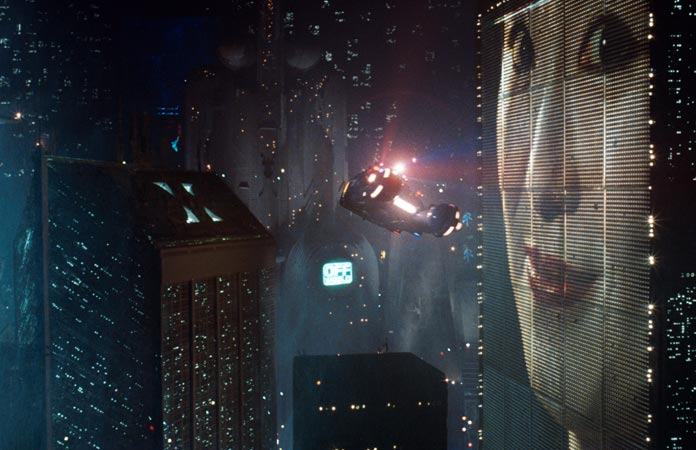
“I’ve seen things you people wouldn’t believe. Attack ships on fire off the shoulder of Orion. I watched C-beams glitter in the dark near the Tannhauser gate. All those moments will be lost in time… like tears in rain. Time to die.”
—Roy Batty in Blade Runner
Comments Off on Electric Lady (Kiss) Land: Blade Runner and R&B
DVD Review: V/H/S/2
Published on September 28th, 2013 in: Current Faves, DVD, DVD/Blu-Ray Reviews, Found Footage, Horror, Movie Reviews, Movies, Reviews |
Here’s a fun experiment to try! Sit ten people around a campfire on a moonless night and start telling scary stories. Everyone takes a turn. What you’ll find quickly enough is that not everything scares everybody. One person may be frightened by ghost stories. Another may be terrified of demonic possession tales. One never knows.
That’s the joy—and the potential for failure—found within any horror anthology film. They’re all scattershot. Even the most ambitious of them (I’m thinking The ABCs of Death) have sections that miss the mark completely (although “D is for Dogfight” was a harrowing piece of storytelling).
2012’s V/H/S was the most consistently enjoyable of the new wave of anthologies, gathering together a conclave of great directors, such as Ti West and Adam Wingard, and letting them do what they do best: scare the shit of people. There are some genuinely unsettling moments in the film (that final sequence, directed by Radio Silence, still haunts my thoughts).
This year’s sequel, V/H/S/2, is better in every regard. The framing device is tighter, the stories are better and the scares are more frequent and more intense.
Instantly The Worst: Ulli Lommel’s Black Dahlia
Published on September 23rd, 2013 in: Horror, Movie Reviews, Movies, Reviews |By LabSplice
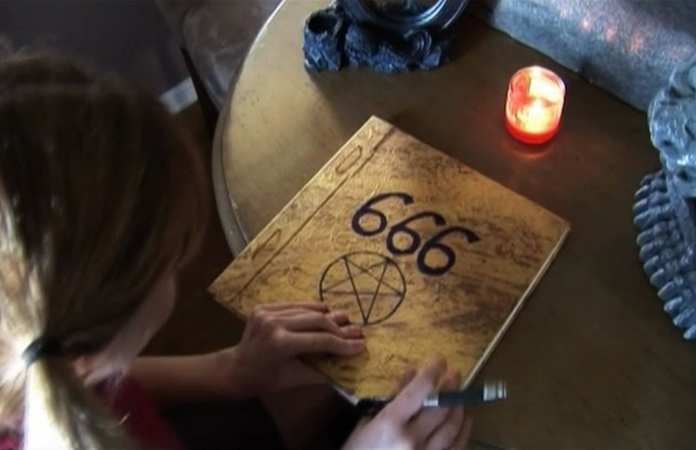
One of the inevitable outcomes of Video on Demand services is that they tend to monopolize our conversations about film. Many people—and I do not exclude myself from this—would rather seek out a new title on Netflix Instant or Amazon Prime than spend the extra money to rent something not available through those channels. This creates something of a cinematic echo chamber, where a smaller selection of titles is given preferential treatment. We want to share experiences and recommend films to others so we focus on a platform that we know many people have in common.
Still, even accounting for the smaller sample size, there are still many interesting conversations to be had about the catalogue of Netflix films. Thousands of films across all genres and nationalities currently vie for our attention, waiting in the cloud for us to press a single button and bring them down to our devices. There are films that can educate, films that can move, and even titles by some of the greatest and most talented filmmakers of each generation. And thanks to the data algorithms and crowdsourcing efforts of Netflix, each title is provided with a handy numerical score to give us a quick snapshot of its quality.
And one of them has to be ranked last.
Blu-Ray Review: X-Ray (a.k.a. Hospital Massacre) and Schizoid
Published on September 12th, 2013 in: Blu-Ray, Current Faves, DVD/Blu-Ray Reviews, Horror, Movie Reviews, Movies, Retrovirus, Reviews |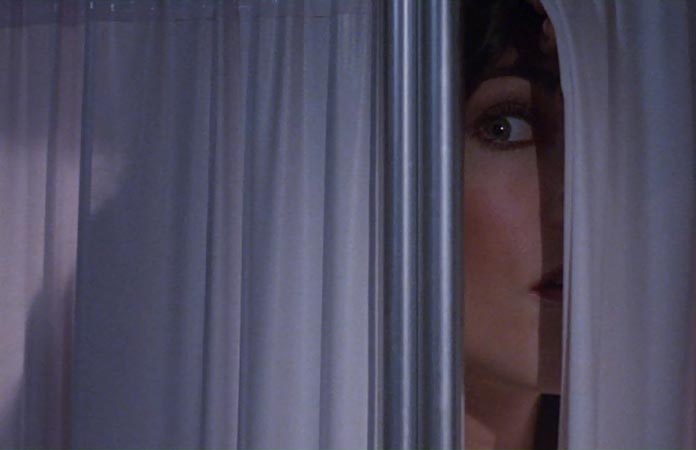
When I was younger, probably around the age of 14, I would help my mother at her job. She would pay me a hefty allowance and I could spend that on whatever I wanted. I used to save up my cash, go on Ebay, and buy box lots of VHS tapes of horror films (I still do this by the way). I would buy anything that I saw on there and spend my weekends staying up late to watch these movies.
One of those large lots I bought contained a cut VHS box fitted into a clear clamshell. It read Hospital Massacre. Upon pulling several titles to watch one night, it was first on my list. Not only was Barbi Benton in it, but Boaz Davidson also directed it. He also directed my favorite ’80s teen film of all time, The Last American Virgin (in the same year of 1982, I might add.)
Comments Off on Blu-Ray Review: X-Ray (a.k.a. Hospital Massacre) and Schizoid
Blu-Ray Review: Frankenstein’s Army
Published on September 10th, 2013 in: Blu-Ray, Current Faves, DVD/Blu-Ray Reviews, Found Footage, Horror, Movie Reviews, Movies, Reviews, Science Fiction |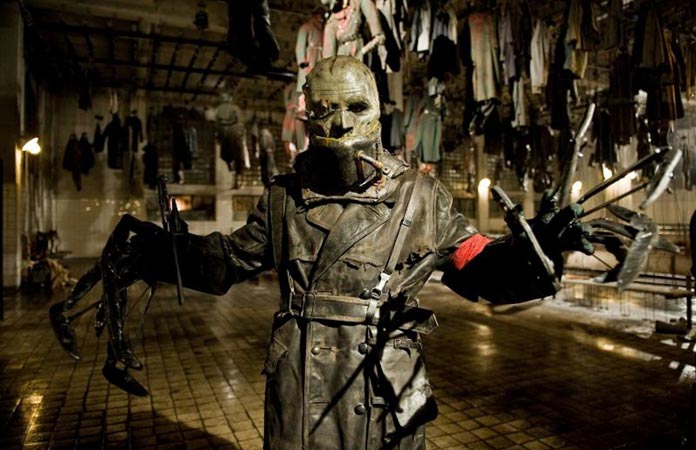
Frankenstein’s Army is the feature debut of director Richard Raaphorst, who’s worked as a concept artist and visualizer. A few years ago, he released some impressive teaser trailers for a planned film called Worst Case Scenario, which unfortunately never came to fruition because his financing fell through. Fortunately for us, he used many of those ideas in Frankenstein’s Army.
Frankenstein’s Army is less like a straight-up horror film and more like a home movie of a haunted house or a survival horror video game, but don’t let that scare you away, because then you’d be missing out on some incredible visuals.