Book Review: Comfort Foods: This Ain’t Your Momma’s Cooking!
Published on October 21st, 2013 in: Book Reviews, Books, Current Faves, Horror, Reviews |
October is here! And just in time for Halloween, the Nashville Writer’s Group presents Comfort Foods, a horror anthology edited by Nashville author Nikki Nelson-Hicks. The collection includes 13 short stories from local writers, many of which have distinctly Southern, if not uniquely Nashville, flavor to them. Some of these tales offer new takes on classic chills such as ghosts or zombies, and others invent entirely new nightmares for the reader.
Comments Off on Book Review: Comfort Foods: This Ain’t Your Momma’s Cooking!
Concert Review: Le Trouble at The Garrison
Published on October 17th, 2013 in: Canadian Content, Concert Reviews, Current Faves, Music, Reviews |By Alexandra West

Toronto, ON
October 15, 2013
There’s a lot to be said for a band that can play a back room like their headlining tour has just hit Madison Square Garden, but that exactly what the Montreal-based band Le Trouble did last night at The Garrison in Toronto. It was a quiet night; the only marking besides the sandwich board outside was the artfully scruffy group of smokers. Tucked away in an unmemorable room on Dundas Street, The Garrison offers shows to those in the know and Le Trouble did not hesitate to take the stage with unrelenting energy while the small crowd looked on.
Comments Off on Concert Review: Le Trouble at The Garrison
TADFF 2013 Movie Review: The Battery
Published on October 17th, 2013 in: Current Faves, Film Festivals, Horror, Movie Reviews, Movies, Reviews |
What would happen if the only other person remaining after the apocalypse was your annoying co-worker who always had his headphones on? What if the only other person smelled terrible? It may sound comical, but these are the hard questions you have to ask yourself when watching The Battery. Despite taking place after an apocalypse (of the Z-word variety), there are definitely funny moments, but on the whole, The Battery is a brutal movie. Things get fucked up and people die.
Comments Off on TADFF 2013 Movie Review: The Battery
Movie Review: Hellaware
Published on October 16th, 2013 in: Art, Comedy, Current Faves, Movie Reviews, Movies, Reviews |
One of the greatest things about Kids in the Hall was the show’s ability to convert the utterly banal into comedy. It requires far more skill to underplay a scene and still get laughs, as the audience imagines a waggling finger pointing at the object of the joke. Hellaware, from writer/director Michael M. Bilandic, achieves this so well it leaves the viewer breathless, both from amusement and admiration. At 75 minutes, Hellaware is expertly paced, wringing the most out of every detail in every scene and each seemingly throwaway secondary character.
Comments Off on Movie Review: Hellaware
Music Review: Jon Batiste and Stay Human, Social Music
Published on October 15th, 2013 in: Current Faves, Music, Music Reviews, New Music Tuesday, Reviews |
Jon Batiste was born into New Orleans musical royalty—it is not mere coincidence that Wendell Pierce’s character Antoine shares the surname. On their debut album, Social Music, Jon Batiste and Stay Human dip effortlessly into different genres and make a remarkable album. It’s warm and engaging, and Batiste’s piano prowess is awe-inspiring.
Music Review: James Booker, Classified: Remixed and Expanded
Published on October 15th, 2013 in: Current Faves, Music, Music Reviews, New Music Tuesday, Reviews |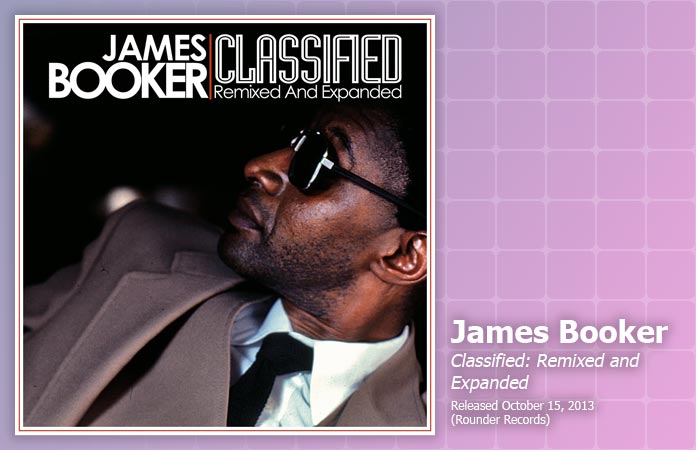
All Music Guide calls the original edition of James Booker’s Classified his best album. I can only imagine how delighted they will be upon hearing Classified: Remixed and Expanded. Released on CD and limited edition double LP vinyl, this remixed version offers nine never-before-released songs as well as voluminous liner notes.
James Carroll Booker III went by many self-given monikers: The Bayou Maharajah, The Bronze Liberace, The Piano Pope, The Ivory Emperor. A flamboyant and astoundingly talented pianist, he fits neatly into the lineage of New Orleans piano greats: Jelly Roll Morton, Professor Longhair, James Booker, and Booker’s student, Harry Connick, Jr. Booker was a bit of an odd duck, and perhaps that’s why he’s not in the Rock and Roll Hall of Fame or comes to mind as unbidden as the other demigods of NOLA piano. Dr. John, himself no slouch, called Booker “the best black gay, one-eyed junkie piano genius New Orleans has ever produced.”
Comments Off on Music Review: James Booker, Classified: Remixed and Expanded
Movie Review: Electric Man
Published on October 15th, 2013 in: Comedy, Comics, Current Faves, Movie Reviews, Movies, Reviews |
Electric Man, a Scottish comedy out on VOD today, explores the world of comic book fans with one eye on comedy and another on the caper film. If that sounds like a strange combination to you, you’d be right, but the clever writing, genuinely funny dialogue, and endearing cast of the film make it work.
Electric Man deals with a rare first edition of the titular comic and how its value comes to signify different things to very different people. Jason (Jazz) and Wolf, owners of Deadhead Comics, are at the center of a cast of characters including a surly bald man who may or may not be a murderer; a mysterious, leggy redhead with glasses; and a comic collector who believes he’s Electric Man himself.
Comments Off on Movie Review: Electric Man
DVD Review: The Walking Dead, Season Three
Published on October 11th, 2013 in: Current Faves, DVD, DVD/Blu-Ray Reviews, Feminism, Horror, Reviews, TV |
For a while, it seemed like The Walking Dead was dead to me. While Season Two had its good points, an overall sense of frustration with the static nature of the narrative made me leery of staying loyal to the show. Cutting the cord a couple of years ago meant that I couldn’t watch The Walking Dead air in real time nor on the Internet (and I’m not into torrents). The third season of the show, however, has reminded me of everything I loved about it in the first place and also managed to surprise me in ways I did not expect.
Music Review: Electric Six, Mustang
Published on October 8th, 2013 in: Current Faves, Music, Music Reviews, New Music Tuesday, Reviews |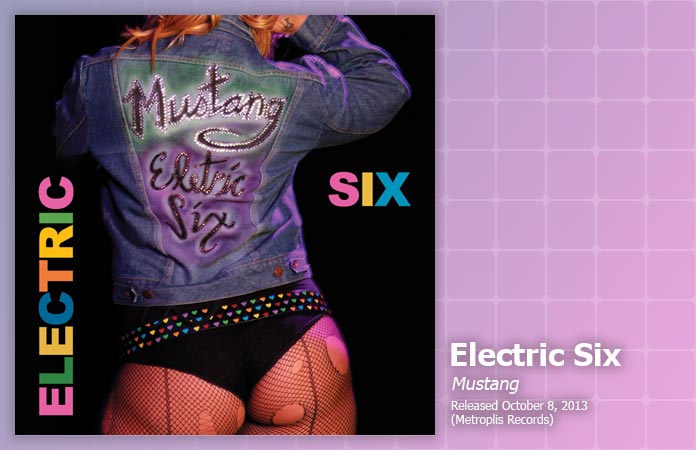
Are you imagined or real?
Or somewhere in between?
—Electric Six, “Show Me What Your Lights Mean”
How do you solve an enigma like Electric Six? The unflattering, often condescending reviews of their albums seem to indicate that music critics only listen to them once or twice before discounting them altogether. I hate to bring up the song that rhymes with “Ray Jar,” but not because it’s a bad song. After all, it does bring legions of fans to their shows (though they frequently are, admittedly, drunken and annoying bros who don’t seem to grasp that the band traffics in irony just as well as it does in impossibly addictive music). Yet it illustrates what most people think of when they think of Electric Six. It’s sort of like describing James Spader as “that guy who was in Pretty In Pink.”
Keep in mind this next statement comes from a diehard, committed fan: Electric Six albums are almost always immediately off-putting and it’s only after listening to them several times that their insidious brilliance wraps itself around you like a mental illness. Mustang is no different, but it’s not Fire, Part 9 by any means.
Comments Off on Music Review: Electric Six, Mustang
Book Review: Rookie Yearbook Two
Published on October 8th, 2013 in: Book Reviews, Books, Current Faves, Feminism, LGBTQ, Teh Sex |
If ever there was a website that required a print counterpart, that website would be Rookie. The smart, bracingly honest site founded by wunderkind Tavi Gevinson has in part made its name on its gorgeous photography, endearing handwritten content, kaleidoscopic collages, and lovingly curated vintage images.
Holding Rookie Yearbook Two between the palms of your hands and idly flipping through its pages is a satisfying experience. The opening and closing papers contain autographs from some of Rookie’s bold-faced friends and contributors, like comedienne Julie Klausner, photographer Autumn de Wilde, and punk rock renaissance woman Carrie Brownstein; the book is printed on heavy matte-finish vellum paper, and the shifting, girly page backgrounds of quilts and textiles gives the book an inviting appearance. Tavi and her colleagues even included some pages to rip out, like a mini-tarot deck of photos from a photo shoot and a foldout of stickers for a build-your-own-shrine feature.
Writing this much about the appearance of a book—down to the card stock pages on which it was printed—might sound a note of foreboding that the images might outshine the words. Nothing could be further from the truth. Though Rookie’s graphic design, online and in print, will enchant readers, the content will engage them past the first glimmers of glamour.
Comments Off on Book Review: Rookie Yearbook Two