Music Review: Giallos Flame, Archivio Giallo, Volume One
Published on March 28th, 2014 in: Current Faves, Horror, Movies, Music, Music Reviews, Reviews |
Fans of horror movies from the 1980s know that half the fun of those flicks was the crazy synthesizer-heavy soundtracks they all seemed to have. Haunting melodies, strange electronic sounds, and spatial effects only served to accentuate the atmosphere, making the blood and guts more shocking.
It’s a weird groove to fall into, being a fan of music like that. You start bringing up musicians like Claudio Simonetti, Fabio Frizzi, Riz Ortolani, or Alan Howarth and most people stare at you like you’ve lost your mind. Then you start bringing up the movies those people have scored. Have you not seen Zombi? The Beyond? Buio Omega? How about The Fog? The original Dawn of the Dead, for cryin’ out loud?
You get a lot of blank looks and sympathetic nods, lots of people silently blessing your heart.
Comments Off on Music Review: Giallos Flame, Archivio Giallo, Volume One
DVD Review: Holy Ghost People
Published on March 28th, 2014 in: Current Faves, DVD, DVD/Blu-Ray Reviews, Horror, Movie Reviews, Movies, Reviews |
Religious horror films are truly terrifying. We have our slashers, monsters, and alien horror, but we know those can be easily dismissed. Sure, there are accounts of people dressing up and killing people and there are serial killers, but we are not surrounded by that. We hear about these things on TV and the Internet but it doesn’t hit close to home. Probably the only things that hit close to home are school shootings because that could literally happen anywhere, at any time, by anyone.
Comments Off on DVD Review: Holy Ghost People
DVD Review: The Punk Singer
Published on March 28th, 2014 in: Current Faves, Documentaries, DVD, DVD/Blu-Ray Reviews, Feminism, Movie Reviews, Movies, Music, Reviews |
Kathleen Hanna was my dream girl growing up. It all started when I went to a record store and found a copy of Reject All American by Bikini Kill. I had no clue what it was but the cover intrigued me. I gave it a shot because it only had a 99-cent price tag.
I left the store with a few CDs that day (mostly punk) and listened to them throughout the rest of the week, but that night I popped that one in and it did a number on me. First, it sounded completely badass. It was raw and ferocious. The lyrics were well thought out and this girl singer was not fucking around. Between “Rebel Girl” and “Statement of Vindication,” this was the best album that I’d heard in years. I immediately found out who Kathleen Hanna was and tracked down everything she put her hands into.
Comments Off on DVD Review: The Punk Singer
Music Review: Foetus, Soak
Published on March 21st, 2014 in: Current Faves, Music, Music Reviews, Reviews |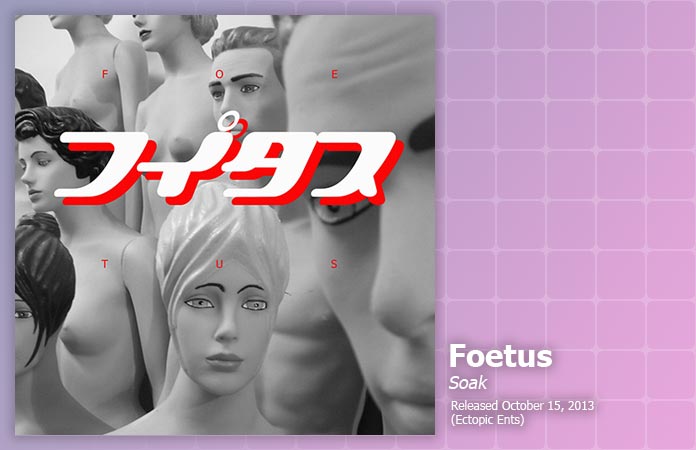
For another perspective on Soak, check out Julie Finley’s review from December 2013.
“I can’t control the wind and rain, but I control the thermostat.”
—From “Kamikaze”
The newest Foetus release, Soak, is a companion album to a previous release, in this case, 2011’s Hide (review). (Calling it Seek would have been way too obvious for a guy like JG Thirlwell. You have to work for it.) And like 2006’s Damp (itself a companion to the previous year’s Love), it’s something of a Foetus sampler and not a straightforward “album” in Foetus terms. It’s also the first Foetus release in a long time that I didn’t love immediately. This is not to say that it’s a bad album—far from it—but it takes a bit more time to sink in. Despite being so obviously a Thirlwell production (could he be mistaken for anyone else ever?) the songs are all quite varied in sound and scope with the connections between them slowly revealing themselves to be sly and subtle.
Comments Off on Music Review: Foetus, Soak
Blu-Ray Review: Odd Thomas
Published on March 21st, 2014 in: Blu-Ray, Current Faves, DVD/Blu-Ray Reviews, Horror, Movie Reviews, Movies, Reviews |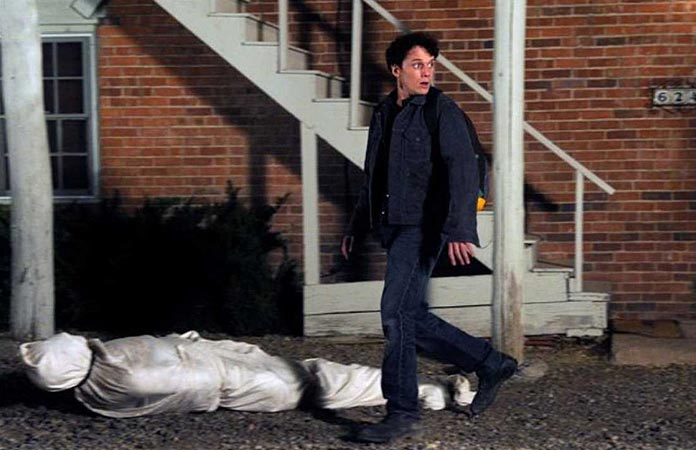
I’ve always thought Odd Thomas was a fun book and when I heard it was being made into a film, I was both intrigued and scared. How in the hell were they going to pull something like this off? If you know anything about the story of Odd Thomas then you know where I’m coming from. It’s a good story but a little out there and hard to fathom seeing on the screen. Also, when I heard Stephen Sommers was directing it I admit that I did frown a little because I’m not a fan of his work aside from Deep Rising.
Upon viewing it I was pleasantly surprised and very happy with the direction it took. The CGI isn’t all that bad aside from a couple of scenes that look a little wonky, but everything is else is pretty solid. Anton Yelchin and Willem Dafoe both do a superb job and give everything they have to bring some of their best work to this kickass flick.
Comments Off on Blu-Ray Review: Odd Thomas
Music Review: Suzanne Vega, Tales From The Realm Of The Queen Of Pentacles
Published on March 21st, 2014 in: Current Faves, Feminism, Music, Music Reviews, Reviews |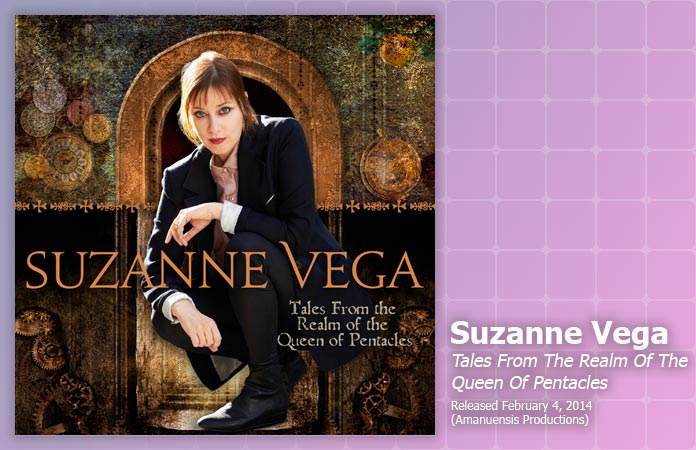
Suzanne Vega is one of the few survivors of the Great Folk Uprising of the Eighties. Her career hit its heights with her single, “Luka,” which was later covered by The Lemonheads. The British producing team, BNA, turned her a capella tune, “Tom’s Diner,” into an international dance hit. You know. “Doo do doo DO doo do-doo DO.” That one.
As it happens with some artists, as Vega matured as a performer and songwriter, her presence on the music charts decreased. Some of her best works went practically unnoticed (why people never caught onto her album Songs in Red and Gray is one of the great mysteries of our time).
After a seven-year break, Vega is back with Tales from the Realm of the Queen of Pentacles, a fascinating mix of bitterness and release, spirituality and despair.
Comments Off on Music Review: Suzanne Vega, Tales From The Realm Of The Queen Of Pentacles
DVD Review: Contracted
Published on March 21st, 2014 in: Current Faves, DVD, DVD/Blu-Ray Reviews, Horror, Movie Reviews, Movies, Reviews |
Dirty, gross, and brilliant are a few words that come to mind while trying to describe Contracted, a new film distributed by IFC Midnight (not on Blu. . . sigh) that’s been somewhat of a hit on the festival circuit. I’ve known about Contracted for a little while but just haven’t gotten around to watching it until tonight. Now I’m sorry I waited so long to view this masterpiece. Yes, it’s a masterpiece.
Music Review: Various Artists, Warfaring Strangers: Darkscorch Canticles
Published on March 21st, 2014 in: Current Faves, Music, Music Reviews, Retrovirus, Reviews |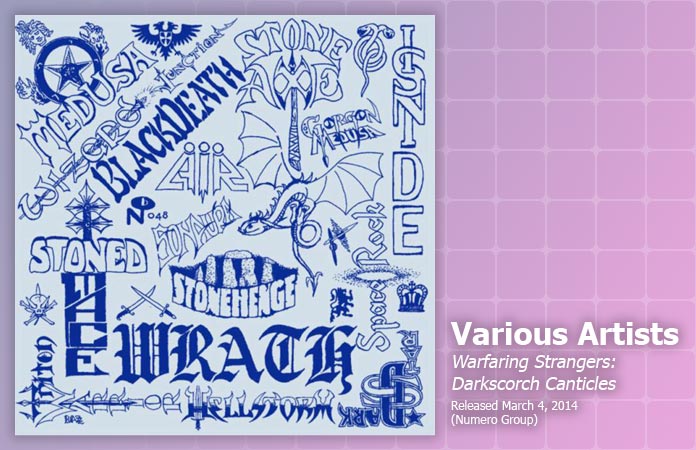
The earth is scorched and jagged, and at night the wolves come. The Christian gods have come to battle the Elder gods for supremacy, but that war has yet to be won. Every move could be your last, for the land is beset with traps. This is a land of magick and superstition. This is where the arcane is commonplace. This is a land filled with thieves and sorcerers, warriors and demons. This is the 1970s.
This is the strange world of Warfaring Strangers: Darkscorch Canticles, a collection of 16 rock and roll songs, plucked from the dank dungeons of obscurity by record label Numero Group. Every song is based in a quasi-Tolkienesque fantasy world, easily recognizable to anyone familiar with Dungeons & Dragons or other such tabletop games. In fact, the double vinyl edition comes with its own RPG called “Cities of Darkscorch.”
Comments Off on Music Review: Various Artists, Warfaring Strangers: Darkscorch Canticles
Music Review: Jimbo Mathus & The Tri-State Coalition, Dark Night Of The Soul
Published on March 21st, 2014 in: Current Faves, Music, Music Reviews, Reviews |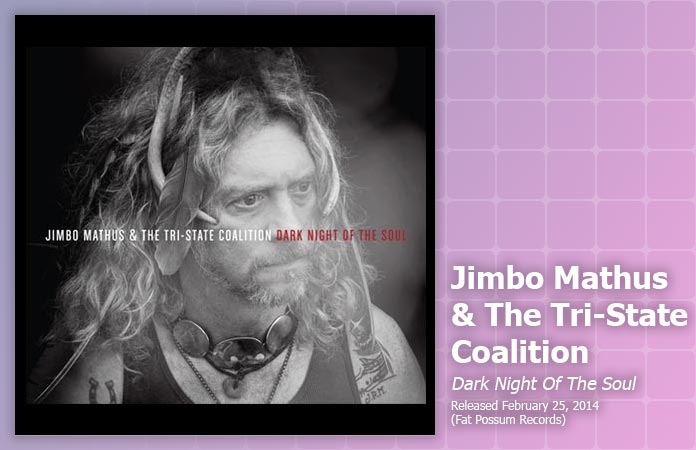
As the leader of the Squirrel Nut Zippers, Jimbo Mathus trafficked in swing, Delta blues, klezmer, and Dixieland jazz, blending them to make something not easily defined, but easily identified. On his own, Mathus makes music that draws upon his rich musical knowledge and is deeply rooted in the South.
They say you can’t judge a book by its cover, but you can often judge a record by its cover art. Dark Night Of The Soul sports a photo of Mathus in full pagan swamp god regalia, complete with horns and feathers in his hair. The album sounds like that, and that’s really a very good thing.
Comments Off on Music Review: Jimbo Mathus & The Tri-State Coalition, Dark Night Of The Soul
Movie Review: A Field In England
Published on March 14th, 2014 in: Current Faves, Movie Reviews, Movies, Reviews |
Reviewing a film like A Field In England almost feels impossible and insulting. While it takes place during the English Civil War of the late 17th century, a historical drama it is not. It is a Ben Wheatley movie and if you’ve seen his others (Sightseers, Kill List, Down Terrace), you’ll know that means you’re in for something entirely different than a standard cinematic experience.
Comments Off on Movie Review: A Field In England