New Vinyl: Concrete Blonde, “Rosalie” b/w “I Know The Ghost”
Published on December 6th, 2012 in: Current Faves, Feminism, Music, Music Reviews, Reviews |By Cait Brennan
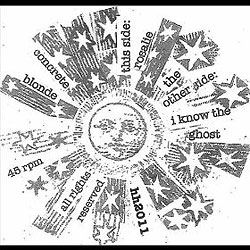
From their circa-1980 Dream 6 post-punk bona fides to their genre defining alternative rock gems like “God Is A Bullet,” “Joey,” “Ghost of a Texas Ladies Man,” and “Everybody Knows,” Concrete Blonde has made an enduring career of mixing the sacred and the profane, the earthy and the unearthly, a mosaic assembled in light and blood. Now 30 years into a truly iconoclastic career, singer/songwriter/bassist/artist Johnette Napolitano makes her home deep in the Mojave desert, and the ghosts of Joshua Tree haunt all seven inches of the group’s eminently cool new white vinyl spinner “Rosalie” b/w “I Know The Ghost.”
The limited edition 45 was originally pressed for the band’s 2011 Texas Halloween tour, and now a handful of the records are available at the band’s Official Website.
“She wraps herself in firelight, and dances in the sand like a ghost,” Napolitano sings on “Rosalie,” all low and mournful like a lost coyote. It’s a great country-infused old west tune, the kind you’d spin at midnight on Dia De Los Muertos. The flip side, “I Know The Ghost,” is a rave-up that hearkens to the band’s punk roots, buzzing with the kind of Madame Wong’s energy that only authentic survivors of the era could conjure.
Both tunes feature founding Concrete Blonde guitarist Jim Mankey (ex-Sparks, and himself a Joshua Tree resident) and drummer Gabriel Ramirez-Quezada, one of the brothers in LA rock en español standouts Maria Fatal and a ten year veteran of Concrete Blonde. The disc was recorded at Stagg Street Studios in Van Nuys with the band’s rock-steady engineer Anne Catalino. Videos for each of the songs are in the works.
The band is about to launch an East Coast tour, kicking off at Boston’s Sinclair Music Hall on Dec. 12 and heading to NYC’s Irving Plaza (12/13), Asbury Park’s Stone Pony (12/14), Washington DC’s 9:30 Club (12/17), Carrboro, NC’s Cat’s Cradle (12/18), Atlanta’s Variety Playhouse (12/19), Chicago’s Park West (12/21) and Minneapolis’ Variety Theatre (12/22). The band will also perform on WXPN Philadelphia’s “World Café Live” radio show on December 15.
One of the most unique and enduring bands of the alternative rock era, Concrete Blonde is still getting it done with passion and fire. These “songs of the spirits of the desert” are a welcome reminder of the band’s strength and Napolitano’s singular voice.
Comments Off on New Vinyl: Concrete Blonde, “Rosalie” b/w “I Know The Ghost”
Music Review: Big Dipper, Crashes On The Platinum Planet
Published on December 4th, 2012 in: Current Faves, Music, Music Reviews, New Music Tuesday, Reviews |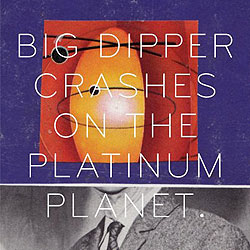
Of all the bands from the Boston Rock Class of 1990, Big Dipper weren’t the first candidates for the “Most Likely to Succeed” superlative. They wrote songs with undeniably catchy melodies and witty lyrics, and their shows at mid-sized East Coast clubs never failed to attract an audience.
Unfortunately, they had signed to Homestead Records, whose history of poor distribution and corrupt business practices restricted their reach to all but their most diehard fans. Though they jumped ship to Epic at the close of the decade, a series of shakeups at their label left them with little support. By the middle of the ’90s, “Dippah” (as their local fans called them) had joined fellow Beantown heavy-hitters Tribe and O Positive in the great cutout bin in the sky.
Blu-Ray Review: Excision
Published on November 27th, 2012 in: Blu-Ray, DVD/Blu-Ray Reviews, Horror, Movie Reviews, Movies, Reviews |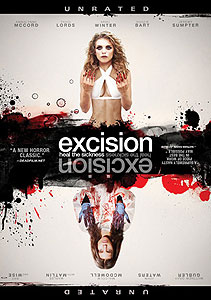
For his first feature, Excision, writer and director Richard Bates, Jr. has assembled quite an impressive cast: Malcolm McDowell, John Waters, Traci Lords, Ray Wise, Matthew Gray Gubler, and Marlee Matlin. Visually, the film is stunning, with pristine, static, centered shots and vivid colors. Excision‘s plot—a disturbed, misanthropic high school student named Pauline dreams (literally) of being a surgeon but her parents just don’t understand–doesn’t sound unique when boiled down to its most basic elements, but Bates manages to create a film that is genuinely disturbing.
Blood plays a crucial role in Excision, too. There is a whole lot of it. Yet it’s not a horror film, despite being well received by a lot of horror film websites and blogs, which puts it into that difficult position of being a genre film that doesn’t fit easily into any genre.
At times, this can be problematic. Excision feels like it wants to be a pitch black comedy or a parody of the suburban dream, but it’s not actually funny. Granted, some of Pauline’s quirks and attempts to navigate her unwelcoming environment at home and school are humorous, but not in a laugh out loud way. The roles of McDowell, Waters, Lords, and Wise in this context could seem like stunt casting, except for the fact that they’re all really good, particularly AnnaLynne McCord as Pauline and Traci Lords as Pauline’s mother Phyllis, whose character arc might represent the best work she’s ever done.
Comments Off on Blu-Ray Review: Excision
The Black Museum: Echoes From The Sleep Room
Published on November 26th, 2012 in: Canadian Content, Horror, Movies, Reviews, Upcoming Events |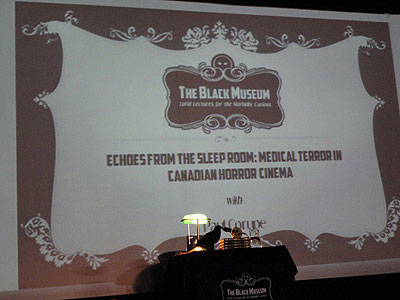
At long last, I finally attended one of The Black Museum‘s “lurid lectures for the morbidly curious.” (Go here to read my Q&A with the curators.) It was Thursday, November 22 and the topic was “Echoes From The Sleep Room,” an examination of the history of medical experimentation in horror cinema. The presentation was wonderful; my only complaint was that I was unable to attend the previous four lectures!
Music Review: Bert Jansch, Heartbreak
Published on November 20th, 2012 in: Current Faves, Music, Music Reviews, Retrovirus, Reviews |By Cait Brennan
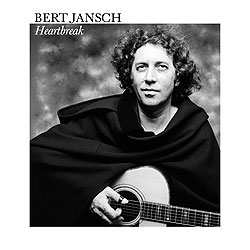
Trying to name the greatest guitarist of all time is a fool’s errand. One, because it would be impossible to choose a single player from a slate of candidates as diverse as Django Reinhardt, Andres Segovia, Jimmy Page, Lindsey Buckingham, Prince, Richard Thompson, Mick Ronson, George Harrison, Ron Asheton, Don Rich, Brian May, Frank Zappa, etc, ad infinitum. And two, because the answer is Bert Jansch.
Fine, reasonable souls may disagree, but from his stunning masterpiece of a debut in 1965, Jansch blazed a staggeringly original trail through an eclectic mix of folk, jazz, blues, rock, and even African, medieval, renaissance, and baroque music. Whether solo or with his band Pentangle, his highly distinctive playing and his warm, earthy vocals made him a major influence on everybody from Jimmy Page, Neil Young, Nick Drake, Donovan and Mike Oldfield to Paul Simon, Johnny Marr, Graham Coxon, Bernard Butler, and so many more. Bert died in 2011, doing what he did best till the very end.
Comments Off on Music Review: Bert Jansch, Heartbreak
Movie Review: Better Than Something – Jay Reatard
Published on November 19th, 2012 in: Current Faves, Documentaries, DVD, Movie Reviews, Movies, Music, Reviews |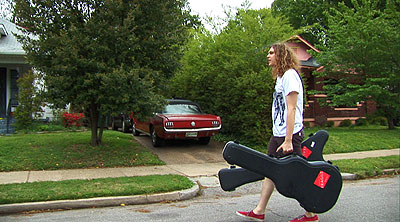
Still from Better Than Something
“What I do is not about being comfortable with the world.”
—Jay Reatard, in Better Than Something
There’s a part in Better Than Something, the Jay Reatard documentary, where the musician talks about being “so tired. . . and I’m only 29.” He laughs a little and adds, “There’s nothing to look forward to.” Anyone who sees this and doesn’t agree with this statement just a little—even secretly—is probably not going to like Jay Reatard’s music and may not even care about this documentary.
Comments Off on Movie Review: Better Than Something – Jay Reatard
Music Review: The Edie Adams Christmas Album
Published on November 15th, 2012 in: Comedy, Feminism, Holidays, Music, Music Reviews, New Music Tuesday, Retrovirus, Reviews, TV |By Cait Brennan
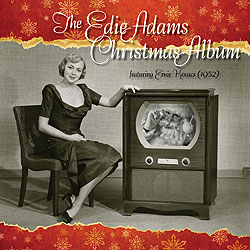
Ernie Kovacs is rightly regarded as television’s first genius. Dynamic, irreverent and uncompromising, Kovacs pushed TV technology to its limits in the service of his anarchic comic brilliance. More than that, Kovacs was larger than life. His personal motto was “Nothing In Moderation,” and he lived up to that billing until the day he died.
Few mere mortals could hope to keep up with his madness. But he met his match the day he met Edie Adams. Smart, sexy, sultry and with a voice like butter, Adams was everything Ernie needed: merry co-conspirator, brilliant comic foil, and a tremendously versatile actress and vocalist that brought elegance and heart to the proceedings. Kovacs’s life, and for that matter his untimely death, cast a big shadow, and Edie’s talents have often been unfairly overlooked.
Thankfully, the lady’s finally getting her due. From the formidable Kovacs/Adams archive and the good folks at Omnivore Recordings comes The Edie Adams Christmas Album, featuring Ernie Kovacs, a warm, charming, and nostalgic record featuring 15 never-before-heard holiday classics. It’s the perfect antidote to contemporary holiday angst and a testament to Adams’s vocal gifts.
Comments Off on Music Review: The Edie Adams Christmas Album
Music Review: David Cassidy, Romance Reissue
Published on November 14th, 2012 in: Music, Music Reviews, Retrovirus, Reviews |By Cait Brennan
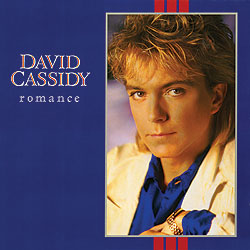
Like a lot of artists who were huge in the early ‘70s, David Cassidy didn’t get much respect. The magnetic and charming breakout star of The Partridge Family topped the charts with his TV band and made waves as a solo artist as well. Modern audiences weaned on prefab TV pop stars may find it difficult to understand the extent of Cassidy’s fame at its peak. On one weekend in 1973, Cassidy sold out six consecutive shows at Wembley Stadium (capacity 82,000) and had similar sellout audiences at arenas around the world. Far more complex than the million-dollar teenybopper albatross they hung around his neck, Cassidy tried offroading it with Broadway plays, a TV series, and tons of other media appearances. In the UK and Europe, his later ‘70s albums continued to do well, but in his home country, David Cassidy was a man that was a little too undercover.
It’s a shame, then, that American audiences never got to hear Romance, Cassidy’s 1985 album for Arista Records. His only studio album of that decade, Romance is a bold re-invention that became a Top 20 hit in the UK and launched a couple of memorable hit singles that should’ve been hits at home, too.
Blu-Ray Review: The Barrens
Published on November 13th, 2012 in: Blu-Ray, Current Faves, DVD/Blu-Ray Reviews, Movie Reviews, Movies, Reviews |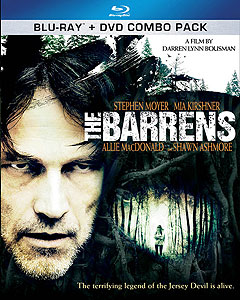
As someone who has never seen any films in the Saw franchise, I was unfamiliar with writer/director Darren Lynn Bousman until now. The legend of the Jersey Devil has been covered on both The X Files and Supernatural, so I was curious to see what a film about the creature—and one starring True Blood‘s Stephen Moyer no less—would be like. I was not disappointed.
Although The Barrens is not technically a horror film, it has elements of horror: monsters, paranoia, insanity, and just enough gore to be convincing. Unfortunately, dramatic thrillers with horror elements usually disappoint genre fans looking for scares or splatterfests. This is a shame, because The Barrens is a great movie.
The film was shot on Super 16 and the difference between this format and digital is obvious immediately. It has a wonderful gritty and grainy texture and shows off some incredible lighting set-ups to their fullest extent. My only complaint would be the overuse of flash edits in some of the scenes, but I realize that at least a few of these were necessitated by budget restraints and weather conditions.
Comments Off on Blu-Ray Review: The Barrens
Music Review: School Of Seven Bells, Put Your Sad Down EP
Published on November 13th, 2012 in: Current Faves, Music, Music Reviews, New Music Tuesday, Reviews |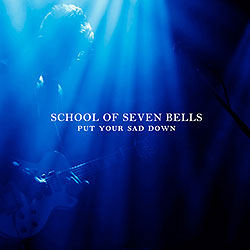
The only downside to a new School of Seven Bells EP is that I’m in no way tired of Ghostory, their full-length release from February of this year (reviewed here). This is a good problem to have.
Put Your Sad Down opens with the 12-minute-plus title track, which takes a while to build, but has a beautiful payoff, an extremely skillful hybrid of straight-up dance music and SVIIB-style dream pop. It’s what My Bloody Valentine might sound like if they hadn’t broken up after two albums. The lyrics are straightforward and sexy; “Put Your Sad Down” is the rare song that sounds exactly like what the lyrics imply. The song’s intensity eventually tapers off only to dial it up again with an impressive subtlety and finesse.
“Secret Days” (listen here) signals a shift to pre-Ghostory SVIIB, with a heavy drumbeat and decidedly South Asian influence in the music, and a wordless vocalized chorus that’s pure magic. I wish I liked “Faded Heart” more, however. It sounds like a clichéd remix of a superior song that’s buried somewhere inside, although that core does show the anthemic pop sheen of Abba.
The next song, “Lovefingers,” is a cover of the 1968 song by Silver Apples from their 1968 self-titled debut album. Here the original’s psychedelia is replaced with a spooky, Middle Eastern mysticism with wonderful results. The repetitive pulse of “Painting a Memory,” the EP’s final song, nourishes a hypnotic dance beat with more South Asian sounds in Alejandra Deheza’s vocalizations. It also shows that the band sounds best when they give themselves enough time to let the ingredients of their recipes simmer for a while.
Although Put Your Sad Down isn’t as consistently excellent as Ghostory, it is after all an EP and one with an overwhelming ratio of hits to misses. It’s definitely whetted my appetite for the band’s next full-length release, whenever that may be.
Put Your Sad Down is out today from Vagrant and can be ordered from the band’s website.