Blu-Ray Review: Hard Core Logo: All Access Edition
Published on January 22nd, 2013 in: Blu-Ray, Canadian Content, DVD/Blu-Ray Reviews, Movie Reviews, Movies, Music, Reviews |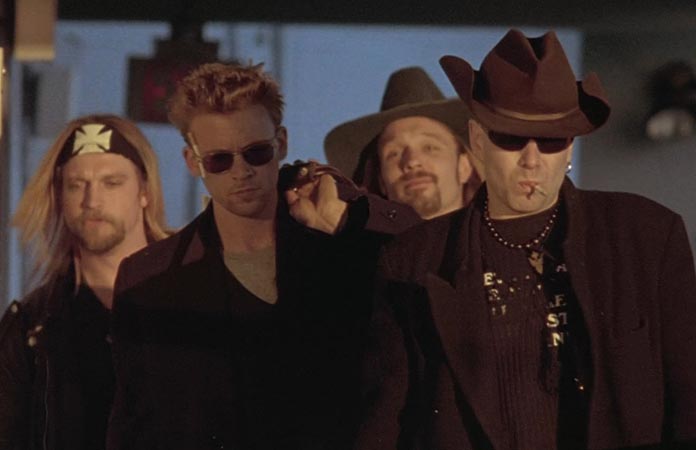
There are few movies I love more than Bruce McDonald’s 1996 Hard Core Logo. It’s a rock mockumentary about an obscure Canadian punk band who reunite for one last tour, hoping to recapture what fleeting fame they once had. When it came out in the States, it was advertised as a movie in the vein of This Is Spinal Tap. While it is occasionally hilarious, it has a dark, seamy underbelly. It’s not a feel good movie.
Hard Core Logo’s two stars, Hugh Dillon and Callum Keith Rennie, share an electric chemistry. Their scenes together don’t feel like acting. Dillon hadn’t acted a great deal before Hard Core Logo, and what he doesn’t have in technical “acting” skill, he makes up for in sheer magnetism. His character, Joe Dick, is by turns funny, malevolent, pathetic, and always fascinating. He is a mostly charming manipulator.
One of the finest actors around, Callum Keith Rennie is his icy cool counterpart. Rennie’s Billy Tallent is a gifted guitar player, just about to break through with another band after years of paying his dues slogging with bands like HCL. He reluctantly rejoins his comrades for a last tour, with an eye to the end, where he’ll join with indie sweethearts Jenifur.
Comments Off on Blu-Ray Review: Hard Core Logo: All Access Edition
Music Review: Ty Segall & Mikal Cronin, Reverse Shark Attack (Reissue)
Published on January 22nd, 2013 in: Current Faves, Music, Music Reviews, New Music Tuesday, Reviews |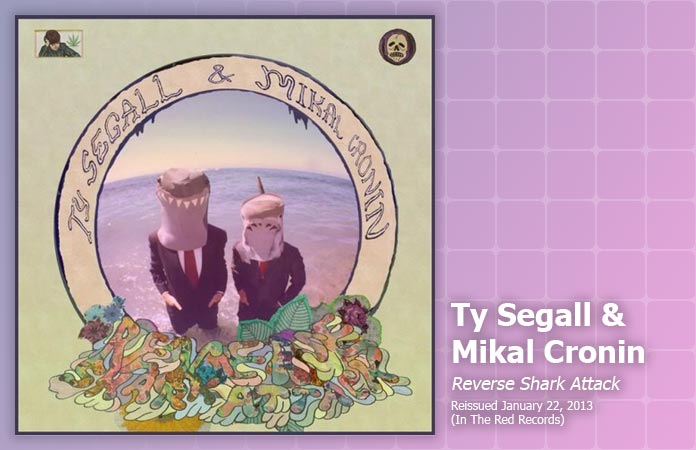
The second of two Ty Segall reissues, Reverse Shark Attack features Segall and his current touring bassist Mikal Cronin (who has quite a few releases with and apart from Segall). While just as dirty sounding as The Traditional Fools (review), these tunes are less garage rock and way more psychedelic, with brain-asplodin’ feedback that seems to lurch forth physically from the speakers.
It’s patently obvious that I’m going to be biased towards a song called “I Wear Black,” but it also happens to be good, snatching the heavy beat from “Wild Thing” and inserting a growling chorus of the song’s title.
Comments Off on Music Review: Ty Segall & Mikal Cronin, Reverse Shark Attack (Reissue)
Music Review: The Traditional Fools, S/T (Reissue)
Published on January 22nd, 2013 in: Current Faves, Music, Music Reviews, New Music Tuesday, Reviews |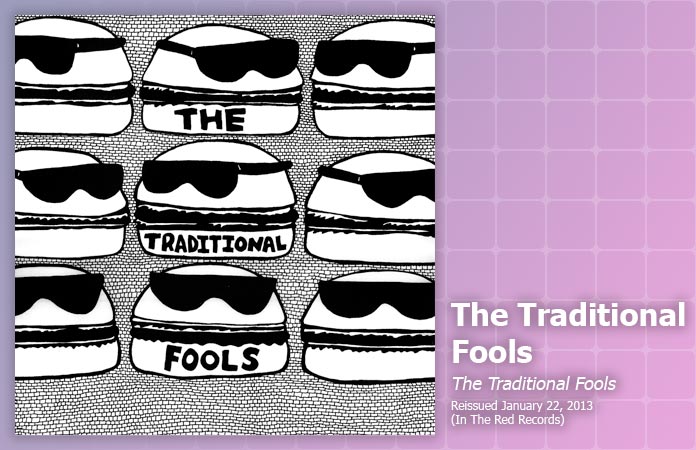
The prolific and talented Ty Segall has another album out today. It’s actually a reissue, but one that was previously only available on vinyl and has been out of print since its release. The Traditional Fools—comprised of Segall, Andrew Luttrell, and David Fox—put out only one album, but it’s killer. Its intensely dirty sound is more akin to Segall’s Slaughterhouse than Twins, but it is instantly loveable. It helps that despite the lo-fi recording, these guys were tight as hell.
The opening track, a cover of “Davey Crockett” by beloved legends Thee Headcoats, will either thrill or piss off fans of the original, but it’s obviously coming from a place of respect. It also sounds fantastic.
Comments Off on Music Review: The Traditional Fools, S/T (Reissue)
Music Review: Erin McKeown, Manifestra
Published on January 17th, 2013 in: Current Faves, Feminism, Music, Music Reviews, Reviews |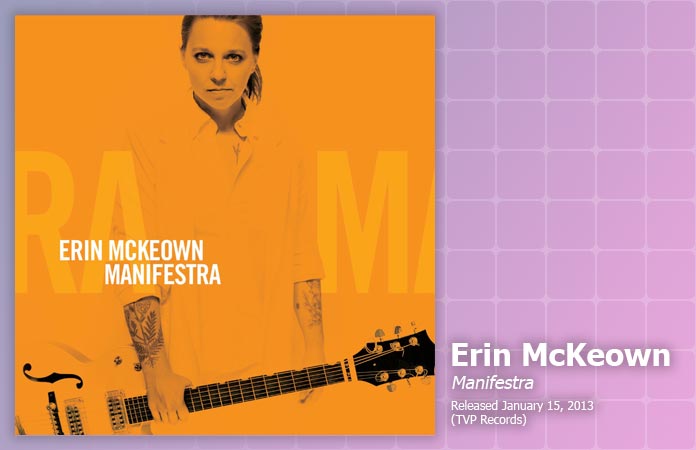
In 2012, musician/activist Erin McKeown made headlines for crowdfunding the production of her latest album, Manifestra. Unlike many artists whose crowd-sourced work becomes a three-ring circus, McKeown has strong musical bona fides. For almost two decades, the singer/songwriter has released a compelling body of work and dabbled in jazz, electronica, and folk. The spine of her work has always been her great skill at songwriting, which blends the tunefulness of Tin Pan Alley songwriters with her own irreverent charm, and her confident, minimalist guitar playing.
Manifestra extends the democratizing concerns of crowdfunding to some of her most explicitly political material to date. While I find many protest songs challenging—mostly because of the need to simplify complex issues into a three-minute time range and force them into a difficult format—McKeown escapes this trap by finding the human scale within the societal problems she describes.
Comments Off on Music Review: Erin McKeown, Manifestra
Music Review: Shoes, 35 Years—The Definitive Shoes Collection 1977-2012
Published on January 15th, 2013 in: Current Faves, Music, Music Reviews, Retrovirus, Reviews |By Cait Brennan

By any measure, 2012 was a banner year for the pioneering power pop rockers Shoes. For decades, the band has hewed its own indie path through pop music, with a strong DIY ethic that helped kick start the home-recording movement decades before Garageband made it easy. Back together in the studio for the first time in 17 years, brothers John and Jeff Murphy and their high school pal Gary Klebe joined with drummer John Richardson for Ignition, a spectacular new album of originals that reestablished Shoes as power-pop masters and made its way onto a number of critics’ year-end best-of lists (review). They were the subject of a new biography, Boys Don’t Lie: A History of Shoes, and their first four pre-Elektra albums—One In Versailles, Bazooka, Black Vinyl Shoes, and Pre-Tense (the Present Tense demos)—were issued on vinyl in gorgeous deluxe editions by the Numero Group.
Truly, it’s never been a better time to be a Shoes fan. But for those who haven’t yet joined the cult of Shoes, it might seem a little daunting to find a way in to a band whose widely acclaimed output stretches to at least 180 songs on 17 albums recorded over a 38-year period.
Real Gone Music has this problem sorted with its excellent new disc 35 Years—The Definitive Shoes Collection 1977-2012. From their ’77 breakthrough Black Vinyl Shoes all the way through Ignition, it’s a great survey of some of the finest moments of their career, and the perfect place to start a Shoes safari.
Comments Off on Music Review: Shoes, 35 Years—The Definitive Shoes Collection 1977-2012
Blu-Ray Review: Sleep Tight
Published on January 10th, 2013 in: Blu-Ray, Current Faves, DVD/Blu-Ray Reviews, Horror, Movie Reviews, Movies, Reviews |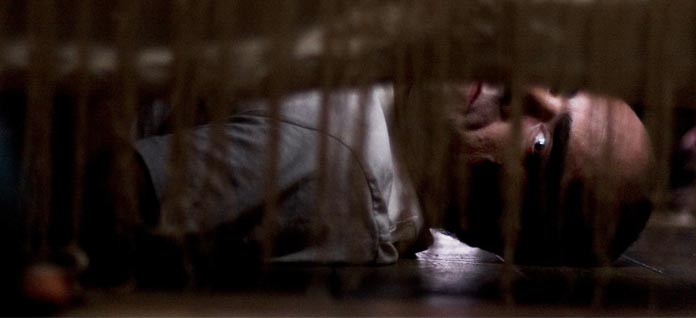
Jaume Balagueró has given us many great films both in his solo career and with his partner in crime, Paco Plaza. They are the ones responsible for the [REC] series and many other horror favorites. Balaguero’s solo films include Fragile, Darkness, The Nameless, and To Let. Now we have Sleep Tight, which is probably his greatest accomplishment to date. Balagueró is a director to keep an eye on.
Sleep Tight premiered at Fantastic Fest 2011. After the film was over, I looked around and saw smiles on everyone’s faces. It was a hit and was loved by many . . . including me. With its glamorous cinematography and quick dialogue, this film is tightly crafted. In Balagueró’s past films we were trapped with nowhere to go, and we find ourselves once again in this situation. He puts us in tight corners and small spaces, and we get a little claustrophobic.
Comments Off on Blu-Ray Review: Sleep Tight
Music Review: Crime & the City Solution, A History of Crime – Berlin 1987-1991: An Introduction to Crime & the City Solution
Published on January 9th, 2013 in: Current Faves, Music, Music Reviews, Retrovirus, Reviews |By Julie Finley

Being a longtime fan of Crime & the City Solution, I was already familiar with all of the tracks on A History of Crime. However, the albums in their discography aren’t easy to find, and are more than likely out of print, so if anyone ever had a fleeting interest in this band, but can’t get their hands on their albums, this release bridges that gap. A History of Crime is a grand collection of Crime & the City Solution’s works, and doesn’t disappoint. However, the one major flaw is that it only includes music created between 1987-1991. I mention this because the pre-1987 output contains some of my favorite songs.
Comments Off on Music Review: Crime & the City Solution, A History of Crime – Berlin 1987-1991: An Introduction to Crime & the City Solution
Blu-Ray Review: Lost Girl, Season 2
Published on January 8th, 2013 in: Canadian Content, Current Faves, DVD/Blu-Ray Reviews, Feminism, Horror, Reviews, Science Fiction, Teh Sex, TV |
As much as I love genre fiction, I’ll admit that most mainstream genre movies and TV shows are fairly sexist. Even if they don’t obviously reinforce stereotypes or display misogynist behavior, the violence enacted against women is often in higher proportion to what their male counterparts must endure. Enter Lost Girl, a Canadian-produced TV show whose title might seem to indicate more of the same, but which is a delightful and welcome entry into the world of genre television.
Lost Girl was created by a woman (Michelle Lovretta) and many of the episodes are written and directed by women. In addition, the gender makeup of the principal cast is half female and half male. The main character, Bo (Anna Silk) is a succubus who is trying to find her way in the world of the Fae (also known as fairy folk) while not committing to either the Light Fae or Dark Fae.
Comments Off on Blu-Ray Review: Lost Girl, Season 2
The Vince Guaraldi Trio, A Charlie Brown Christmas
Published on December 13th, 2012 in: Current Faves, Holidays, Music, Music Reviews, Retrovirus, Reviews, Soundtracks and Scores, TV |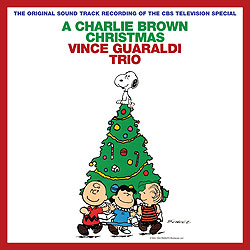
The tinkling piano lines, rolling brushed drums, and sprightly tempos of Vince Guaraldi’s soundtrack to the classic TV special A Charlie Brown Christmas are a welcome sign of the holiday season. Guaraldi’s keyboard treatments of classic Christmas songs like “Greensleeves,” “O Tannenbaum,” and the classic children’s choral arrangement of “Hark! The Herald Angels Sing” give these classics a new sound. Some of his originals, such as “Christmas Time is Here,” portray the loneliness and melancholy of the holiday season though a few minor chords and a contemplative melody. Other new songs, like the bright, upbeat “Linus and Lucy,” sound like the rush of energy you sometimes felt as a kid around the holiday.
Comments Off on The Vince Guaraldi Trio, A Charlie Brown Christmas
Blu-Ray Review: V/H/S
Published on December 11th, 2012 in: Blu-Ray, DVD/Blu-Ray Reviews, Found Footage, Horror, Movie Reviews, Movies, Reviews |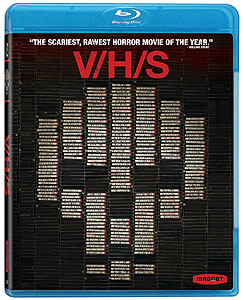
V/H/S is possibly the first found-footage horror anthology, two styles of filmmaking that are loved as much as they are hated. Found footage films are, without a doubt, one of the biggest cultural trends of the last decade and as such, can go either very well or horribly awry. Anthologies are another risky venture for horror films as inevitably there will be one or two segments which don’t measure up to the rest, thus rendering the entire project grievously flawed. These issues do plague V/H/S to a certain extent, but as an experimental indie horror film, it’s still a success.
The wraparound story of V/H/S (“Tape 56,” written by Simon Barrett, directed by Adam Wingard) is certainly creepy, but still off putting in the way it posits the main characters as disgusting losers. Our introduction to them is footage of their restraining a woman in a parking garage and filming her naked breasts as they pull off her shirt and later, trashing the hell out of an abandoned house. They do this for money but we get the idea that they’d probably do it for free, too. We next learn they’ve been hired to break into a house and steal one VHS tape, having been told “you’ll know it when you see it.” This makes sense within the context of the wraparound segment, but it doesn’t endear us to them one bit. In fact, I found myself pretty repulsed by the intro and wondered if I could even make it through the rest of the film.
Comments Off on Blu-Ray Review: V/H/S