Waxing Nostalgic Connecting the Dots: Steve Taylor/Chagall Guevara
Published on November 20th, 2013 in: Music, Waxing Nostalgic |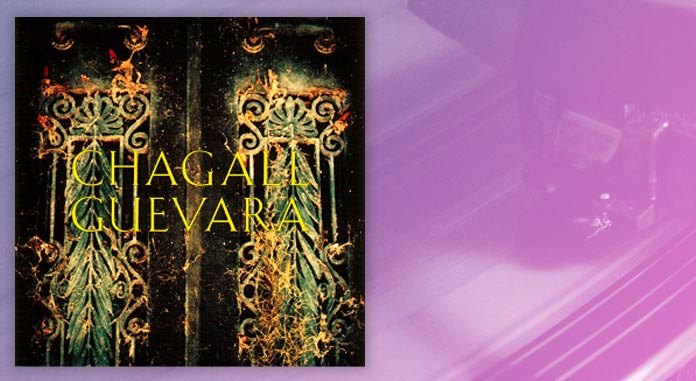
It’s 1983. I’m in one of my phases of really trying to give Christianity an honest go. I’m in a high school auditorium with hundreds of other Christian youth, watching a band called Petra. I will eventually see this band three times. Petra knows all the tricks. Founder and guitarist Bob Hartman has all the pedals and a basic understanding of the hammer-on technique. Their singer has a four-octave range. He wears a shimmering jump suit. His hair is long and blonde. The amplifiers wobble slightly from the force of volume. Dry ice fog drifts across the stage. Lights blind the audience.
This sucks. It is like a Journey tribute band without the lovin’, touchin’, and squeezin’. The show ends with an altar call. The altar call ends with a reminder that the merch tables will be open for another half hour. Something smells wrong here.
There’s an earnest desperation about mainstream Christian rock. Stylewise, it remains about ten years behind its secular counterpart. If it sounds like Train or Tal Bachman but it’s not, it’s probably a Christian rock song. It wants to be a viable alternative to secular rock. It wants to be uplifting and comforting. By doing so, it becomes bland and ineffective.
There was, however, this one guy . . .
Music Review: Fuzz, Fuzz
Published on November 15th, 2013 in: Current Faves, Less Lee Moore, Music, Music Reviews, Reviews |By Less Lee Moore
Ty Segall gets a lot of—admittedly deserved—attention. But what of his constant cohorts? Segall's latest project, Fuzz, includes two of them and it's killer. Fuzz is comprised of Roland Cosio (drummer for Epsilons) on bass and Charles Moothart on guitar (The Moonhearts and live guitarist for Segall) and what's this? Ty Segall on drums and vocals. Aw yeah.
Right away you can tell that Fuzz's self-titled release owes a lot to the past when it credits Chris Woodhouse with “Recording, Mixing & Wizardry” and includes lyrics like “Still we ride the burning ship/ride the ship cause we can't quit.” Not to mention the mind bending cover art. True to form, “Earthen Gate” opens with staccato dissonance and sounds straight outta the stoner '70s before it speeds up into quasi-metal territory, with flashes of Pink Floyd pre-The Wall. The album is not a parody, though, and that lack of self-consciousness makes it eerily timeless.
“Sleigh Ride” (of the aforementioned burning ship lyrics) is so captivating musically that the lyrics are almost secondary. The slow, mesmerizing “What's In My Head” includes a chills-inducing vocal performance from Segall, drawing the word “saw” out into four delicious syllables, and a thrilling guitar coda. Segall's banshee shriek permeates the heavy but tight “Hazemaze” and just when you think it's over, it comes storming back with an awesome guitar/bass melody propelling it forward.
“Loose Sutures” is the showcase showdown of the album. Dig the multi-tracked harmonies on the word “run.” Then marvel as a guitar solo introduces an extended jam, a bowed guitar bit, alternating bass and drum solos, and then yet another jam. It's kind of astonishingly good. You can only get away with this if you can play really well, and these dudes can.
“Preacher” presents a pounding sonic assault and a downright threatening guitar sound. Mootheart takes lead vocal duties on “Raise,” with a bluesy beat, harmonies from Segall, and some interesting lyrics (“He raised the sun up high/and left us all to live or die/he lets the babies die and mothers cry/what's his side?”).
Live performance of “One”
The instrumental “One” feels cinematic in scope, a constant building of tension, only relieved with intermittent periods of epic drumming and chord changes, ending with an amazing flourish.
It's hard to believe all this goodness is contained within only 37 minutes. And yes, Segall's as good of a drummer as he is a guitarist and singer. Don't miss out on Fuzz.
Fuzz was released by In The Red on October 1.
The post Music Review: Fuzz, Fuzz appeared first on Popshifter.
Comments Off on Music Review: Fuzz, Fuzz
Music Review: Fuzz, Fuzz
Published on November 15th, 2013 in: Current Faves, Music, Music Reviews, Reviews |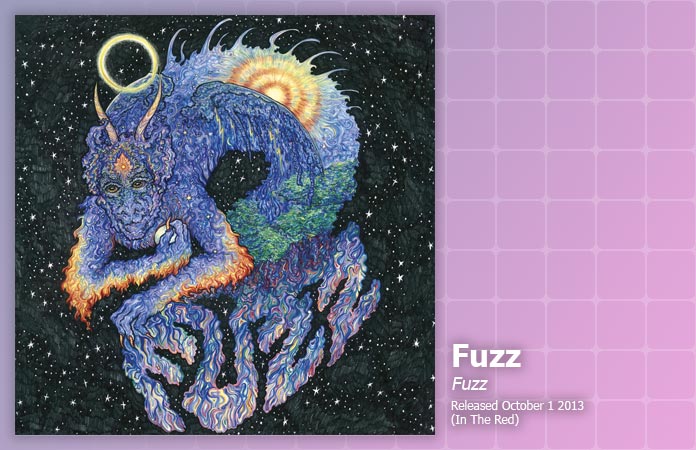
Ty Segall gets a lot of—admittedly deserved—attention. But what of his constant cohorts? Segall’s latest project, Fuzz, includes two of them and it’s killer. Fuzz is comprised of Roland Cosio (drummer for Epsilons) on bass and Charles Moothart on guitar (The Moonhearts and live guitarist for Segall) and what’s this? Ty Segall on drums and vocals. Aw yeah.
Comments Off on Music Review: Fuzz, Fuzz
Music Review: Sleepies, More Humans EP
Published on November 14th, 2013 in: Current Faves, Music, Music Reviews, Reviews |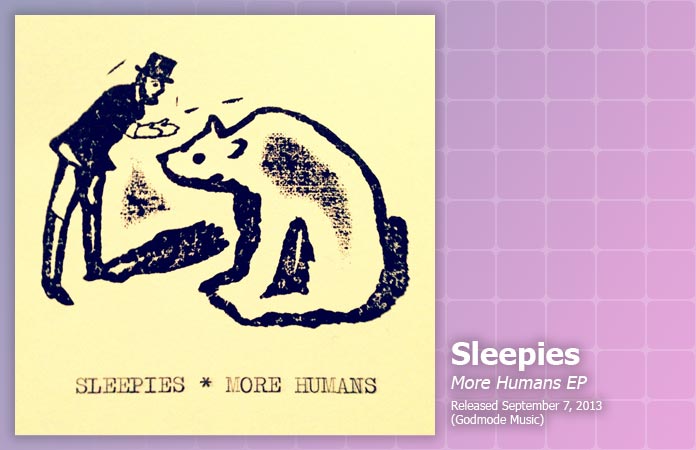
Brooklyn’s Sleepies are back with a new EP and it’s a good one. Though not as sonically varied as last year’s full-length Weird Wild World album (review), it does establish a definitive sound for the band, giving us even more to look forward to with their next release.
Their Dice Go To 20 & Amps To 11: D&D-Inspired Rock Album Out In Early 2014
Published on November 13th, 2013 in: Music, Retrovirus |By Jesse Greener
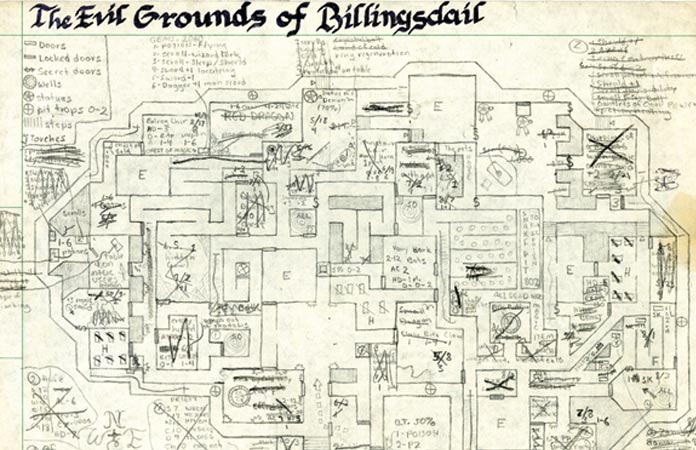
Wearily, you think back on your expedition from adolescence. You left with a small band of companions in search of epic adventures and righteous tunes. But, one after the other, members of your party were charmed by false promises of prosperity and now pray with the masses at the altars of security and mediocrity. Alone, you fought on, but in time fatigue and despair overtook you. To your horror, the moment you laid down your axe you too were quickly surrounded by fools, thieves—and worse—their popular music.
Weary traveler, your suffering has been noted; your prayers have been heard. A rain of fire is coming to the system that entrapped you. And it comes in the form of a Wizard using his Stone Axe to summon a new ’70s rock compilation: Warfaring Strangers: Darkscorch Canticles.
This new compilation, to be released in March 2014, is brought to you by Numero Group, an archival record label that goes to great lengths to unearth long-forgotten or under appreciated music, film, and photography for a second airing. Warfaring Strangers is their latest genre-defining compilation of “wizard rock.” The album will feature 16 bands from the ’70s with names like Stone Axe, Medusa, and Wizard. But the awesomeness doesn’t stop there. The music will be presented with authentic, amateur Dungeons & Dragons inspired artwork released on vinyl and CD, with rich embellishments.
In advance of this epic endeavor, two songs have been released: “Sorcerer” by Junction and “Warlord” by Wrath. Both are well-produced recordings with an authentic ’70s sound.
“Sorcerer” is classically classic rock a la Hendrix, featuring a mix of cool straight-ahead riffs, catchy choruses and selective use of tasteful delay on the vocals. Three swords and one dagger out of 5.
Wrath’s “Warlord” is faster, featuring an enjoyably active drummer who is only undermined by the flat drum sound, which plagued many ’70s-era recordings. This is made up for by the experimental vocals, with a hint of anti-war morality. Four swords and one healing potion out of 5.
Comments Off on Their Dice Go To 20 & Amps To 11: D&D-Inspired Rock Album Out In Early 2014
Music Review: Cate Le Bon, Mug Museum
Published on November 12th, 2013 in: Current Faves, Feminism, Music, Music Reviews, Reviews |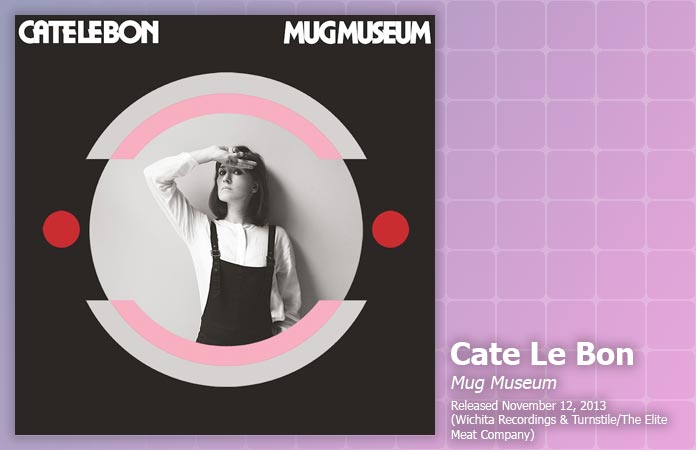
Cate Le Bon’s newest release, Mug Museum, is like something out of a fever dream. A wild mish mash of instrumental slashes and dips, coupled with Welsh native Le Bon’s unusual, beguiling voice and curious phrasing, Mug Museum is challenging listening.
Comments Off on Music Review: Cate Le Bon, Mug Museum
Music Review: Nikki Sudden (Waiting On Egypt, Bible Belt) and Jacobites (Jacobites, Robespierre’s Velvet Basement) – Vinyl Reissues
Published on November 12th, 2013 in: Current Faves, Music, Music Reviews, New Music Tuesday, Retrovirus, Reviews |By Hanna
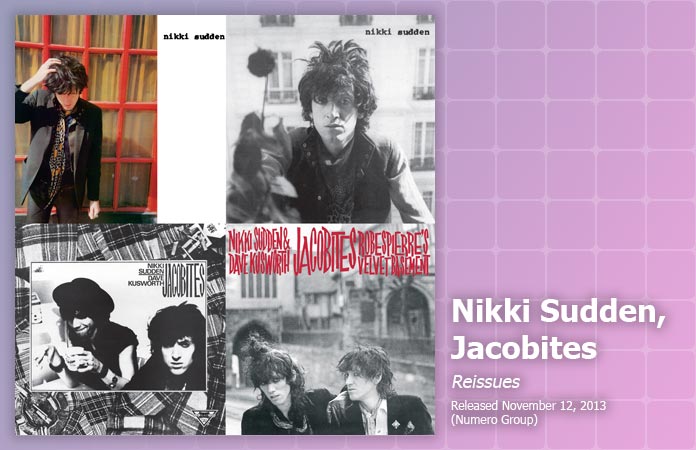
The re-issue of these four albums is part of a seven-album Nikki Sudden oeuvre re-issue from Numero Group. This, the first part, consists of the first two Nikki Sudden solo albums (Waiting on Egypt, Bible Belt), and the first two Jacobites albums, (Jacobites, Robespierre’s Velvet Basement). Together, they give an overview of Nikki Sudden’s work directly after Swell Maps.
(more…)
Comments Off on Music Review: Nikki Sudden (Waiting On Egypt, Bible Belt) and Jacobites (Jacobites, Robespierre’s Velvet Basement) – Vinyl Reissues
Waxing Nostalgic Connecting The Dots: Jim Steinman, “Bad for Good”
Published on November 6th, 2013 in: Music, Waxing Nostalgic |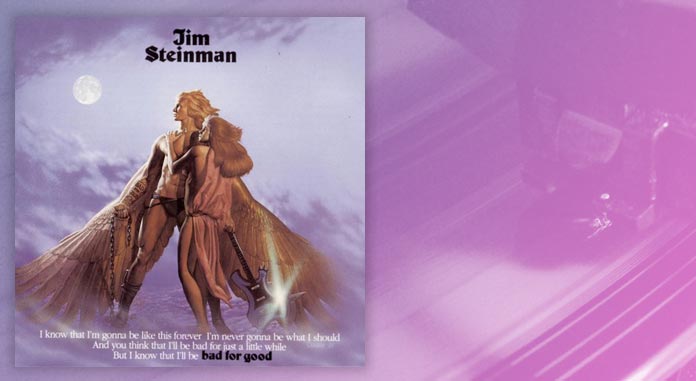
Let us now sing the praises of those who have gone previously unsung.
I didn’t get to see my sister, Winter, much when I was a kid. My dad’s daughter, she lived across the river in mysterious Ohio. I would get to see her once or twice a month. After she began driving and discovered the mysterious joys of high-school penis, it was even less than that. She was the one, however, who took me to see not only Purple Rain, but Grease 2. I’m not sure which one made more of an impact. Sure, Apollonia Kotero had amazing breasts, but I still remember all the words to “Reproduction” and “Do It for Your Country” from Grease 2.
Puberty sucks. Everything leaves its mark.
Winter’s musical taste tended towards the progressive and theatrical. I have never known anyone else, even to this day, who has owned a Marillion album. Winter did. She had every Electric Light Orchestra record. She had a love for the concept album that most certainly informed my own. There was one album in particular . . . and we’re getting to it.
Music Review: Howe Gelb, The Coincidentalist
Published on November 6th, 2013 in: Current Faves, Music, Music Reviews, Reviews |By J Howell

Howe Gelb begins The Coincidentalist with a half-whispered “Welcome to the desert.” It’s as intriguing an invitation as ever, but one that—after 30-plus years and who knows how many records—is as familiar as your front door. If you’re a longtime listener of Gelb and his various permutations and projects, that is. That there are now almost as many “projects” of Gelb’s as there are albums is both a testament to Gelb’s prolific work ethic and possibly a reason why Gelb hasn’t really caught on with the public so well, in the States at least.
His status as an elder statesman of risk-taking, genre-distorting “erosion rock”—though there’s so much more to it than that—is legendary, if mostly in the sort-of ghetto of “musician’s musician.” Howe Gelb almost seems cast as a musical crazy uncle, the sort who’s fun and smart and maybe just a little bit kooky, but who the rest of the family doesn’t mention much. This is a damned shame, as Gelb’s iconoclastic voice is just plain good for the soul, and awfully damned clever to boot.
Comments Off on Music Review: Howe Gelb, The Coincidentalist
Music Review: Buck Owens, Buck ‘Em! The Music of Buck Owens (1955-1967)
Published on November 5th, 2013 in: Current Faves, Music, Music Reviews, New Music Tuesday, Retrovirus, Reviews |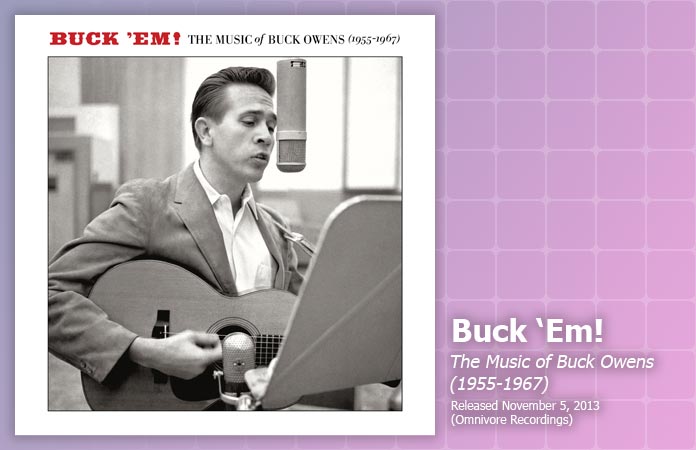
A sticker on the front of the CD proudly proclaims that Buck ‘Em! The Music of Buck Owens (1955-1967) isn’t your father’s Buck Owens collection, and it certainly isn’t. The hits are here, of course, but so are alternate takes and live tracks, as well as unreleased music. For a completist (like, say, me), it’s a treasure. With voluminous, entertaining liner notes written by Buck Owens himself (culled from his upcoming autobiography, also titled Buck ‘Em) (which is pretty impressive, especially since he passed away in 2006) (which is some Tupac level of productivity right there) it’s a chronological trip through the Buck Owens catalogue, and what a catalogue it is. Buck Owens and his Buckaroos made so many records, with so many catchy songs that it amazes me that they aren’t revered in the same way as Johnny Cash or Willie Nelson.
Comments Off on Music Review: Buck Owens, Buck ‘Em! The Music of Buck Owens (1955-1967)