Music Review: Mind & Matter, 1514 Oliver Avenue (Basement)
Published on October 29th, 2013 in: Current Faves, Music, Music Reviews, New Music Tuesday, Retrovirus, Reviews |By Paul Casey
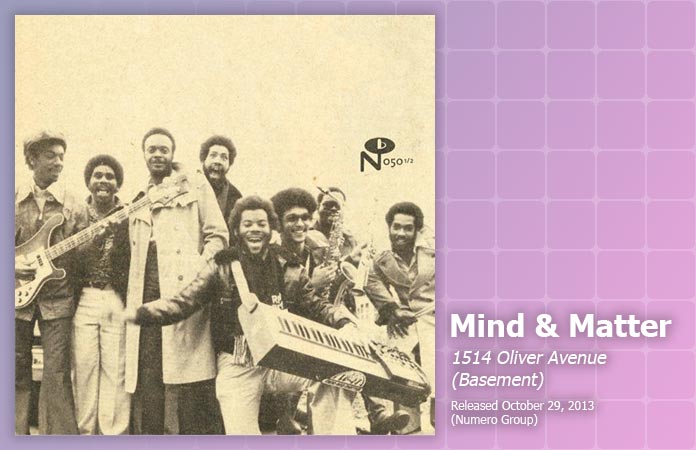
Jimmy Jam is half of one of the most important production teams of the last few decades. As discussed earlier this year, Jimmy Jam and Terry Lewis were probably the most talented people to be connected to Prince. Although both were more than capable of writing, producing, and performing on their own albums, their input on The Time was largely restricted to live shows. Their ability to work outside of Prince’s insecure and restrictive system would lead to their exit from the band and push them to become the hit-making powerhouses of the 1980s and 1990s, leading Janet Jackson to nine number ones.
Comments Off on Music Review: Mind & Matter, 1514 Oliver Avenue (Basement)
Music Review: Patti Page, The Complete Columbia Singles 1962-1970
Published on October 29th, 2013 in: Current Faves, Feminism, Music, Music Reviews, New Music Tuesday, Retrovirus, Reviews |
The fine folks at Real Gone Music have released a definitive compendium of Patti Page records recently. The Complete Columbia Singles 1962-1970 does just what it says on the tin, and paints a portrait of an artist who was prolific and gifted, having a career that spanned seven decades. The photo of Patti Page on the front cover is strikingly beautiful and inside is a two-disc set with copious liner notes that mark the date of release of each song and their various chart positions.
While Page was ubiquitous on the Billboard charts in the 1950s, being the #2 artist of that decade, the liner notes caution us to not think of her in that way solely. In the ’60s and ’70s, she branched out, charting numerous times on the Easy Listening charts as well as the Country charts. The Complete Columbia Singles covers many of those hits.
Comments Off on Music Review: Patti Page, The Complete Columbia Singles 1962-1970
Music Review: Patti Page, From Nashville to L.A. – Lost Columbia Masters 1963-1969
Published on October 29th, 2013 in: Current Faves, Feminism, Music, Music Reviews, New Music Tuesday, Retrovirus, Reviews |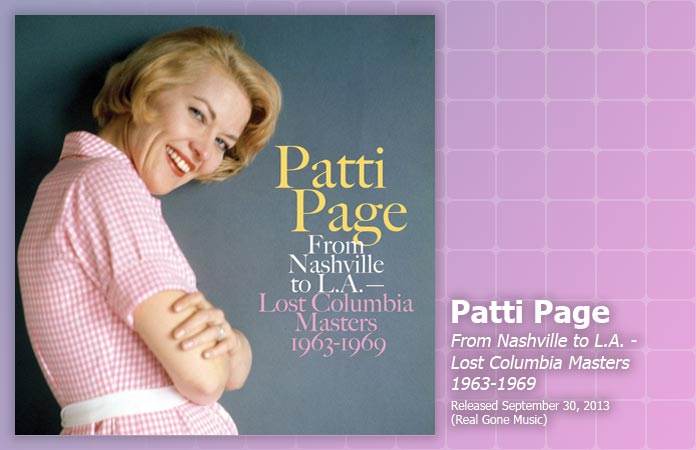
The new Patti Page release From Nashville To L.A.—Lost Columbia Masters 1963-1969 is comprised of unreleased masters from recording sessions in the 1960s. In those days, recording sessions consisted of laying down several tracks in a span of three or so hours, usually three or four songs live with an orchestra. The most commercial pieces would be put out as singles, others would be used as B-sides or album tracks, but there would almost always be songs that didn’t meet either criteria. From 1962-1970, Patti Page recorded almost 200 songs for Columbia. Fifty or so were singles; many were on albums. These leftovers, in no way inferior, are being released on From Nashville To L.A. for the first time.
Comments Off on Music Review: Patti Page, From Nashville to L.A. – Lost Columbia Masters 1963-1969
Music Review: Rene Lopez, Let’s Be Strangers Again EP
Published on October 28th, 2013 in: Current Faves, Music, Music Reviews, Reviews |
Could Rene Lopez be headed for Broadway? A cursory listen to his EP, Let’s Be Strangers Again, suggests a passing familiarity with contemporary show tunes. He writes songs with melodies so memorable you’ll be singing along and dancing down the street before the song has ended. His strong, sure baritone ably catches the ear, and his songs encompass conga drums, polyrhythms, and horn charts that suggest both Fania and 42nd Street. The slick yet straightforward production gives the album an inviting sound.
Comments Off on Music Review: Rene Lopez, Let’s Be Strangers Again EP
Music Review: The Fratellis, We Need Medicine
Published on October 25th, 2013 in: Music, Music Reviews, Reviews |
After a five-year hiatus, The Fratellis have returned with their third album, We Need Medicine. It attempts to be a return to former glory, but it falls painfully short. The songs aren’t as punchy as the ones on their surprising debut, Costello Music, or even its follow up, Here We Stand. Jon Fratelli’s voice is still brilliantly distinctive and compelling, and the guitar riffs are as crunchy as always, but the songs start with bombast and furor and then peter out to . . . not much. It’s disappointing.
Comments Off on Music Review: The Fratellis, We Need Medicine
Music Review: Various Artists, The Dawn Of Psychedelia
Published on October 24th, 2013 in: Culture Shock, Current Faves, Music, Music Reviews, Retrovirus, Reviews |
After listening to Cherry Red Records’ vast two-CD set The Dawn Of Psychedelia, I feel that I can say without a doubt that the humble flute launched the psychedelic revolution. Or possibly the sitar. Or a combination of both.
The Dawn Of Psychedelia attempts to trace back the origins of the Aquarian Age that defined the music of the ’60s. Sometimes, it hits the nail on the head. Other times, it sounds a bit like filler.
Comments Off on Music Review: Various Artists, The Dawn Of Psychedelia
Music Review: Jon Batiste and Stay Human, Social Music
Published on October 15th, 2013 in: Current Faves, Music, Music Reviews, New Music Tuesday, Reviews |
Jon Batiste was born into New Orleans musical royalty—it is not mere coincidence that Wendell Pierce’s character Antoine shares the surname. On their debut album, Social Music, Jon Batiste and Stay Human dip effortlessly into different genres and make a remarkable album. It’s warm and engaging, and Batiste’s piano prowess is awe-inspiring.
Music Review: James Booker, Classified: Remixed and Expanded
Published on October 15th, 2013 in: Current Faves, Music, Music Reviews, New Music Tuesday, Reviews |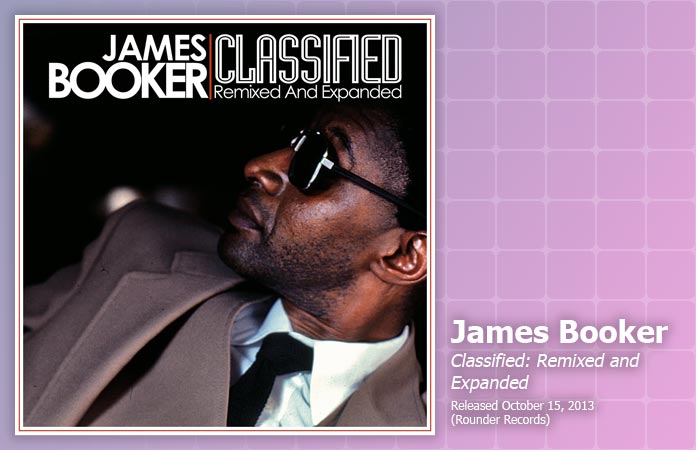
All Music Guide calls the original edition of James Booker’s Classified his best album. I can only imagine how delighted they will be upon hearing Classified: Remixed and Expanded. Released on CD and limited edition double LP vinyl, this remixed version offers nine never-before-released songs as well as voluminous liner notes.
James Carroll Booker III went by many self-given monikers: The Bayou Maharajah, The Bronze Liberace, The Piano Pope, The Ivory Emperor. A flamboyant and astoundingly talented pianist, he fits neatly into the lineage of New Orleans piano greats: Jelly Roll Morton, Professor Longhair, James Booker, and Booker’s student, Harry Connick, Jr. Booker was a bit of an odd duck, and perhaps that’s why he’s not in the Rock and Roll Hall of Fame or comes to mind as unbidden as the other demigods of NOLA piano. Dr. John, himself no slouch, called Booker “the best black gay, one-eyed junkie piano genius New Orleans has ever produced.”
Comments Off on Music Review: James Booker, Classified: Remixed and Expanded
Music Review: Electric Six, Mustang
Published on October 8th, 2013 in: Current Faves, Music, Music Reviews, New Music Tuesday, Reviews |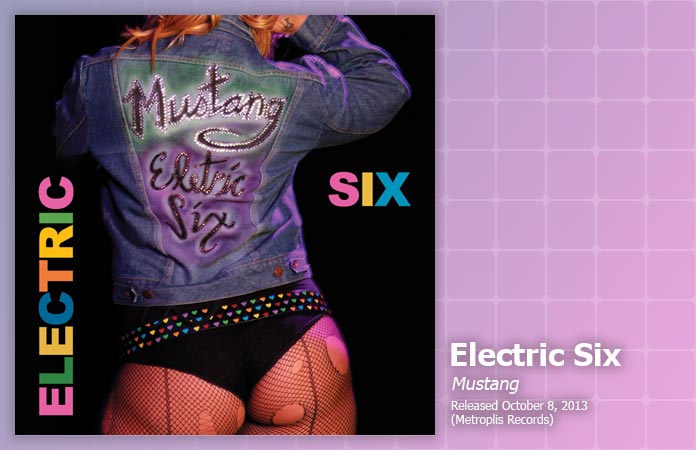
Are you imagined or real?
Or somewhere in between?
—Electric Six, “Show Me What Your Lights Mean”
How do you solve an enigma like Electric Six? The unflattering, often condescending reviews of their albums seem to indicate that music critics only listen to them once or twice before discounting them altogether. I hate to bring up the song that rhymes with “Ray Jar,” but not because it’s a bad song. After all, it does bring legions of fans to their shows (though they frequently are, admittedly, drunken and annoying bros who don’t seem to grasp that the band traffics in irony just as well as it does in impossibly addictive music). Yet it illustrates what most people think of when they think of Electric Six. It’s sort of like describing James Spader as “that guy who was in Pretty In Pink.”
Keep in mind this next statement comes from a diehard, committed fan: Electric Six albums are almost always immediately off-putting and it’s only after listening to them several times that their insidious brilliance wraps itself around you like a mental illness. Mustang is no different, but it’s not Fire, Part 9 by any means.
Comments Off on Music Review: Electric Six, Mustang
Music Review: Alex Chilton, Electricity By Candlelight
Published on October 7th, 2013 in: Current Faves, Music, Music Reviews, Retrovirus, Reviews |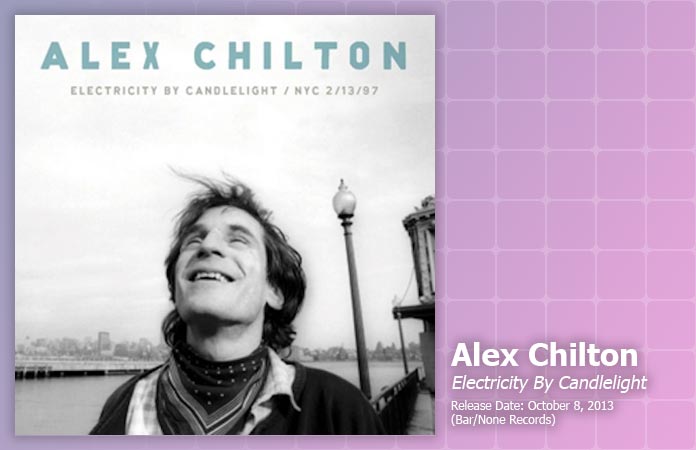
Electricity By Candlelight is the kind of record that music nerds dream of. Imagine your favorite musician playing an acoustic set of his favorite songs, things by the artists who influenced him, to a very intimate, engaged crowd. Imagine that he is playing in a venue where a storm has knocked out the electricity, and he’s playing in a nearly pitch black room, illuminated by only three table candles. And you have had the foresight to bring your trusty tape recorder, which is great, because if you hadn’t documented it, no one would believe it even happened.