Music Review: Painted Palms, Forever
Published on January 24th, 2014 in: Current Faves, Music, Music Reviews, Reviews |
At the risk of dating this review, Painted Palms’ Forever is a beam of sunlight in the middle of an oppressive winter. It’s not like pulling up the shades at 7 a.m., though. The album’s delightful qualities creep up on you slowly but surely, until you’re singing along and humming the tunes later on.
Comments Off on Music Review: Painted Palms, Forever
Music Review: Foetus, Soak
Published on December 31st, 2013 in: Current Faves, Music, Music Reviews, New Music Tuesday, Reviews |By Julie Finley

Let me start off by saying it has been very hard for me to enjoy anything lately. This year has sucked the life out of me due to being in constant pain. When you are in pain, it is hard to focus on anything but agony itself. That agony becomes mental anguish on top of the physical distress, thus making everything worse. In order to break through the grip of throbbing torment long enough to take notice of anything else, it has to be of either A) exceptional excellence, or B) something that sucks worse than your current state. In the case of Foetus’s Soak, it is of exceptional excellence!
Comments Off on Music Review: Foetus, Soak
Music Review: Various Artists, Psych-Out Christmas
Published on December 20th, 2013 in: Current Faves, Holidays, Music, Music Reviews, Reviews |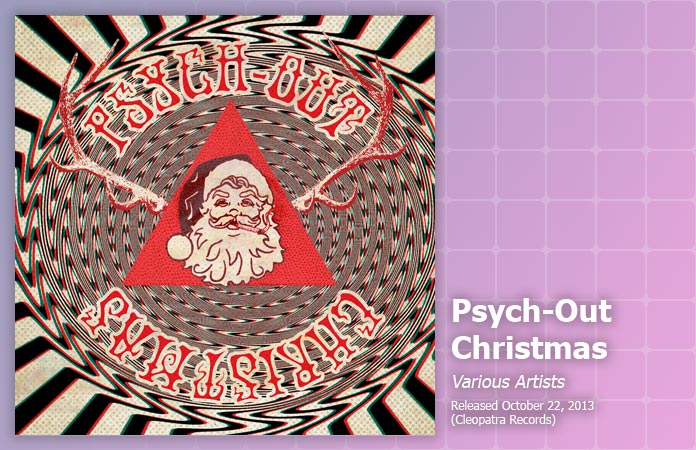
It’s that time of year when you’re sick to death of Christmas music. The forced cheer, the same five or six songs over and over . . . you know the routine. Thankfully, the fine folks at Cleopatra Records have recently released Psych-Out Christmas, which is exactly that.
Comments Off on Music Review: Various Artists, Psych-Out Christmas
Music Review: Melvins, Tres Cabrones
Published on December 12th, 2013 in: Current Faves, Music, Music Reviews, Reviews |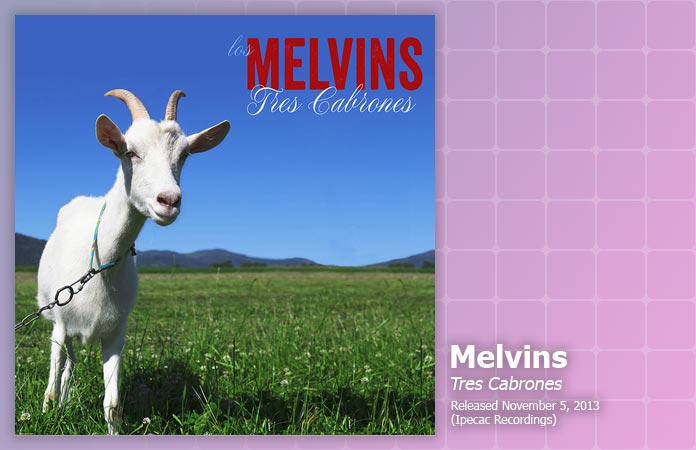
Unless you’re a hardcore Melvins fan, you probably didn’t realize that not only have they been around since the ’80s, they’re also one of the more insanely prolific bands of the last few decades, with dozens of albums (including live albums), EPs, and singles, not to mention their many appearances on various compilation and tribute albums, plus near-constant touring. They not only put to bed that tired old chestnut about bands from the ’80s being terrible, they proceed to stay up all night afterwards, getting shit done.
Tres Cabrones, which loosely translates to “Three Fuckers,” is their latest album, but a cohesive long-player it is not. It’s an assemblage of songs previously released on vinyl singles and EPs, a couple of new tracks, and covers of traditional folk songs (yes). If that sounds like a bit of a mess to you, you’d be right, but it’s still quite good. The album does have one unifying thread that also pushes it into “must hear” territory. All the songs include King Buzzo, Dale Crover, and original drummer Mike Dillard (with Crover on bass).
Comments Off on Music Review: Melvins, Tres Cabrones
Music Review: Various Artists, Purple Snow: Forecasting The Minneapolis Sound
Published on December 3rd, 2013 in: Current Faves, Music, Music Reviews, New Music Tuesday, Retrovirus, Reviews |By Paul Casey
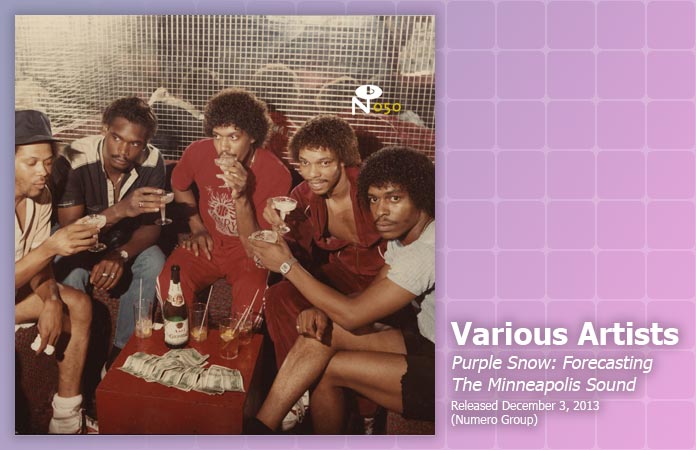
Purple Snow: Forecasting The Minneapolis Sound collects music from many musical outfits that helped shape the sound of the title. While the title is a nod to the importance of that miniature-sized and prodigiously talented man, the collection assembled by Numero Group has a broader interest. This is a work of love and commitment. It is a history lesson for those who think great artists are created in a vacuum. Everybody who has sat back and had a sob over the genius of Prince, Jimmy Jam & Terry Lewis, or Alexander O’Neal and assumed they came out fully formed, should have a listen to this compilation.
Comments Off on Music Review: Various Artists, Purple Snow: Forecasting The Minneapolis Sound
Music Review: Sebastien Grainger, Yours To Discover
Published on November 30th, 2013 in: Canadian Content, Current Faves, Music, Music Reviews, Reviews |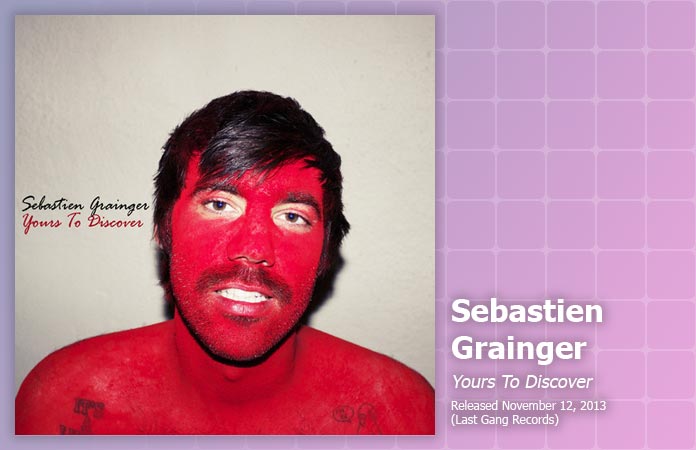
Sebastien Grainger’s first album post-Death From Above 1979 included a band called The Mountains and established a distinctive musical style far removed from his work with Jesse F. Keeler (review). Five years later, Grainger has something new to offer—this time without The Mountains—and he’s expanded his palette considerably, while still retaining some of what made that first solo debut so compelling.
Comments Off on Music Review: Sebastien Grainger, Yours To Discover
Music Review: Saâda Bonaire, Saâda Bonaire
Published on November 30th, 2013 in: Culture Shock, Current Faves, Feminism, Music, Music Reviews, Retrovirus, Reviews |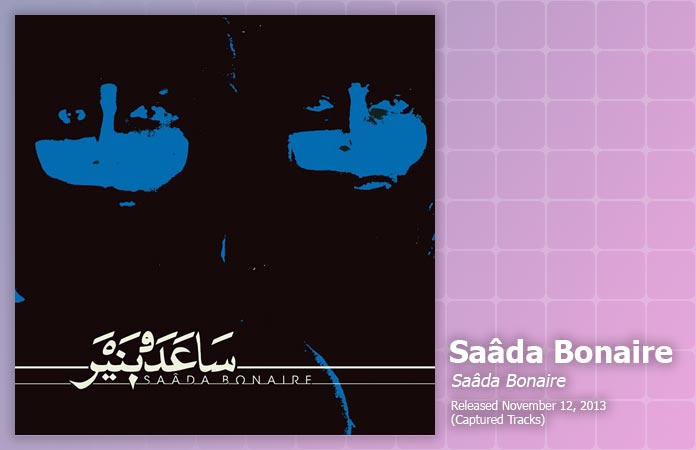
There’s a lot to be said about the decidedly bizarre time capsule that is Saâda Bonaire. They weren’t so much a band as an experiment, but one that definitely pays off.
In 1982, Bremen DJ Ralf Behrendt, a.k.a. Ralf von Richthofen, embarked on a musical project that he hoped would replicate something akin to the influence Caribbean and Indian music was having on British pop. Behrendt had an exposure to and fascination with Turkish music due to his work in the German government’s immigration department. He enlisted local Turkish and Kurdish musicians, as well as his then-girlfriend Stephanie Lange and her friend Claudia Hossfeld (who both wrote the songs), to create Saâda Bonaire.
Thirteen tracks were recorded for EMI in Kraftwerk’s Studio N with producer Dennis Bovell, including “You Could Be More As You Are” as the intended single. But then, it all hit a snag.
Comments Off on Music Review: Saâda Bonaire, Saâda Bonaire
Music Review: An Evening With Neil Gaiman And Amanda Palmer
Published on November 27th, 2013 in: Current Faves, Music, Music Reviews, Reviews |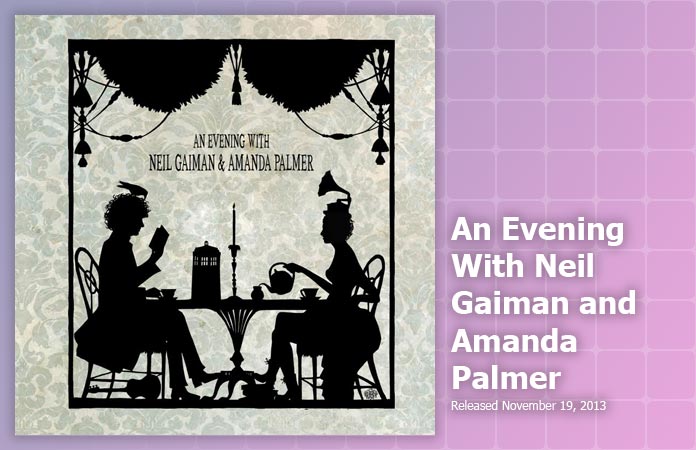
“Happy loving couples make it look so easy/Happy loving couples always talk so kind.”
—Joe Jackson, “Happy Loving Couples”
When Neil Gaiman and Amanda Palmer got together, it seemed to be the perfect pairing, a gentle collision of geek-o-spheres, the kind of thing the word “adorkable” was coined for. Witness the reserved writer and the flamboyant cabaret singer gliding around the world, about three feet off the ground, being fabulous and sweetening up Twitter with their frequent declarations of love for each other.
That’s cool, if you like shit like that.
Some people don’t like to see happy couples. I understand that. I used to be that way. But it takes a lot of work to be bitter all the time. I enjoy that dynamic now, that chemistry. It’s nice to be around people who enjoy being together, not taking caustic pot shots at each other and gleefully wishing for the other’s slow painful death.
Comments Off on Music Review: An Evening With Neil Gaiman And Amanda Palmer
Music Review: Various Artists, It’s A Scream How Levine Does The Rhumba: The Latin-Jewish Musical Story 1940s-1980s
Published on November 26th, 2013 in: Culture Shock, Current Faves, Music, Music Reviews, New Music Tuesday, Retrovirus, Reviews |
Ruth Wallis
The Idelsohn Society For Musical Preservation has an important mission: to look at Jewish history and the Jewish experience through recorded sound. Their motto: History sounds different when you know where to start listening. With their two CD set It’s A Scream How Levine Does The Rhumba: The Latin-Jewish Musical Story 1940s-1980s, they have created an important document that explores the connection between Jewish and Latin music. With vast liner notes, essays, archival photos and ephemera, it is a fascinating compilation.
It’s A Scream How Levine Does The Rhumba is surprisingly varied despite its narrow scope. There are Latin artists doing Jewish songs and Jewish artists embracing Latin beats. There are novelty songs from the early 20th century, disco beats, straight-up funk, and blazing salsa tunes.
Comments Off on Music Review: Various Artists, It’s A Scream How Levine Does The Rhumba: The Latin-Jewish Musical Story 1940s-1980s
Music Review: Patrick Cowely, School Daze
Published on November 25th, 2013 in: Current Faves, LGBTQ, Music, Music Reviews, Reviews |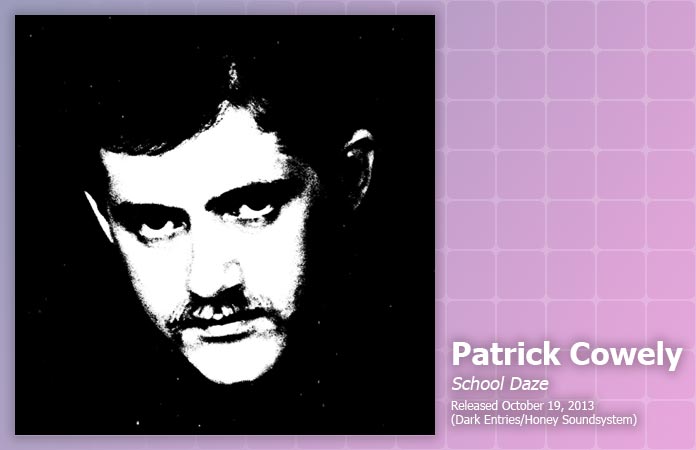
As a big disco fan, I’m ashamed to admit that Sylvester is not a name I mention when discussing my favorite tunes of the genre. “You Make Me Feel (Mighty Real)” and “Do You Wanna Funk” are two of Sylvester’s biggest hits and besides being fantastic tracks, have another thing in common. They were both composed and produced by Patrick Cowely.