Movie Review: Better Than Something – Jay Reatard
Published on November 19th, 2012 in: Current Faves, Documentaries, DVD, Movie Reviews, Movies, Music, Reviews |
Still from Better Than Something
“What I do is not about being comfortable with the world.”
—Jay Reatard, in Better Than Something
There’s a part in Better Than Something, the Jay Reatard documentary, where the musician talks about being “so tired. . . and I’m only 29.” He laughs a little and adds, “There’s nothing to look forward to.” Anyone who sees this and doesn’t agree with this statement just a little—even secretly—is probably not going to like Jay Reatard’s music and may not even care about this documentary.
Comments Off on Movie Review: Better Than Something – Jay Reatard
Blu-Ray Review: The Barrens
Published on November 13th, 2012 in: Blu-Ray, Current Faves, DVD/Blu-Ray Reviews, Movie Reviews, Movies, Reviews |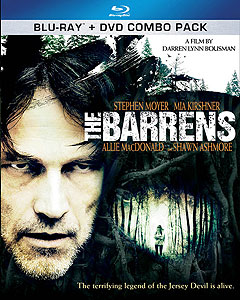
As someone who has never seen any films in the Saw franchise, I was unfamiliar with writer/director Darren Lynn Bousman until now. The legend of the Jersey Devil has been covered on both The X Files and Supernatural, so I was curious to see what a film about the creature—and one starring True Blood‘s Stephen Moyer no less—would be like. I was not disappointed.
Although The Barrens is not technically a horror film, it has elements of horror: monsters, paranoia, insanity, and just enough gore to be convincing. Unfortunately, dramatic thrillers with horror elements usually disappoint genre fans looking for scares or splatterfests. This is a shame, because The Barrens is a great movie.
The film was shot on Super 16 and the difference between this format and digital is obvious immediately. It has a wonderful gritty and grainy texture and shows off some incredible lighting set-ups to their fullest extent. My only complaint would be the overuse of flash edits in some of the scenes, but I realize that at least a few of these were necessitated by budget restraints and weather conditions.
Comments Off on Blu-Ray Review: The Barrens
Music Review: School Of Seven Bells, Put Your Sad Down EP
Published on November 13th, 2012 in: Current Faves, Music, Music Reviews, New Music Tuesday, Reviews |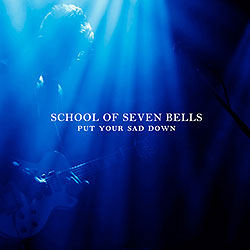
The only downside to a new School of Seven Bells EP is that I’m in no way tired of Ghostory, their full-length release from February of this year (reviewed here). This is a good problem to have.
Put Your Sad Down opens with the 12-minute-plus title track, which takes a while to build, but has a beautiful payoff, an extremely skillful hybrid of straight-up dance music and SVIIB-style dream pop. It’s what My Bloody Valentine might sound like if they hadn’t broken up after two albums. The lyrics are straightforward and sexy; “Put Your Sad Down” is the rare song that sounds exactly like what the lyrics imply. The song’s intensity eventually tapers off only to dial it up again with an impressive subtlety and finesse.
“Secret Days” (listen here) signals a shift to pre-Ghostory SVIIB, with a heavy drumbeat and decidedly South Asian influence in the music, and a wordless vocalized chorus that’s pure magic. I wish I liked “Faded Heart” more, however. It sounds like a clichéd remix of a superior song that’s buried somewhere inside, although that core does show the anthemic pop sheen of Abba.
The next song, “Lovefingers,” is a cover of the 1968 song by Silver Apples from their 1968 self-titled debut album. Here the original’s psychedelia is replaced with a spooky, Middle Eastern mysticism with wonderful results. The repetitive pulse of “Painting a Memory,” the EP’s final song, nourishes a hypnotic dance beat with more South Asian sounds in Alejandra Deheza’s vocalizations. It also shows that the band sounds best when they give themselves enough time to let the ingredients of their recipes simmer for a while.
Although Put Your Sad Down isn’t as consistently excellent as Ghostory, it is after all an EP and one with an overwhelming ratio of hits to misses. It’s definitely whetted my appetite for the band’s next full-length release, whenever that may be.
Put Your Sad Down is out today from Vagrant and can be ordered from the band’s website.
Subscribe To Marshall Crenshaw: New Single Out On November 23
Published on November 12th, 2012 in: Current Faves, Music, Music Reviews, Reviews, The Internets |By Cait Brennan

It’s hard to believe that Marshall Crenshaw’s tuneful, songs have been with us for three decades, but amazingly, 2012 marks the 30th anniversary of his acclaimed, self-titled 1982 debut. Three decades, five presidents, and thirteen albums later, he’s still going strong, not only with his own music, but his radio show, a book, film music, and vital compilation work as well. (It’s not an overstatement to say that the Crenshaw-helmed Hillbilly Music . . . Thank God!, a 24-track compilation of rockabilly and country sides by artists from Buck Owens to Rose Maddox to Hank Thompson to the Louvin Brothers, saved my soul and the souls of every living, breathing human being who heard it. It’s not too late for you, brother, get yourself a copy.)
Writing and performing new music is still where his heart’s at, though, and like so many artists in the still-evolving, post-record-industry-Armageddon landscape, Crenshaw turned to Kickstarter to fund a new way of getting his songs to his fans. After blowing past his goal with a cool $33,000, Crenshaw is launching a subscription EP series, enabling him to get new music to his fans in a cool way. Over the next two years, Crenshaw will release six exclusive three-song 10-inch, 45-rpm vinyl EPs, along with a download card for digital versions of the tracks.
The opener, which debuts November 23, features the brand-new Crenshaw tune “I Don’t See You Laughing Now,” combining Crenshaw’s relentless knack for melody with a withering character portrait of somebody who clearly had it coming. “It must be hell to realize you fell for your own lies,” sings Crenshaw, dismantling his subject line by line and rubbing it in with some gorgeous harmonies and the fine playing of Andy York on guitar and the brilliant Graham Maby on bass.
Track two features Crenshaw and alt-country sensations the Bottle Rockets on a live alted-up version of the Crenshaw gem “There She Goes Again,” originally on Crenshaw’s 1982 album.
A weird and wonderful cover of The Move’s post-apocalyptic 1971 classic “No Time” rounds out the set. Recorded with Glen Burtnik (who starred as Paul McCartney in Beatlemania opposite Crenshaw’s John Lennon), “No Time” is worth the price of admission all on its own, with its rich layered harmonies, gorgeous psych-pop production, and fine mastering by engineer Greg Calbi.
“I’ve always put a great deal of care into the albums I’ve made,” Crenshaw said in a press release. “But as a listener, I’ve always been a singles guy and an individual-tracks guy. I’m looking forward to creating a steady output of music in small batches, rather than being stuck in a cave for months and stockpiling a whole bunch of music and dumping it out all at once. Now, when I finish something, I get to put it out, instead of having to wait until I’ve got 12 more.”
“I Don’t See You Laughing Now” is available November 23 from marshallcrenshaw.com. Please note: the website has been down due to issues resulting from Hurricane Sandy, so keep checking back.
Comments Off on Subscribe To Marshall Crenshaw: New Single Out On November 23
Music Review: Firewater, International Orange!
Published on November 8th, 2012 in: Current Faves, Music, Music Reviews, Reviews |By Julie Finley
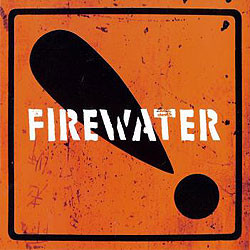
The new Firewater album came out on 9/11, so I have had some time to let it sink in. I don’t think it was a coincidence that it came out on that historic day, either; I truly think that Tod Ashley was thinking that it would be a good day to release the record, just in time for my first wedding anniversary (I’m kidding!).
I believe it’s been about four years since the last Firewater album, The Golden Hour, was released and International Orange! is the perfect sequel. In fact, I think I kinda like this one even more (and I really loved the last one). They are very similar musically, but lyrically there is a much more positive and playful vibe to International Orange!
Comments Off on Music Review: Firewater, International Orange!
Music Review: Ultimate Creedence Clearwater Revival – Greatest Hits & All-Time Classics
Published on November 6th, 2012 in: Current Faves, Music, Music Reviews, New Music Tuesday, Reviews |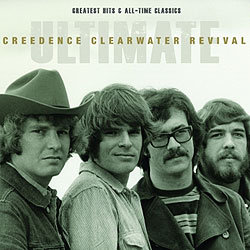
In the opening line of Alec Palao’s liner notes for the new three-disc set Ultimate Creedence Clearwater Revival, he makes the following statement: “If any one act could legitimately stake a claim to be America’s Beatles, then that would be Creedence Clearwater Revival.”
That is some bold shit.
Comments Off on Music Review: Ultimate Creedence Clearwater Revival – Greatest Hits & All-Time Classics
Music Review: Sophie Auster, Red Weather EP
Published on November 6th, 2012 in: Current Faves, Feminism, Music, Music Reviews, New Music Tuesday, Reviews |
From the first notes of her debut EP Red Weather, Sophie Auster creates a compelling mise e scene. The angular piano riff and cacophonous arrangement that propel the first song, “Run Run Run,” invest the song with a palpable sense of urgency. Auster sketches out a minimal narrative that deepens this mood, and you feel her voice in the pit of your stomach as surely as you hear it.
Comments Off on Music Review: Sophie Auster, Red Weather EP
Movie Review: The Red Machine
Published on November 5th, 2012 in: Current Faves, Movie Reviews, Movies, Reviews |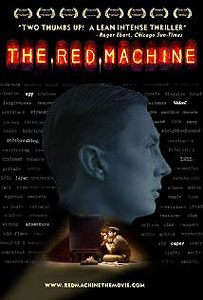
In the annals of unlikely buddy teams, the portrayal of a working relationship between a rock-ribbed naval officer and a wisecracking thief seems so obvious, it’s a wonder it hasn’t been done before. Stephanie Argy and Alec Boehm’s compulsively watchable heist flick The Red Machine hinges on such a surprising bond. Set against the conflicted relationship between the US and Japan in the years before World War II, Argy and Boehm create a fascinating world.
The place is Washington, DC; the time, 1935. The Great Depression is at its height, and war between the Allies and Axis powers is over half a decade away. Cryptologists in the nation’s capitol are working to decode a series of messages sent from the Japanese consulate. Two unlikely accomplices must work closely with one another to aid in the cryptologists’ plight: Eddie Doyle (Donal Thoms-Cappello), a voluble, fast-talking safecracker, and F. Ellis Coburn (Lee Perkins), a disgraced naval officer as mysterious as his first initial. Coburn regards Doyle with silent contempt, while Doyle works to get thrown off this project by trying to get on Coburn’s last good nerve. In spite of their fractious bond, the immovable object and unstoppable force work together to create a caper that will allow them to get the goods on their opponents.
Comments Off on Movie Review: The Red Machine
Graveyard Smash: John Zacherle, Monster Mash/Scary Tales
Published on October 30th, 2012 in: Current Faves, Halloween, Music, Music Reviews, New Music Tuesday, Reviews |By Cait Brennan
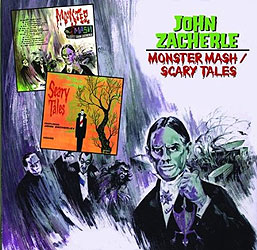
Ever since the creeping dawn of that undead-zombification machine known as television, monster movies and horror hosts have been joined at the hip, like a mad scientist and his freakishly deformed sidekick, like Jan and her pan, like Rosie Grier and Ray Milland’s racist head. From Vampira and Ghoulardi to Dr. San Guinary and Morgus the Magnificent, horror hosts were an indelible part of pop culture in the ’50s, ’60s, and ’70s.
But nowhere is there a horror host whose career—and life—has lasted as long as John Zacherle. The rockingest of horror icons, Zach got his start as Roland (pronounced “Roland“) on Philadelphia’s WCAU before pulling up stakes to New York and becoming “Zacherley” (same ghoul, different name). Now 94, the eternal Cool Ghoul is almost certainly the last survivor of the golden age of horror hosts, and he still looks as good . . . he still looks as . . . he still looks like Zacherle, and he’s still out there making convention appearances and delighting generations of horror fans.
Comments Off on Graveyard Smash: John Zacherle, Monster Mash/Scary Tales
Music Review: Matmos, The Ganzfeld EP
Published on October 30th, 2012 in: Current Faves, Music, Music Reviews, New Music Tuesday, Reviews |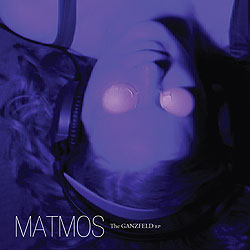
In their 20-year history of making music together, Drew Daniel and M. C. Schmidt have collaborated on some delightfully weird compositions, unusual instrumentations, and intimate, fun, and often frankly erotic live performances. The intervening years seem not to have blunted the drive towards innovation both in concept and result, even if The Ganzfeld EP contains two of the most straightforwardly danceable tracks Matmos has ever produced. There’s still plenty of experimental oddness and scientific detachment to go around, but the youthful provocation shows signs of approachable mellowing.
Comments Off on Music Review: Matmos, The Ganzfeld EP