Music Review: Crime & the City Solution, A History of Crime – Berlin 1987-1991: An Introduction to Crime & the City Solution
Published on January 9th, 2013 in: Current Faves, Music, Music Reviews, Retrovirus, Reviews |By Julie Finley
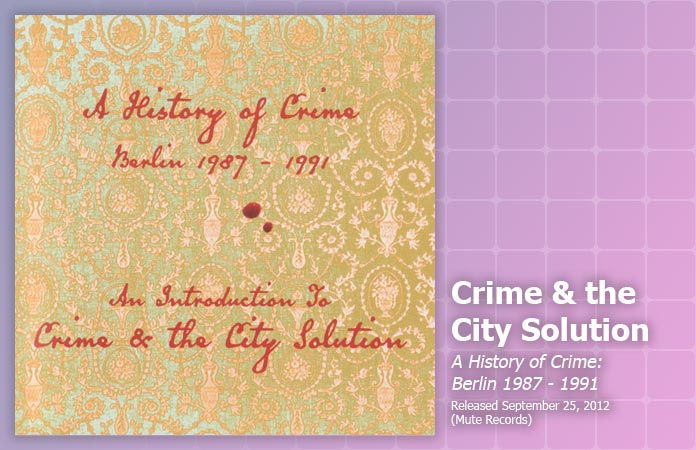
Being a longtime fan of Crime & the City Solution, I was already familiar with all of the tracks on A History of Crime. However, the albums in their discography aren’t easy to find, and are more than likely out of print, so if anyone ever had a fleeting interest in this band, but can’t get their hands on their albums, this release bridges that gap. A History of Crime is a grand collection of Crime & the City Solution’s works, and doesn’t disappoint. However, the one major flaw is that it only includes music created between 1987-1991. I mention this because the pre-1987 output contains some of my favorite songs.
Comments Off on Music Review: Crime & the City Solution, A History of Crime – Berlin 1987-1991: An Introduction to Crime & the City Solution
Blu-Ray Review: Lost Girl, Season 2
Published on January 8th, 2013 in: Canadian Content, Current Faves, DVD/Blu-Ray Reviews, Feminism, Horror, Reviews, Science Fiction, Teh Sex, TV |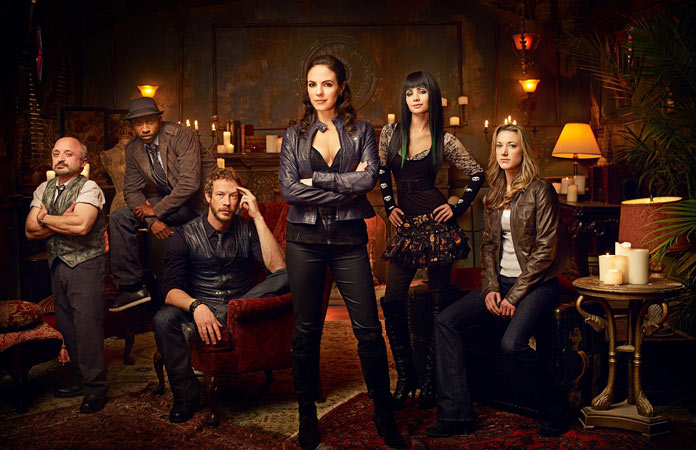
As much as I love genre fiction, I’ll admit that most mainstream genre movies and TV shows are fairly sexist. Even if they don’t obviously reinforce stereotypes or display misogynist behavior, the violence enacted against women is often in higher proportion to what their male counterparts must endure. Enter Lost Girl, a Canadian-produced TV show whose title might seem to indicate more of the same, but which is a delightful and welcome entry into the world of genre television.
Lost Girl was created by a woman (Michelle Lovretta) and many of the episodes are written and directed by women. In addition, the gender makeup of the principal cast is half female and half male. The main character, Bo (Anna Silk) is a succubus who is trying to find her way in the world of the Fae (also known as fairy folk) while not committing to either the Light Fae or Dark Fae.
Comments Off on Blu-Ray Review: Lost Girl, Season 2
Band Profile: The Grownup Noise
Published on January 7th, 2013 in: Current Faves, Music |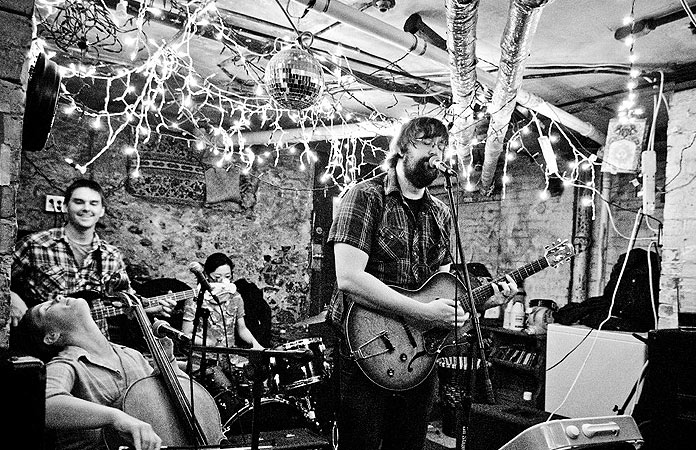
Over the past few years, the Boston music scene has been host to a reinvention of the folk music scene. Bands like Crooked Still, Golden Bloom, and the Michael J. Epstein Memorial Library have adapted aspects of traditional music to a more rock- and indie-inspired sound. Most recently, The Grownup Noise has blended verbose, catchy singalong verses and choruses to ornately orchestrated pop songs and substantial rock rhythms.
The opening riff for “Strawmen,” the opening song for the band’s 2011 release This Time, With Feeling, sounds like the musical equivalent of a Dagwood sandwich. Rolling, savory percussion wells up amidst tangy cello and a schmear of shimmering keyboard. This combination of aural flavors shouldn’t work as well together as they do. Call it love at first taste.
Throughout the album, canny arrangements contrast the band’s musical lineup in a manner that keeps the listeners in a kind of musical suspense. On a production level, This Time, With Feeling has a clean, mid-range sound that sometimes emphasizes the band’s idiosyncratic, retro qualities, with some fun stereophonic sound effects.
Paul Hansen’s songwriting skills and endearingly imperfect vocals anchor The Grownup Noise’s musical cornucopia. Hansen writes lushly melodic songs and pairs his abbreviated verses with long, detailed lyrical stretches. Listening to him fit all the words into his verses sounds like watching someone try to write a long, detailed message on the back of a beautiful postcard. Hansen sings in a nasally tenor that suggests James Taylor or Van Dyke Parks. The contrast of his breathy, sometimes pinched-sounding vocals against the movable feast of The Grownup Noise’s baroque pop makes for an engaging listen.
Fans of The Grownup Noise’s impeccable records won’t have long to wait for the next one. The quintet recorded a new album this past fall that should be available soon. In the meantime, they will be engaging in a brief East Coast tour this February. Fans of unusual pop music should check them out. You can listen to tracks on the band’s website or Facebook page.
Tour Dates:
February 21: The Middle East (upstairs), Cambridge MA/8:30 p.m.
February 22: The Rock Shop, Brooklyn NY/9 p.m.
February 23: The Basement, Northampton MA/8 p.m.
Comments Off on Band Profile: The Grownup Noise
Music Review: Django Unchained Original Motion Picture Soundtrack
Published on December 21st, 2012 in: Current Faves, Music, Music Reviews, Soundtracks and Scores |
Audiences know by now that the films of Quentin Tarantino will have certain elements in common: protagonists that barely edge out of antihero territory, if at all; bad guys at least as charming as the heroes, but lacking in fundamental compassion; gleefully creative use of extreme profanity, either in dialogue or in philosophy; and of course, extreme, explicit, and shocking violence. Something often overlooked, however, until experienced, is the fact that Tarantino is one of the most gifted compilers of phenomenal soundtracks that has ever lived.
Comments Off on Music Review: Django Unchained Original Motion Picture Soundtrack
666 Park Avenue: The Best Little Horror Program You Aren’t Watching
Published on December 14th, 2012 in: Current Faves, Horror, TV |
The Ansonia
On September 30 of this year, a new supernatural drama called 666 Park Avenue premiered on ABC. Produced by David Wilcox, a veteran of such shows as Law & Order and Fringe, 666 Park Avenue is loosely based on the Gabriella Pierce novel of the same name. I’ve been watching and enjoying it, and apparently I’m one of only a few, because the show—disadvantaged perhaps by its 10 p.m./9 p.m. eastern time slot—has failed to break more than 2.1 of the Nielsen ratings share in the 18-49 demographic (which translates to about 23,982 viewers). It deserves a closer look in my opinion—at least for people who are into network TV horror.
The Vince Guaraldi Trio, A Charlie Brown Christmas
Published on December 13th, 2012 in: Current Faves, Holidays, Music, Music Reviews, Retrovirus, Reviews, Soundtracks and Scores, TV |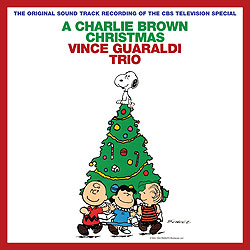
The tinkling piano lines, rolling brushed drums, and sprightly tempos of Vince Guaraldi’s soundtrack to the classic TV special A Charlie Brown Christmas are a welcome sign of the holiday season. Guaraldi’s keyboard treatments of classic Christmas songs like “Greensleeves,” “O Tannenbaum,” and the classic children’s choral arrangement of “Hark! The Herald Angels Sing” give these classics a new sound. Some of his originals, such as “Christmas Time is Here,” portray the loneliness and melancholy of the holiday season though a few minor chords and a contemplative melody. Other new songs, like the bright, upbeat “Linus and Lucy,” sound like the rush of energy you sometimes felt as a kid around the holiday.
Comments Off on The Vince Guaraldi Trio, A Charlie Brown Christmas
New Vinyl: Concrete Blonde, “Rosalie” b/w “I Know The Ghost”
Published on December 6th, 2012 in: Current Faves, Feminism, Music, Music Reviews, Reviews |By Cait Brennan
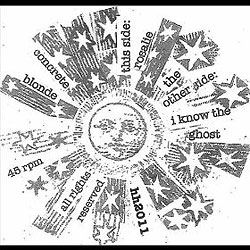
From their circa-1980 Dream 6 post-punk bona fides to their genre defining alternative rock gems like “God Is A Bullet,” “Joey,” “Ghost of a Texas Ladies Man,” and “Everybody Knows,” Concrete Blonde has made an enduring career of mixing the sacred and the profane, the earthy and the unearthly, a mosaic assembled in light and blood. Now 30 years into a truly iconoclastic career, singer/songwriter/bassist/artist Johnette Napolitano makes her home deep in the Mojave desert, and the ghosts of Joshua Tree haunt all seven inches of the group’s eminently cool new white vinyl spinner “Rosalie” b/w “I Know The Ghost.”
The limited edition 45 was originally pressed for the band’s 2011 Texas Halloween tour, and now a handful of the records are available at the band’s Official Website.
“She wraps herself in firelight, and dances in the sand like a ghost,” Napolitano sings on “Rosalie,” all low and mournful like a lost coyote. It’s a great country-infused old west tune, the kind you’d spin at midnight on Dia De Los Muertos. The flip side, “I Know The Ghost,” is a rave-up that hearkens to the band’s punk roots, buzzing with the kind of Madame Wong’s energy that only authentic survivors of the era could conjure.
Both tunes feature founding Concrete Blonde guitarist Jim Mankey (ex-Sparks, and himself a Joshua Tree resident) and drummer Gabriel Ramirez-Quezada, one of the brothers in LA rock en español standouts Maria Fatal and a ten year veteran of Concrete Blonde. The disc was recorded at Stagg Street Studios in Van Nuys with the band’s rock-steady engineer Anne Catalino. Videos for each of the songs are in the works.
The band is about to launch an East Coast tour, kicking off at Boston’s Sinclair Music Hall on Dec. 12 and heading to NYC’s Irving Plaza (12/13), Asbury Park’s Stone Pony (12/14), Washington DC’s 9:30 Club (12/17), Carrboro, NC’s Cat’s Cradle (12/18), Atlanta’s Variety Playhouse (12/19), Chicago’s Park West (12/21) and Minneapolis’ Variety Theatre (12/22). The band will also perform on WXPN Philadelphia’s “World Café Live” radio show on December 15.
One of the most unique and enduring bands of the alternative rock era, Concrete Blonde is still getting it done with passion and fire. These “songs of the spirits of the desert” are a welcome reminder of the band’s strength and Napolitano’s singular voice.
Comments Off on New Vinyl: Concrete Blonde, “Rosalie” b/w “I Know The Ghost”
Music Review: Big Dipper, Crashes On The Platinum Planet
Published on December 4th, 2012 in: Current Faves, Music, Music Reviews, New Music Tuesday, Reviews |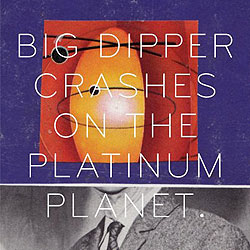
Of all the bands from the Boston Rock Class of 1990, Big Dipper weren’t the first candidates for the “Most Likely to Succeed” superlative. They wrote songs with undeniably catchy melodies and witty lyrics, and their shows at mid-sized East Coast clubs never failed to attract an audience.
Unfortunately, they had signed to Homestead Records, whose history of poor distribution and corrupt business practices restricted their reach to all but their most diehard fans. Though they jumped ship to Epic at the close of the decade, a series of shakeups at their label left them with little support. By the middle of the ’90s, “Dippah” (as their local fans called them) had joined fellow Beantown heavy-hitters Tribe and O Positive in the great cutout bin in the sky.
Free Single: The Explorers Club, “No Good To Cry”
Published on November 21st, 2012 in: Current Faves, Music |By Cait Brennan
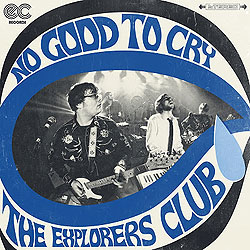
Charleston, South Carolina’s classic pop new traditionalists The Explorers Club are young men with old souls who have graced us with some of the finest pop music of the last ten years. Their output includes two critically lauded albums and a series of fun EPs featuring their fine originals alongside well-chosen covers of golden-age pop gems by Burt Bacharach, Vanity Fare, and Dennis Yost’s Classics IV.
The band is back with a one-off single, “No Good To Cry,” a dynamite tune guaranteed to blast the transistors out of your AM radio, and if there’s any justice, one that should garner the group some well-deserved attention.
“No Good To Cry” was a regional smash from the summer of ’67 by The Wildweeds. The band was fronted by 19-year old guitarist Al Anderson, and while The Wildweeds never quite broke through on a national level, Big Al went on to front the hugely influential NRBQ before going on to yet more success as a Nashville songwriter. “No Good To Cry” was just the third song he ever wrote, and it’s a gem that by all rights should have been a national hit instead of merely a huge regional number one record.
The Explorers Club version captures the raw energy and irresistible hook of the original scorcher and adds Matt Goldman’s lush, sophisticated production and the peerless musicianship that has been a trademark of the band’s fine albums Freedom Wind and Grand Hotel. Paul Runyon contributes a 50,000 watt soul vocal that transforms “No Good To Cry” from a mere cover into one of this very accomplished band’s finest moments yet. The song is free via the Explorers Club Noisetrade site, but “tips” are welcome and will help support the band as it works on its third long-player. Don’t miss this one.
Music Review: Bert Jansch, Heartbreak
Published on November 20th, 2012 in: Current Faves, Music, Music Reviews, Retrovirus, Reviews |By Cait Brennan
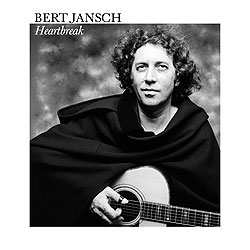
Trying to name the greatest guitarist of all time is a fool’s errand. One, because it would be impossible to choose a single player from a slate of candidates as diverse as Django Reinhardt, Andres Segovia, Jimmy Page, Lindsey Buckingham, Prince, Richard Thompson, Mick Ronson, George Harrison, Ron Asheton, Don Rich, Brian May, Frank Zappa, etc, ad infinitum. And two, because the answer is Bert Jansch.
Fine, reasonable souls may disagree, but from his stunning masterpiece of a debut in 1965, Jansch blazed a staggeringly original trail through an eclectic mix of folk, jazz, blues, rock, and even African, medieval, renaissance, and baroque music. Whether solo or with his band Pentangle, his highly distinctive playing and his warm, earthy vocals made him a major influence on everybody from Jimmy Page, Neil Young, Nick Drake, Donovan and Mike Oldfield to Paul Simon, Johnny Marr, Graham Coxon, Bernard Butler, and so many more. Bert died in 2011, doing what he did best till the very end.
Comments Off on Music Review: Bert Jansch, Heartbreak