Music Review: Young Widows, Easy Pain
Published on July 11th, 2014 in: Current Faves, Music, Music Reviews, Reviews |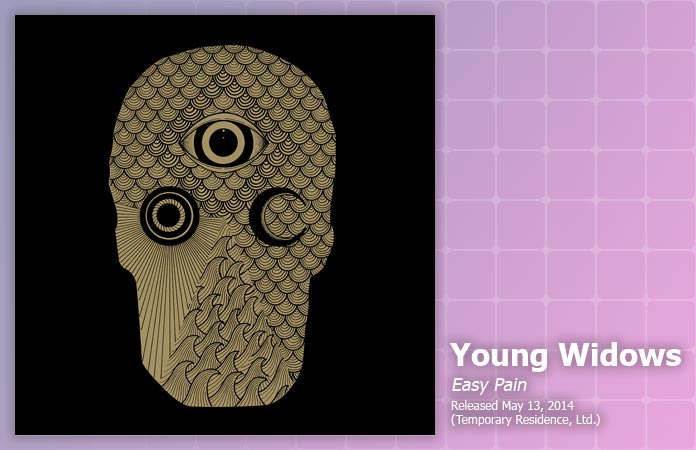
Imagine being thrown through a fortieth story window. Hear that rush of wind in your ears, the whistling and howling blotting out everything but your own panicked shrieks, your clothing ripping and flapping in the wind, pounding out a flat parachute rhythm as you continue to plummet, a failed bird, picking up speed, the ground rushing towards you (or vice versa) and even if you aren’t precisely sure where you’re landing, you know it’s going to be hard and it’s going to hurt. There’s nothing to do but resign yourself to it, embrace it, and let whatever happens happen.
That description fairly accurately echoes the first sixty seconds of Easy Pain by Louisville band Young Widows. There are still nine more songs to go.
Comments Off on Music Review: Young Widows, Easy Pain
Blu-Ray Review: The Machine
Published on June 6th, 2014 in: Blu-Ray, Current Faves, DVD/Blu-Ray Reviews, Movie Reviews, Movies, Reviews, Science Fiction |
Sci Fi on a budget is one of the hardest tasks in filmmaking. One thing you constantly worry about is how the effects in your film will look. You don’t want them to look cheap and cheesy because that’s a good way to lose your audience quickly. Also, when it comes to this genre, you need a story that is original and not a copy of a copy.
Comments Off on Blu-Ray Review: The Machine
Music Review: Rich Robinson, The Ceaseless Sight
Published on June 6th, 2014 in: Current Faves, Music, Music Reviews, Reviews |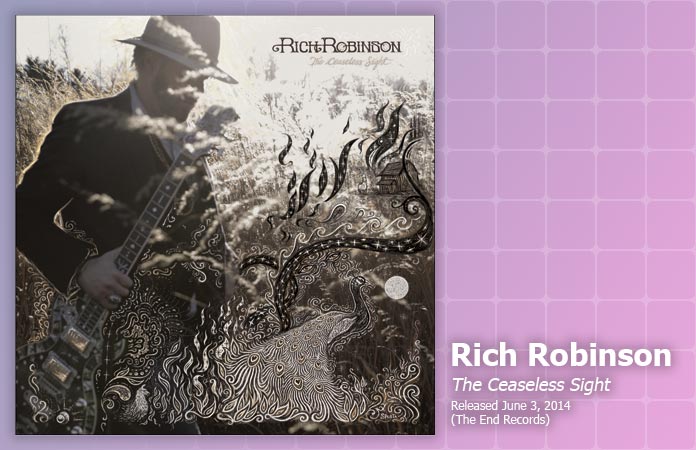
Black Crowes’ guitarist and songwriter, Rich Robinson, writes amazing choruses. On his third solo album, The Ceaseless Sight, Robinson sings of love and happiness, as well as the flip side of that, with candor and a seeker’s quest to make sense of it all. While lyrically, the songs are interesting, the choruses are brilliant nuggets of rhythm and melody that are so striking and ear-wormy that I found myself humming them constantly.
Comments Off on Music Review: Rich Robinson, The Ceaseless Sight
Music Review: LP, Forever For Now
Published on June 6th, 2014 in: Current Faves, Feminism, Music, Music Reviews, Reviews |By Cait Brennan

New York-born, L.A.-based singer/songwriter LP is a true American survivor. With roots in the music business going back to the ’90s, LP recorded two promising albums in the early 2000s, collaborating with Cracker’s David Lowery and hit maker Linda Perry in the process. But the impossible to pigeonhole artist and her considerable charm and swagger never really fit in with the machine. Deals with labels like Island Def Jam didn’t pan out, and LP reinvented herself as a songwriter, co-writing smash hits for Rihanna (“Cheers [Drink To That]”) and Christina Aguilera (“Beautiful People”), among others.
Comments Off on Music Review: LP, Forever For Now
Music Review: Aurelio Valle, Acme Power Transmission
Published on May 30th, 2014 in: Current Faves, Music, Music Reviews, Reviews |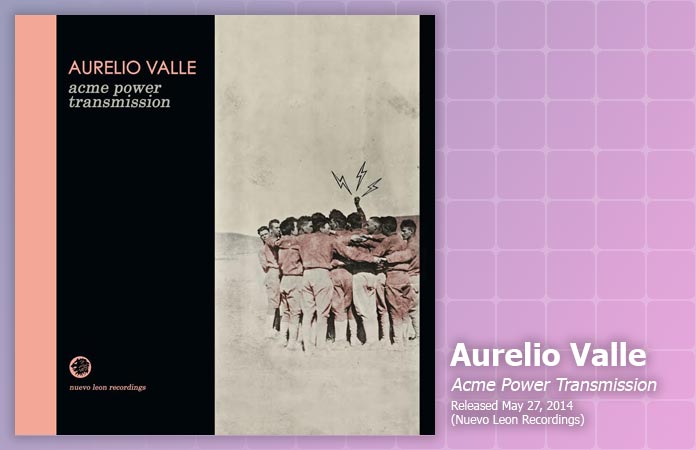
Not only does Calla front man Aurelio Valle’s debut solo album have one of the best titles of the year (Acme Power Transmission, named after his landlord’s auto parts store), it is also one of the most interesting, atmospheric records I’ve heard in 2014. It could be the score for the next True Detective season, awash in mystery, dark places, and hushed echoes. While not explicitly about a specific place, it has a great feeling of place and specificity.
Comments Off on Music Review: Aurelio Valle, Acme Power Transmission
Music Review: Little Barrie, Shadow
Published on May 30th, 2014 in: Current Faves, Music, Music Reviews, Reviews |By Hanna
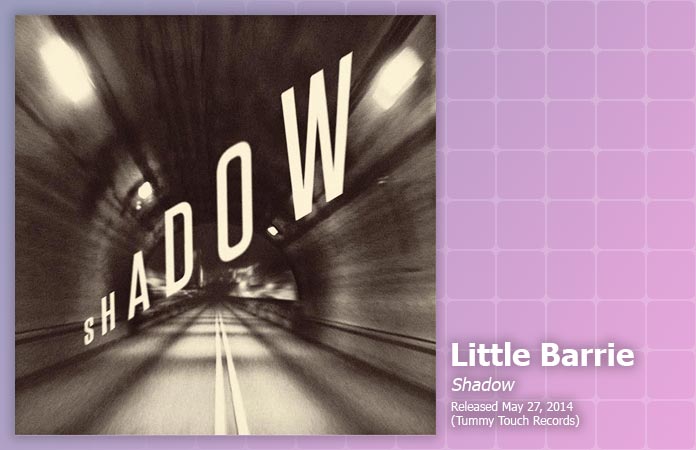
Shadow is the fourth Little Barrie album and their first release after a pause in activity for the band; their last album, King of the Waves, was released in 2011. In the meantime, several members of the band have been working for other bands, notably Primal Scream, while Virgil Howe has joined as drummer. These changes are audible in this new album, as Shadow is different from their previous albums.
Comments Off on Music Review: Little Barrie, Shadow
Music Review: Rene Lopez, Paint The Moon Gold
Published on May 23rd, 2014 in: Current Faves, Music, Music Reviews, Reviews |
On his new album, Paint The Moon Gold, New York City musician Rene Lopez draws upon the rich musical tapestry of his city and pens a love letter—to New York, his family, and his heritage. The charismatic Mr. Lopez almost has an old school jazz singer vibe, though he calls his style of music “Electric Latin Soul,” which is as good of a descriptor as anything. Paint The Moon Gold is a cohesive, high-energy album that is paced cleverly. In fact, the album picks up in pace in the last quarter, leaving the listener on a high, rather than drifting off to sleep, lulled by quiet songs and quiet ideas. It’s a smart trick.
Comments Off on Music Review: Rene Lopez, Paint The Moon Gold
Music Review: Nikki Lane, All Or Nothin’
Published on May 16th, 2014 in: Current Faves, Feminism, Music, Music Reviews, Reviews |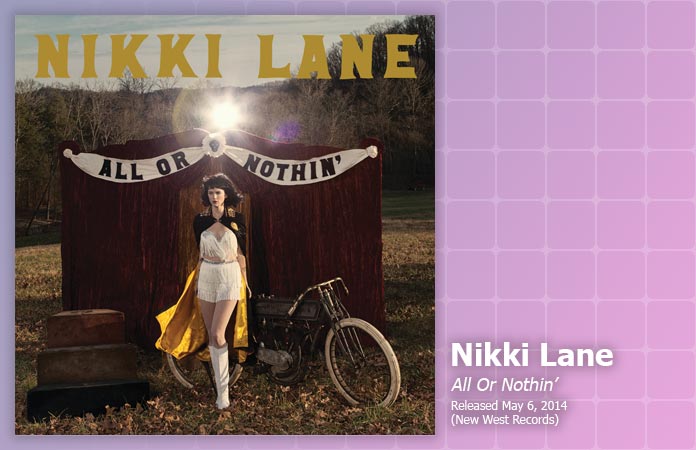
On her second album, All Or Nothin’, Nikki Lane (with the help of producer Dan Auerbach of the Black Keys) lets fly with incredibly hook-filled songs about drinking, smoking pot, one night stands, and crappy ex-boyfriends. Nikki Lane is a hard one to pin down: her music easily thematically fits into the “outlaw country” camp, and her voice is a magical mix of Loretta Lynn and Dusty Springfield, and All Or Nothin’ is crazy with the steel guitar of country, but she’s not exactly country. The most striking tracks on All Or Nothin’ sound like they’re straight off of the Red Bird label, the early ’60s girl group record company founded by Leiber and Stoller.
Comments Off on Music Review: Nikki Lane, All Or Nothin’
Music Review: Swans, To Be Kind
Published on May 16th, 2014 in: Current Faves, Music, Music Reviews, Reviews |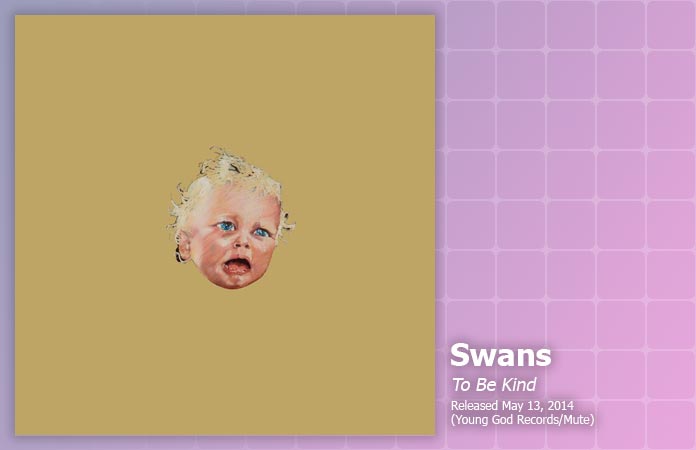
I have an irrational fear of Swans leader Michael Gira. I imagine him striding through the desert at sunset, taking impossibly long steps, heat shimmering from him in mirage waves, impossible to look at directly. He holds out his arms and silently begins to absorb the encroaching darkness, holding it somewhere deep within himself, perhaps in the fetid abyss he calls a “heart.” He moves through the world like the Walking Man and, in my mind, he sounds like Werner Herzog when he speaks.
To Be Kind, the third album from Swans since their reformation in 2010, does nothing to alter that vision.
Comments Off on Music Review: Swans, To Be Kind
Music Review: St. Paul & The Broken Bones, Half The City
Published on May 9th, 2014 in: Current Faves, Music, Music Reviews, Reviews |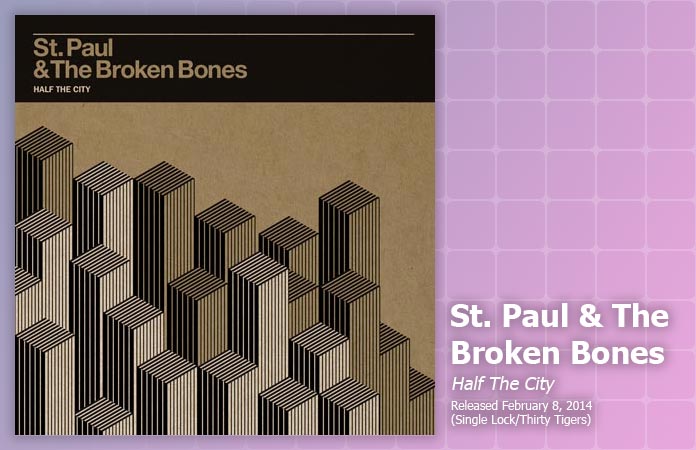
St. Paul & The Broken Bones’ frontman Paul Janeway (St. Paul himself) was raised Pentecostal and studied to be a preacher. Upon hearing Half The City, one can only say, “Thank God it didn’t pan out.” Paul Janeway has the kind of voice that you’ll read all kinds of hype about, and for once, that hype is true. The man sings like the second coming of Otis Redding and has a killer band to back him up. Hailing from Birmingham, Alabama, St. Paul & The Broken Bones tread the same sort of ground as Alabama Shakes (and Half The City is, in fact, produced by Alabama Shakes’ Ben Tanner): soulful and bluesy, but with the added bonus of an amazing horn section.
Comments Off on Music Review: St. Paul & The Broken Bones, Half The City