Music Review: Death From Above 1979, The Physical World
Published on October 3rd, 2014 in: Canadian Content, Current Faves, Music, Music Reviews, Reviews |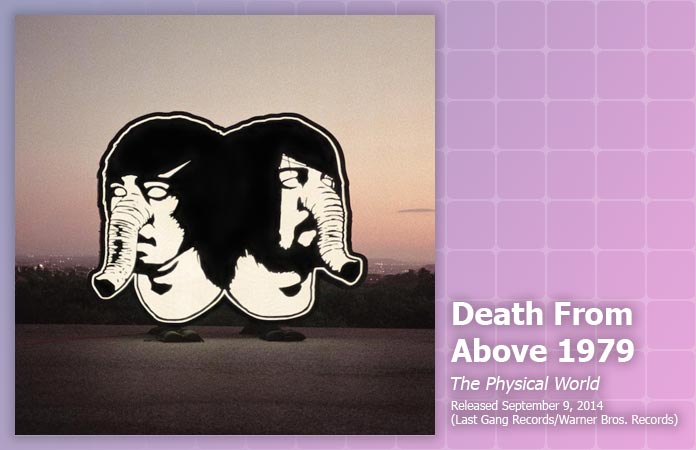
I can’t sell you if no one buys.
Point out your heroes, click and they die.
—Death From Above 1979, “The Physical World”
Death From Above formed and later added the 1979 (under a bit of duress, mind you). The duo released some EPs and an album. Then they broke up for a decade and during that time, didn’t speak to each other for five years. Eventually, they started emailing each other again and took steps towards reforming. They toured for a couple of years, including a set at Coachella in 2011. Now they are back with a second album of new material and as much as it pains me to say this, I like it better than everything else they’ve ever done.
Comments Off on Music Review: Death From Above 1979, The Physical World
Music Review: Lucinda Williams, Down Where The Spirit Meets The Bone
Published on October 3rd, 2014 in: Current Faves, Feminism, Music, Music Reviews, Reviews |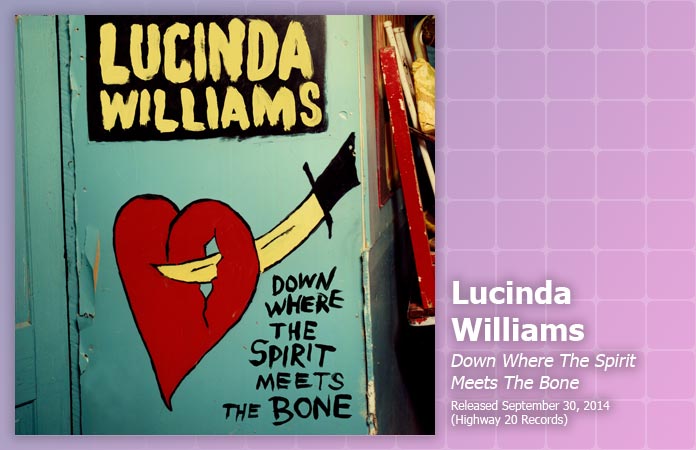
There is no one quite like Lucinda Williams: her voice, her particularly Southern identity, her phrasing, her stunning writing. A true American iconoclast, she has been recording for over four decades, and shows no signs of compromising her integrity or sense of self. On her new album, Down Where The Spirit Meets The Bone, released on her own independent label, Highway 20 Records, Williams speaks for the poor, the rejected, and the disenfranchised while asking for compassion. Of the 20 songs on the album, she wrote 18 of them, and her very particular voice could not be clearer.
Music Review: Various Artists, The Soul Of Designer Records
Published on October 3rd, 2014 in: Current Faves, Music, Music Reviews, Retrovirus, Reviews |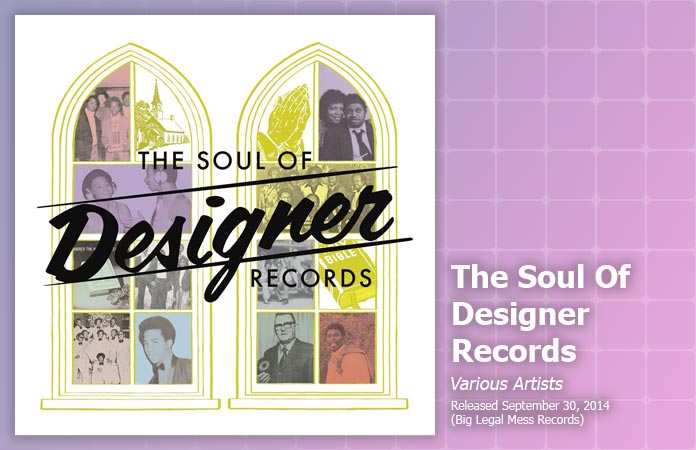
Out now on Big Legal Mess Records, the four-CD, 101-song compilation The Soul Of Designer Records is flat out amazing. Between 1967 and 1977, Memphis-based Designer Records founder, the delightfully named Style Wooten, gave any group that wanted it a chance to record in his studio, using his studio musicians if they didn’t have their own, for the low price of $469.50. In exchange, the group would get 25 copies of their single to sell or distribute, and when those 25 were gone, they could re-up for another 25. Black gospel groups flocked to Memphis to record their 45s, and Designer Records became one of the most successful independent gospel labels in the States.
Music Review: Brian Reitzell, Hannibal Original Television Soundtrack Seasons 1 & 2
Published on September 26th, 2014 in: Current Faves, Music, Music Reviews, Reviews, Soundtracks and Scores, TV |
Fans of both Hannibal Lecter and Brian Reitzell will be thrilled by the recent release of nearly five hours of music from the soundtrack to what may become known as the most compelling interpretation of Thomas Harris’s iconic character, NBC’s Hannibal. With 27 tracks, one representing each episode from both seasons (and an extra track highlighting some of the music in Season 2’s killer finale), there is much to absorb here. Even those who have never seen the show, or who have perhaps avoided it because they can’t imagine anything living up to Anthony Hopkins’s cinematic portrayal, will be seduced by the exquisite sounds contained within this collection.
Comments Off on Music Review: Brian Reitzell, Hannibal Original Television Soundtrack Seasons 1 & 2
Music Review: Merchandise, After The End
Published on September 26th, 2014 in: Current Faves, Music, Music Reviews, Reviews |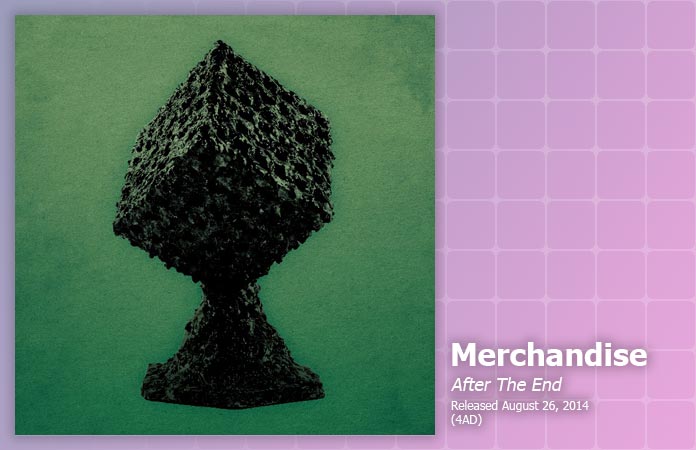
O nostalgia is just a looking glass
It’s for us to distort and mold
Won’t someone please help me
I’m too young to feel this old.
—Merchandise, “Looking Glass Waltz”
The first track on Merchandise’s new album is called “Corridor,” a stunning instrumental track that feels like the introduction to a concept album. While After The End is anything but, it’s not a stretch to imagine the band tackling something like that one day. They’re full of surprises.
Comments Off on Music Review: Merchandise, After The End
Music Review: Thank You Scientist, Maps Of Non-Existent Places
Published on September 26th, 2014 in: Current Faves, Music, Music Reviews, Reviews |By Tyler Hodg
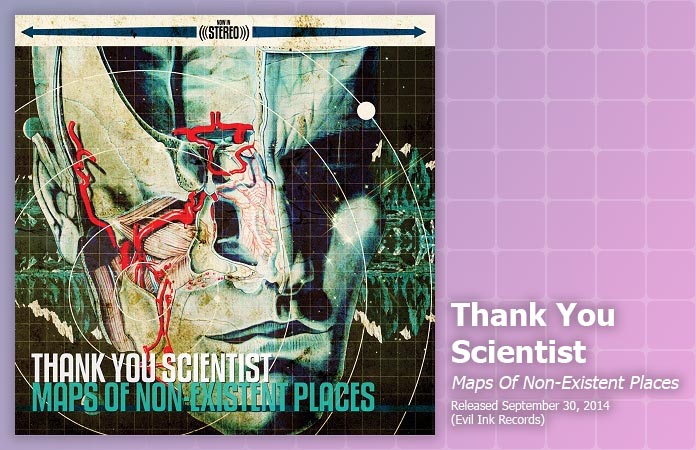
In a world with so many options, how does one decide on what genre to listen to? Well, “thank” Thank You Scientist for finding a solution to that problem. Categorizing this band isn’t easy and simply isn’t worth the effort. With the re-release of their album Maps Of Non-Existent Places, Thank You Scientist proves that you don’t need to be bound by genre, but by passion and creativity.
Comments Off on Music Review: Thank You Scientist, Maps Of Non-Existent Places
Music Review: Tony Bennett & Lady Gaga, Cheek To Cheek
Published on September 26th, 2014 in: Current Faves, Feminism, Music, Music Reviews, Reviews |By Tyler Hodg

Tony Bennett is a clock that keeps on ticking. His career has spanned over 65 years and he shows no signs of slowing down. For his 57th studio album (!!), Bennett calls upon a familiar friend—Lady Gaga—to record a duet album of jazz standards titled Cheek To Cheek. What initially seems like an unlikely pairing is in fact something incredibly special; listening to this album is a reminder of how great these two artists truly are.
Comments Off on Music Review: Tony Bennett & Lady Gaga, Cheek To Cheek
Music Review: Laetitia Sadier, Something Shines
Published on September 26th, 2014 in: Current Faves, Feminism, Music, Music Reviews, Reviews |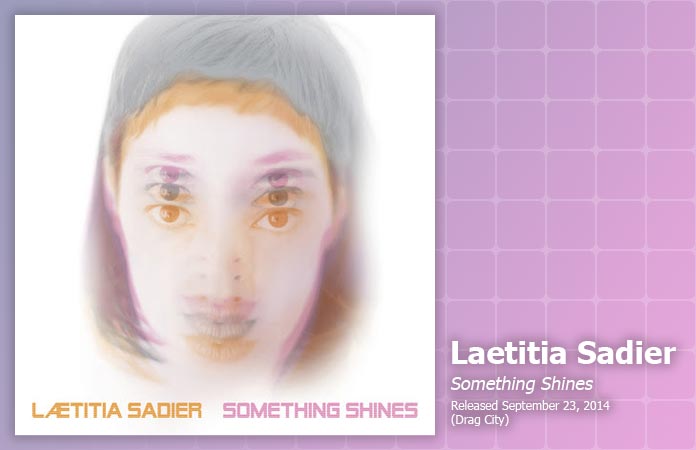
On her third solo album, Stereolab’s Laetitia Sadier treads her accustomed ground, while also shaking things up. Something Shines sounds like a Stereolab record, with space rock, jittering ‘60s tropicalia, and her trademark rich, distant alto. It also shatters song structure, abruptly changing to another style of music whilst in the middle of a song, like a collage. It’s a sometimes-frustrating album, with moments of brilliance.
Comments Off on Music Review: Laetitia Sadier, Something Shines
Music Review: The Turtles, 45 RPM Singles Collection
Published on September 26th, 2014 in: Current Faves, Music, Music Reviews, Retrovirus, Reviews |
One of the things that makes listening to music on vinyl different is how much attention must be paid to it. Putting an iPod on shuffle is easy, but not interactive. Listening to an album, or better yet, singles, makes me slow down, sit down, and actually listen to the music. It’s no longer background noise. It’s an experience.
Comments Off on Music Review: The Turtles, 45 RPM Singles Collection
Music Review: The Asteroids Galaxy Tour, Bring Us Together
Published on September 19th, 2014 in: Current Faves, Feminism, Music, Music Reviews, Reviews |
Danish pop group The Asteroids Galaxy Tour have returned with a spacey (as one might expect with a name like The Asteroids Galaxy Tour), but still danceable, musical collage that breaks new ground for them and still sticks to their signature style. The duo of singer Mette Lindberg and instrumentalist Lars Iversen makes evocative electronic music that is made warmer by Lindberg’s delightful singing voice. She sings like Björk and Billie Holiday and Christina Amphlett were put in a juicer with a little honey. Kind of.
Comments Off on Music Review: The Asteroids Galaxy Tour, Bring Us Together