Sparks: No. 1 Songs In Heaven

Published on August 11th, 2010 in: Book Reviews, Books, Current Faves, Music, Reviews |

By Matt Keeley

sparks in heaven book

Sparks are awesome.

This is a given.

And, finally, Sparks have joined the rank of awesome things that have books about them. Two books, actually: Talent Is An Asset has already been reviewed in Popshifter, so now we bring you the other unauthorized Sparks bio, Dave Thompson’s Sparks: No. 1 Songs In Heaven.
Continue reading ‘Sparks: No. 1 Songs In Heaven

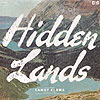
Candy Claws, Hidden Lands

Published on August 3rd, 2010 in: Current Faves, Music, Music Reviews, Reviews |

By John Lane

hidden lands

I happily stumbled upon the duo named Candy Claws (now a sort of band) not too long ago. Their 2009 album, In the Dream of the Sea Life gives off a Wes-Anderson/Steve-Zissou vibe, from the quirk,y mostly-instrumental cinematic sounds right down to the design and packaging.

Sound architects Ryan Hover and Kay Bertholf return this year with Hidden Lands, an album that represents somewhat of a sideways progression. For hipsters clamoring for another boy/girl duo-combo (i.e., Beach House, She & Him), this will satisfy that need. What separates Hover and Bertholf from the pack, however, is the fact that there is a certain joyous naiveté that seems to guide them and makes their existence all the more curious and appealing.
Continue reading ‘Candy Claws, Hidden Lands

Comments Off on Candy Claws, Hidden Lands

Los Lobos, Tin Can Trust

Published on August 3rd, 2010 in: Current Faves, Music, Music Reviews, Reviews |

By J Howell

tin can trust

It speaks volumes about a band when, after 30 years and 19 albums, they remain vital. Los Lobos is just that, as Tin Can Trust demonstrates. For listeners who’ve slept on this institution of American music, or only know the cover of “La Bamba” from the 1987 movie of the same title, you’re missing out on one of the most consistently great bands, well, ever.

Don’t think you like Latin music? The cumbia “Yo Canto,” with its Marc Ribot-esque guitars, is brilliant. The norteno-flavored “Mujer Ingrata” bounces with such a joyous spirit that’s impossible to dislike. While the band does good by its Mexican-American roots, Los Lobos have always been masterful at incorporating all manner of American roots music into their work; Tin Can Trust is no exception.
Continue reading ‘Los Lobos, Tin Can Trust

Our July/August 2010 Issue Is Out Now

Published on July 31st, 2010 in: New Issue |

July/August 2010 Issue

July/August2010 Issue
Click the image
to read the issue!

Issue 017—Staff Picks: Nerd References In Hip Hop, Hilarious American Commercials; Interviews with Shad; Ergo Phizmiz; Feature on À La Recherche du Brooding Perdu; Reviews of Inception, Manorexia, Steroid Maximus, Rufus Wainwright, Jesca Hoop, Wild Beasts, Neu!, Concrete Blonde, Billy Squier, The Rolling Stones/Mick Taylor; GOLD: Before Woodstock, Beyond Reality, Mister Fusty, Japanese Gum, and K-X-P.

Comments Off on Our July/August 2010 Issue Is Out Now

GOLD: Before Woodstock, Beyond Reality DVD

Published on July 30th, 2010 in: DVD, DVD/Blu-Ray Reviews, Movies, Music, Retrovirus, Reviews |

By Matt Keeley

GOLD: Before Woodstock, Beyond Reality is a 40-year-old lost film starring a comedy hero, Del Close. Like another film by a comedy hero, Savages (a Merchant-Ivory film written by Michael O’Donoghue), it’s a noble failure.
Continue reading ‘GOLD: Before Woodstock, Beyond Reality DVD’

Comments Off on GOLD: Before Woodstock, Beyond Reality DVD

A Play In Three Acts: An Interview With Ergo Phizmiz

Published on July 30th, 2010 in: Art, Comedy, Interviews, Music |

By Greta Pistaceci

I first came across Ergo Phizmiz a few years ago, though I am not exactly sure where—the British artist’s cover of the entirety of the Velvet Underground’s White Light/White Heat was available as a free download somewhere or other online (I have a feeling this was probably the WFMU blog, or one that might have linked to his personal website).
Continue reading ‘A Play In Three Acts: An Interview With Ergo Phizmiz’

JG Thirlwell/Manorexia, The Mesopelagic Waters

Published on July 30th, 2010 in: Current Faves, Music, Music Reviews, Reviews, Underground/Cult |

By Ann Clarke

JG Thirlwell’s The Mesopelagic Waters was released on John Zorn’s Tzadik record label during the spring of 2010. This is the third installment of Thirlwell’s Manorexia project, but it’s not a block of new songs. It is, in essence, an acoustic re-arrangement scored for tactual instruments, performed by virtuosos. However, that’s easier said than done!

So if you were hoping to hear new songs on this album that weren’t on Volvox Turbo or The Radiolarian Ooze . . . that’s not going to happen, so nix that thought! So now, if you are thinking, “Why bother?” read on, and I’ll explain why you should!
Continue reading ‘JG Thirlwell/Manorexia, The Mesopelagic Waters

Comments Off on JG Thirlwell/Manorexia, The Mesopelagic Waters

K-X-P, S/T

Published on July 30th, 2010 in: Music, Music Reviews, Reviews |

By Ben Sullivan

In our current cultural moment of sonic permissiveness and fraying mainstream consensus, instrumental rock is no longer ghettoized to the skinny aisles of sub-genre. Prog is no longer a four letter word; electronic/rock hybrids are old hat. Even when the guitar is de-emphasized à la Out Hud—or completely absent, as with Add (N) to (X)—vocal-light bands specializing in sturdy rock grooves now enjoy growing audiences and heightened festival appeal.
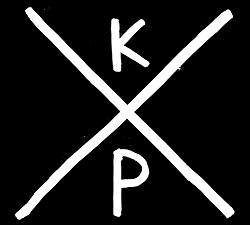
kxp album art

That being said, the ubiquity of the guitar and the immediacy of its musical heritage still pay dividends. The six-stringers in Battles can still reliably benefit from stage-side guitar-nerds slobbering over their nervy chops. Post-rockers Mogwai and Explosions in the Sky have proven accessible enough for big-budget soundtrack work. So: whither the synthesizer in the expanding landscape of post-pop?

K-X-P’s synth-centric self-titled debut is redoubtably Teutonic. Driving, unfettered motorik grooves undergird a tasteful array of analog modules bubbling, reverberating, and panning towards dawn. Founder and lead wavesmith Timo Kaukolampi manages the density of his arrangements skillfully and with rockist panache, patiently staging his modulations over the insinuating groove of “Mehu Moments.” Kaukolampi expertly samples (and simulates) a gate-reverb-drenched guitar in “18 Hours (Of Love),” a credible club rave-up caught somewhere between Depeche Mode’s shuffle grooves and Alan Vega’s solo output.
Continue reading ‘K-X-P, S/T’

Comments Off on K-X-P, S/T

À La Recherche du Brooding Perdu

Published on July 30th, 2010 in: Culture Shock, Music |

By AJ Wood

When I was 20, I was crazy to get out of Los Angeles, the Valley, and all I had grown up with. Being a French and English major at college, I honed in on an escape available to me: enrolling in a program for university students to teach English to French school children in France. Applications were made in stuttering French, time was spent wondering, and then, I got my escape: I went to France, to the smallest town I had ever been in (where cows outnumbered people) to teach French. But: I was 20, and an English Major, which means I was a navel-gazer and I brooded. And I certainly did that too: I brooded in pidgin French: Je brood, tu broodes, nous avons broodé souvent.
Continue reading ‘À La Recherche du Brooding Perdu’

Comments Off on À La Recherche du Brooding Perdu

Feed Your Head

Published on July 30th, 2010 in: Editorial, Movies, Science Fiction |

The movie medium began as a series of technical advancements and research projects, an attempt to put still photographs into motion, beginning with Eadweard Muybridge’s “zoopraxiscope” and Thomas Edison’s inventions of the kinetoscope in 1889 and the vitascope in 1895, and quickly moving towards the many imitations and variations that followed.

According to film historian Benjamin B. Hampton, Edison was too involved in his laboratory experiments and “too far removed from the public to realize that his invention was anything more than a toy.” Yet soon, “[M]en with keener commercial sense than Edison. . . saw a field of money-making.”

altered states1
Altered States, 1980

Although the more artistic possibilities of this new medium would soon reveal themselves through films like George Méliès’ A Trip To The Moon, these seem to have been exceptions to the norm. Hampton notes that although “[T]here was no opposition to quality; there merely was no conscious effort” since the main objectives were that the films “did not require any more film or cost any more money.”

And there was a lot of money to be made. By 1913, the gross income of Edison’s Vitagraph corporation “was between five and six million dollars a year,” a nearly inconceivable amount of money for the time. The battle between art and commerce has continued in the film industry ever since.
Continue reading ‘Feed Your Head’