New this week on Popshifter: I give thanks and praise to “Echoes From The Sleep Room,” the last lecture in The Black Museum’s series and explain how shaking off the movie Excision is a lot harder than I thought it would be.
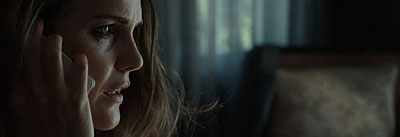
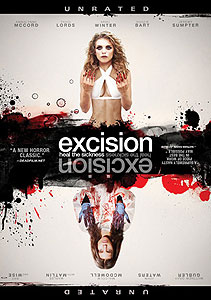
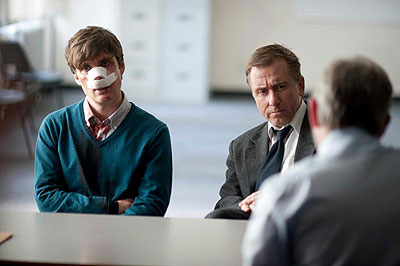
For his first feature, Excision, writer and director Richard Bates, Jr. has assembled quite an impressive cast: Malcolm McDowell, John Waters, Traci Lords, Ray Wise, Matthew Gray Gubler, and Marlee Matlin. Visually, the film is stunning, with pristine, static, centered shots and vivid colors. Excision‘s plot—a disturbed, misanthropic high school student named Pauline dreams (literally) of being a surgeon but her parents just don’t understand–doesn’t sound unique when boiled down to its most basic elements, but Bates manages to create a film that is genuinely disturbing.
Blood plays a crucial role in Excision, too. There is a whole lot of it. Yet it’s not a horror film, despite being well received by a lot of horror film websites and blogs, which puts it into that difficult position of being a genre film that doesn’t fit easily into any genre.
At times, this can be problematic. Excision feels like it wants to be a pitch black comedy or a parody of the suburban dream, but it’s not actually funny. Granted, some of Pauline’s quirks and attempts to navigate her unwelcoming environment at home and school are humorous, but not in a laugh out loud way. The roles of McDowell, Waters, Lords, and Wise in this context could seem like stunt casting, except for the fact that they’re all really good, particularly AnnaLynne McCord as Pauline and Traci Lords as Pauline’s mother Phyllis, whose character arc might represent the best work she’s ever done.
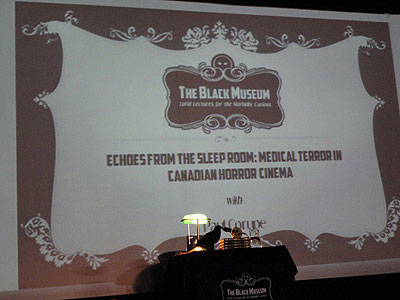
At long last, I finally attended one of The Black Museum‘s “lurid lectures for the morbidly curious.” (Go here to read my Q&A with the curators.) It was Thursday, November 22 and the topic was “Echoes From The Sleep Room,” an examination of the history of medical experimentation in horror cinema. The presentation was wonderful; my only complaint was that I was unable to attend the previous four lectures!
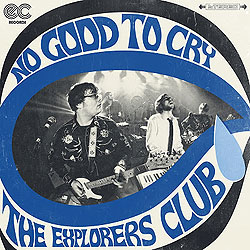
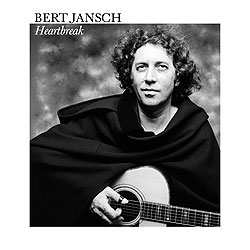
New this week on Popshifter: I take a look at the excellent Jay Reatard documentary Better Than Something and the upcoming What The Brothers Sang album by Dawn McCarthy and Bonnie “Prince” Billy; Cait provides a beautiful review of Bert Jansch’s recently reissued Heartbreak and encourages music lovers to check out the latest single from the Explorers Club, “No Good To Cry.”
Even if you don’t think you’re familiar with The Everly Brothers, you probably are. Known for topping the Billboard pop and country charts for their 1957 version of “Bye Bye Love,” their unusual, lovely harmonies and straddling of the lines between pop and country were remarkable then and now. And that was just their first popular single, which was followed by “All I Have To Do Is Dream,” “Till I Kissed You,” “Cathy’s Clown,” and “When Will I Be Loved,” to name a few.
If you’ve heard Dawn McCarthy (of Faun Fables) or Bonnie “Prince” Billy (also known as Will Oldham of Palace Brothers and others) then you’re familiar with each of their unique vocal talents as well those for creating music that weaves in and out of traditional pop, folk, and Americana.
The upcoming What The Brothers Sang, which will be released through Drag City on February 19, 2013, is an album of Everly Brothers songs interpreted by and filtered through both McCarthy and Billy’s distinctive talents.
Drag City’s press release remarks that these new versions “rethink The Everly Brothers for the audience of listeners today, who naturally might have no knowledge or experience with those songs.”
In the meantime, here’s their cover of The Everly Brothers’ 1972 track, “Christmas Eve Can Kill You,” which is a nice antidote to the forced cheer we’re subjected to for the final months of every year.
You can purchase the “Christmas Eve Can Kill You” single directly from Drag City.
Comments Off on Upcoming Release: Dawn McCarthy and Bonnie “Prince” Billy, What The Brothers Sang
Charleston, South Carolina’s classic pop new traditionalists The Explorers Club are young men with old souls who have graced us with some of the finest pop music of the last ten years. Their output includes two critically lauded albums and a series of fun EPs featuring their fine originals alongside well-chosen covers of golden-age pop gems by Burt Bacharach, Vanity Fare, and Dennis Yost’s Classics IV.
The band is back with a one-off single, “No Good To Cry,” a dynamite tune guaranteed to blast the transistors out of your AM radio, and if there’s any justice, one that should garner the group some well-deserved attention.
“No Good To Cry” was a regional smash from the summer of ’67 by The Wildweeds. The band was fronted by 19-year old guitarist Al Anderson, and while The Wildweeds never quite broke through on a national level, Big Al went on to front the hugely influential NRBQ before going on to yet more success as a Nashville songwriter. “No Good To Cry” was just the third song he ever wrote, and it’s a gem that by all rights should have been a national hit instead of merely a huge regional number one record.
The Explorers Club version captures the raw energy and irresistible hook of the original scorcher and adds Matt Goldman’s lush, sophisticated production and the peerless musicianship that has been a trademark of the band’s fine albums Freedom Wind and Grand Hotel. Paul Runyon contributes a 50,000 watt soul vocal that transforms “No Good To Cry” from a mere cover into one of this very accomplished band’s finest moments yet. The song is free via the Explorers Club Noisetrade site, but “tips” are welcome and will help support the band as it works on its third long-player. Don’t miss this one.
Trying to name the greatest guitarist of all time is a fool’s errand. One, because it would be impossible to choose a single player from a slate of candidates as diverse as Django Reinhardt, Andres Segovia, Jimmy Page, Lindsey Buckingham, Prince, Richard Thompson, Mick Ronson, George Harrison, Ron Asheton, Don Rich, Brian May, Frank Zappa, etc, ad infinitum. And two, because the answer is Bert Jansch.
Fine, reasonable souls may disagree, but from his stunning masterpiece of a debut in 1965, Jansch blazed a staggeringly original trail through an eclectic mix of folk, jazz, blues, rock, and even African, medieval, renaissance, and baroque music. Whether solo or with his band Pentangle, his highly distinctive playing and his warm, earthy vocals made him a major influence on everybody from Jimmy Page, Neil Young, Nick Drake, Donovan and Mike Oldfield to Paul Simon, Johnny Marr, Graham Coxon, Bernard Butler, and so many more. Bert died in 2011, doing what he did best till the very end.
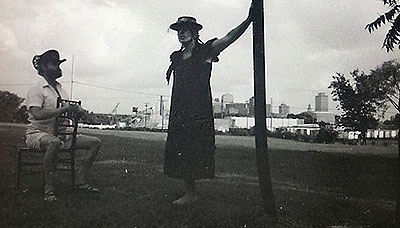
“What I do is not about being comfortable with the world.” —Jay Reatard, in Better Than Something
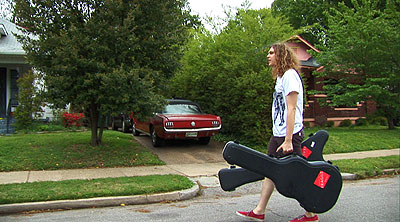
There’s a part in Better Than Something, the Jay Reatard documentary, where the musician talks about being “so tired. . . and I’m only 29.” He laughs a little and adds, “There’s nothing to look forward to.” Anyone who sees this and doesn’t agree with this statement just a little—even secretly—is probably not going to like Jay Reatard’s music and may not even care about this documentary.
The latest in our ongoing series on the life and death of linear television, a.k.a. old-style appointment television, TV that only moves forward in time. For previous installments, go here.
This installment will outline your best options for cutting the cord to your cable or satellite subscription.