It’s White Flag’s World, We Just Live In It: An Interview With Pat Fear
Published on September 26th, 2013 in: Interviews, Music |Note: this interview was originally published in May 2010.
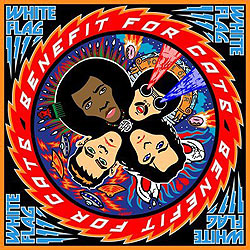
Recently we’ve been treated to new music from the venerable White Flag, an excellent EP called Keepers Of The Purple Twilight. Released on Target Earth in March of this year, all five songs are fantastic, featuring the White Flag hallmarks of clever, witty lyrics, which are often belied by hooky, but rocking tuneage.
One intriguing factor is that lyrically, the tunes are pretty introspective, perhaps pondering where a band like White Flag, who has been consistently making music but continually underrated over the years, fits into this weird world of American Idols and Justin Biebers.
If you haven’t been paying attention to White Flag, we’re here to help fill in those gaps for you. What follows is a conversation with singer, guitarist, songwriter, and main Flag-waver Pat Fear about the history of the band, including just a few of the “28 years of stories” he’s accumulated about punk rock, playing Greenland, The Shaggs, Os Mutantes, Gasatanka Records, and being the most connected band in the universe.
Music Review: Kelley Stoltz, Double Exposure
Published on September 25th, 2013 in: Current Faves, Music, Music Reviews, Reviews |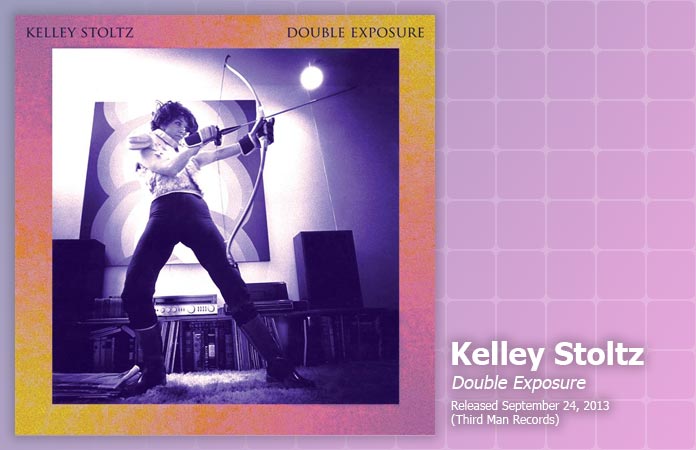
San Francisco’s Kelley Stoltz has made the jump from SubPop to Third Man Records and has embraced the garage rock ethos fully—Double Exposure was recorded in his garage. Not a mere garage this: it goes by the name of Electric Duck Studio and houses vintage synths, an amp used by a Stooge, and a tape machine used by The Residents.
Double Exposure is garagey in the best way. It’s full of exploration and experimentation, and all kinds of noises not naturally occurring in nature. It’s reminiscent of the ’60s psychedelia revival from the ’80s ala the Fuzztones and Fleshtones and their brethren, awash in handclaps and harmonies.
Comments Off on Music Review: Kelley Stoltz, Double Exposure
An Interview With Tiger Cooke
Published on September 25th, 2013 in: Interviews, Music |By Paul Casey

Photo © Tiger Cooke
Tiger (real name Tadhg) Cooke is an Irish musician. He has recorded two studio albums, his most recent being the excellent Fingertips of the Silversmiths from 2010. Cooke has received his fair share of critical notice. The Irish Times called him “eminently likeable, utterly enviable” on the basis of his debut. Hot Press, a long running and popular Irish publication, was equally impressed, handing out some fairly glowing words. More importantly, your pal Muggins here likes it! Cooke has a handle on making music that is lowdown but witty. He is comfortable in the rockier end of the singer-songwriter camp but also willing to account for influences and interests outside of the obvious.
Fingertips of the Silversmiths is the album that pushed me to speak with him and has many of the qualities that I look for with modern singer-songwriters. It has a really nice sound, for one. It is present and hooked in. Cooke’s music avoids that muddled and confused revivalist shot, the one that generally comes with the embarrassing “Hey man we’re taking music back to its roots!” It’s lyrically interesting which always helps. Perhaps most of all, Cooke’s voice has that flavor. Just enough sauce.
Waxing Nostalgic Connecting the Dots: Maria Muldaur, “Midnight at the Oasis”
Published on September 25th, 2013 in: Music, Waxing Nostalgic |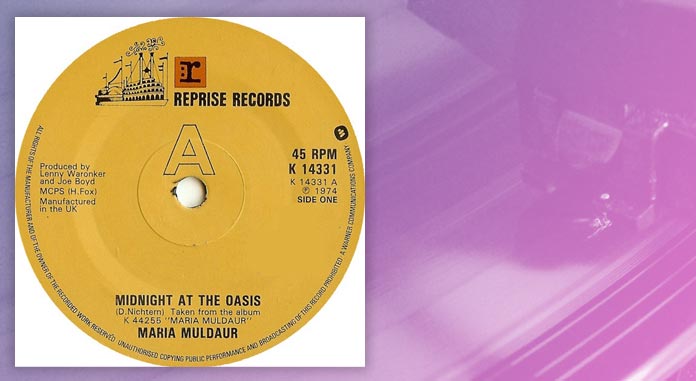
When the Sixties ended, they made a noise like a whoopee cushion. Peace and love were replaced with polyester and The Sierra Club. Even The Beatles said to hell with it and bailed out before the Seventies really got rolling. A lot of people got tired of Serious Rock, and in response to the backlash, the music business gave us a lot of bubblegum pop. It was sweet and nice with nary an iota of substance. We got lots of one-hit wonders this way.
The first time I remember hearing “Midnight at the Oasis” was in a hair salon. I was waiting for my mother to get whatever the hell she was getting done, done. I was five years old. I could already read at a high school level (math was a different story), and I had already flipped through all the magazines that interested me. The hairdressers were yammering on about what pains in the asses men were. Hairdryers hummed away.
Music Review: Allen Toussaint, Songbook
Published on September 24th, 2013 in: Current Faves, Music, Music Reviews, New Music Tuesday, Reviews |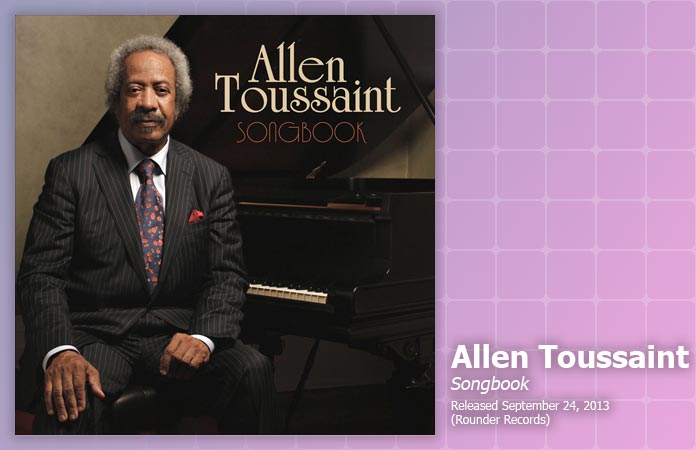
Allen Toussaint has probably written your favorite song, and you didn’t even know it. His new album, the remarkable, amazing Songbook, is a live recording (including a DVD of the performance) of Allen Toussaint, a piano, and his venerable back catalogue. His songs have been covered by such diverse artists as The Rolling Stones, Glen Campbell, Warren Zevon, Devo, Irma Thomas, and The Who. Listening to Songbook, you can’t help but marvel at his songwriting brilliance.
In the wake of Hurricane Katrina in 2005, Allen Toussaint was flooded out of his home and studio and relocated to New York City. There he began to perform solo shows at Joe’s Pub, resurrecting songs he hadn’t performed in years, honing his live show, and developing a passionate following outside of New Orleans. Songbook is taken from those Joe’s Pub shows; an intimate, warm set of songs written by Toussaint that were made popular by other artists.
Comments Off on Music Review: Allen Toussaint, Songbook
Music Review: Tom McDermott, Bamboula
Published on September 24th, 2013 in: Current Faves, Music, Music Reviews, New Music Tuesday, Reviews |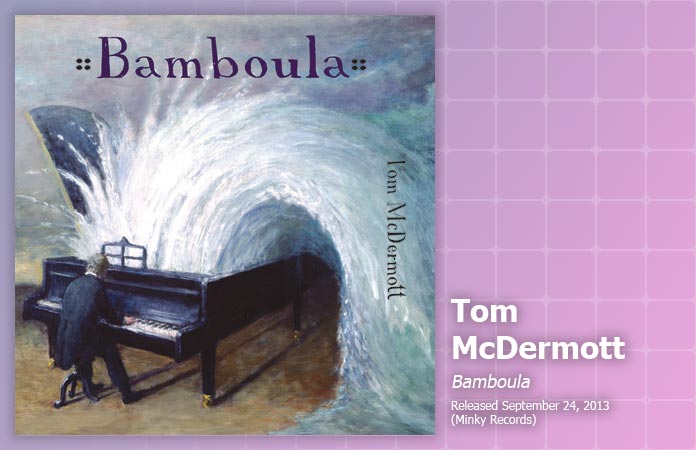
The veritable Van Dyke Parks has curated a collection culled from New Orleans-based piano god Tom McDermott’s previous albums. Bamboula is pure sonic pleasure from the first note.
Parks elaborates on just what makes McDermott’s playing and composing so astonishing: “As a composer, Tom’s compositions each read like a good short story, filled with motifs, anecdotes, and suspended sub-plots that all resolve in conclusion.” As I listened to Bamboula, I was struck by the visual nature of Tom McDermott’s music. Each song became the music for a movie I wanted to see or possibly be in, richly layered and fascinating. It’s transporting in a way that you long for music to be.
Comments Off on Music Review: Tom McDermott, Bamboula
Music Review: Various Artists, The Exquisite Corpse Game
Published on September 19th, 2013 in: Current Faves, Music, Music Reviews, Reviews |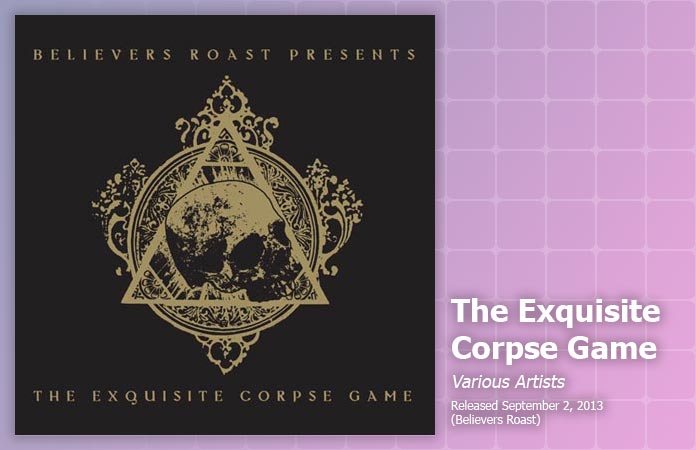
I first head the term “Exquisite Corpse” in the Bauhaus song of the same name, but I didn’t know what it meant or about its history. Popularized by the Surrealists, it is “a method by which a collection of words or images is collectively assembled. Each collaborator adds to a composition in sequence, either by following a rule or by being allowed to see only the end of what the previous person contributed” (Wikipedia).
This method seems perfect for a variety of artistic collaborations, particularly music, where it can be utilized to create a textured mixtape quality. Musician Kavus Torabi decided to embark on an exquisite corpse project through his own label, Believers Roast, and the results—two years in the making—are remarkable and intoxicating. Each artist was only allowed to hear the final 20 seconds of the previous installment and was not allowed to hear the entire collection until it was completed.
Comments Off on Music Review: Various Artists, The Exquisite Corpse Game
Waxing Nostalgic Connecting The Dots: The Who, “Won’t Get Fooled Again” (1971)
Published on September 18th, 2013 in: Music, Waxing Nostalgic |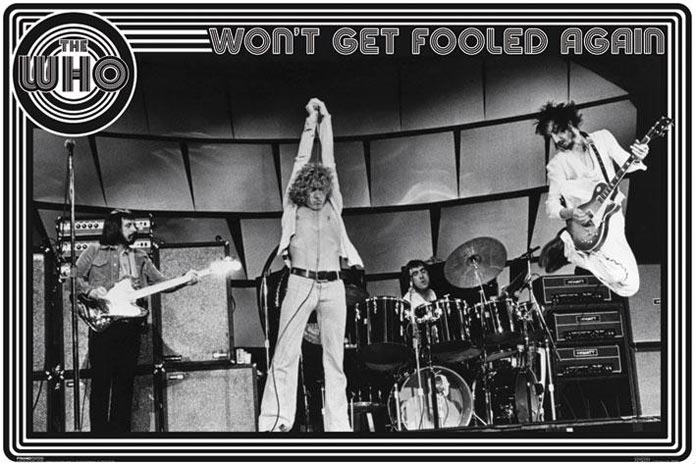
The John A. Roebling Suspension Bridge connects Covington, Kentucky (the town of my birth) to Cincinnati, Ohio (the town that, as a teenager, became my stomping ground). At the time of its completion, in 1866, it was the longest suspension bridge in the world, with a span of 322 meters (1057 feet).
Let’s get down to brass tacks here. Driving over the Suspension Bridge is scary as shit. As soon as you hit the surface of the bridge, the road surface changes. No smooth blacktop or asphalt here; it is nothing but closely spaced thin strips of steel. That’s all keeping you and your car from pulling a Mothman Prophecies and plunging hood-first into the Ohio River. When you drive over it, the car begins to vibrate, and this hideous hum begins emanating from your tires. Rubber meets metal, and the entire vehicle shakes and swerves.
It’s not pleasant.
Unless you’re two years old and don’t know any better.
Here’s the odd thing. Depending on how fast you go, the friction of the bridge against the tires produces a musical note. I know for a fact that as my mother drove across the bridge that day, she was playing an open A chord without realizing it.
Comments Off on Waxing Nostalgic Connecting The Dots: The Who, “Won’t Get Fooled Again” (1971)
Music Review: Ha Ha Tonka, Lessons
Published on September 17th, 2013 in: Music, Music Reviews, New Music Tuesday, Reviews |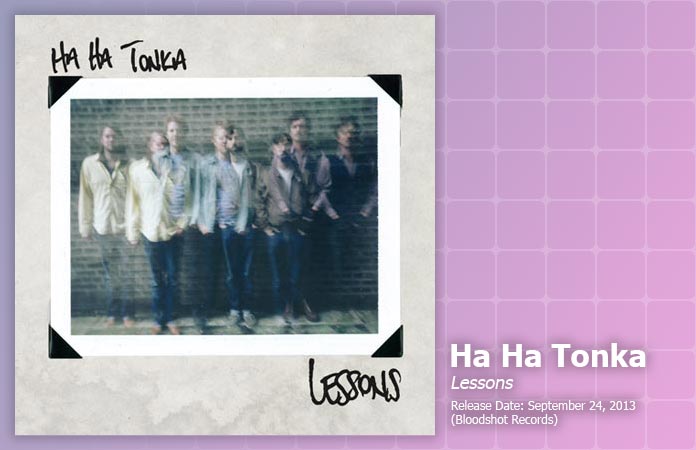
The delightfully named Ha Ha Tonka (named after a gorgeous state park in Missouri, replete with a crumbling mansion/hotel) are clearly at a crossroads. Their latest effort, Lessons, is a departure from their previous more stripped-down records, and is chock full of soul-searching, thinky lyrics. I’m not sure the change in direction was a good move.
Comments Off on Music Review: Ha Ha Tonka, Lessons
Music Review: Kenny Feinstein, Loveless: Hurts To Love
Published on September 17th, 2013 in: Music, Music Reviews, New Music Tuesday, Reviews |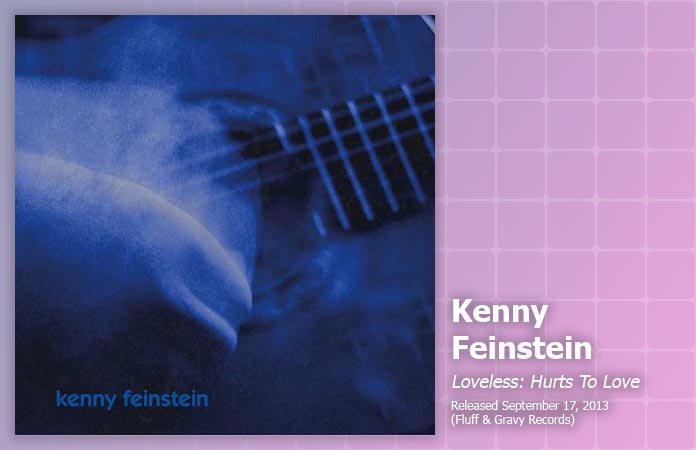
It became a cliché, nearly a joke, the reverence that rock critics had for My Bloody Valentine’s Loveless album, a singular document of noisy, sexy, melodic weirdness that loomed large in reputation for the 20-plus years since its release. This year has seen several tribute albums to it, somehow all of them excellent, but this latest from Portland-based Kenny Feinstein wins additional points for freshness, sincerity, and an obsessive attention to detail that would undoubtedly please the notoriously perfectionist MBV frontman, Kevin Shields.
Comments Off on Music Review: Kenny Feinstein, Loveless: Hurts To Love