Sometimes It Snows In April: In Praise of Wendy & Lisa
Published on March 30th, 2011 in: Back Off Man I'm A Feminist, Feminism, Issues, LGBTQ, Music |By Paul Casey

Photo from Wendy & Lisa’s MySpace page
When Prince fired Wendy & Lisa in 1986, the most significant writing partnership in that precious little Minnesotan’s career left with them. Not only are Wendy & Lisa credited as co-writers on many classic Prince and the Revolution songs—including “Sometimes It Snows In April,” “Computer Blue,” and “Mountains”—their influence on popular music of the past 30 years is considerable, extending to associated artists, like The Time and Apollonia 6. As well as producing five albums since leaving The Revolution, the duo has written scores for the television show Heroes and currently, Showtime’s Nurse Jackie.
In addition, Wendy & Lisa’s soft, mature approach to their sexuality, especially following The Revolution, mark them as two of the more inspiring musical figures to resonate with the LGBT community.
Comments Off on Sometimes It Snows In April: In Praise of Wendy & Lisa
Suzi Quatro: Like A Lightning Flash
Published on March 30th, 2011 in: Back Off Man I'm A Feminist, Feminism, Issues, LGBTQ, Music, Soundtracks and Scores, TV |By Cait Brennan

It’s hard to imagine how unwelcome women were in the rock music world of the 1960s. While the titans of what we now call “classic rock” were singing about “social justice” and standing up to The Man, the man they were talking about was definitely not the one in the mirror. Most rock stars used and abused women in ways even their fathers and grandfathers would have found offensive, and the notion that women could rock—or should even be allowed to try—was as foreign to the classic rock era as the idea of an openly gay rock star. (Sorry, Jobriath.)
(more…)
A Little Bowie, A Little Bardot: The Runaways
Published on March 30th, 2011 in: Back Off Man I'm A Feminist, DVD, Feminism, Issues, LGBTQ, Movie Reviews, Movies, Music, Teh Sex |The Runaways, Floria Sigismondi’s 2010 film about the seminal all-girl rock band, is not a documentary. That role, to some extent, has already been filled: Former Runaway Vicki Tischler-Blue made Edgeplay: A Film About The Runaways in 2004, even though Joan Jett declined to participate and refused to allow any original music from the band to be used.
Despite the fact that Joan Jett was an executive producer on The Runaways, do not watch it expecting a history lesson. Because the movie, although based on member Cherie Currie’s bio Neon Angel, is partly fact and partly fiction, but all fantasy: sex, drugs, more drugs, rock & roll, heartbreak, and dreaming.
(more…)
Comments Off on A Little Bowie, A Little Bardot: The Runaways
Zoobombs, La Vie En Jupon
Published on March 29th, 2011 in: Current Faves, Music, Music Reviews, Reviews |By Matt Keeley
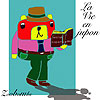
Most of the Japanese bands I listen to seem to draw their inspiration from the late ’70s. Shonen Knife are heavily influenced by The Ramones and the Buzzcocks, while POLYSICS draw from DEVO, XTC and M. The Zoobombs on the other hand, while also influenced by the ’70s, draw inspiration from the earlier part of that decade. Their new collection, La Vie En Jupon, is much closer to Black Sabbath than punk. And, as far as Sabbath goes, they are less “Paranoid” and more “Electric Funeral.”
(more…)
Comments Off on Zoobombs, La Vie En Jupon
Thomas Dolby, Oceanea EP
Published on March 29th, 2011 in: Music, Music Reviews, Reviews |By Jemiah Jefferson
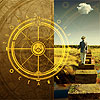
Those expecting a return to the bleepy electro-funk of the early releases of Thomas Dolby will likely be disappointed with the Oceanea EP; its sound tends more to the supperclub-jazz singer-songcraft reminiscent of Dolby’s early track, “I Scare Myself.” Those willing to listen more closely, however, will be rewarded by Spanish rhythms, nuanced piano, and storytelling lyrics that make each song like a snapshot from a complex relationship.
(more…)
Scala & Kolacny Brothers, S/T
Published on March 17th, 2011 in: Current Faves, Music, Music Reviews, Reviews |By Christian Lipski
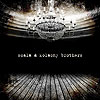
The Stone Age was followed by the Bronze Age, which was followed by the Iron Age. With every new movie that Hollywood releases, with every mashup video on YouTube or “greatest hits” tour by a reunited band, it becomes more and more clear that we are currently living in the Age of the Remake. This is not always the sign of a lack of ideas, fortunately. Often it’s a way to make people look at something in a whole new light.
Listeners may recognize Scala & Kolacny Brothers from the movie The Social Network, which featured their haunting cover of the Radiohead song “Creep.” Their new self-titled CD is their debut in the US, and they obviously hope to capitalize on the film’s great success here.
(more…)
Sparks Donates Income From Online Store Sales To Japan Tsunami Relief
Published on March 15th, 2011 in: Music |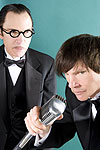
Posted by Less Lee Moore
From Sparks Management:
Hello,
Ron and Russell have, like all of us, been deeply moved by the devastation caused by the earthquake and the tsunami in Japan. They have many friends in Japan and have enjoyed some wonderful times in the country.
At the moment the situation seems overwhelming and the challenges facing the Japanese people and the authorities appear insurmountable. But in order to try, in some small way, to help we would like to do some fundraising—Sparks’ style.
Until April 30th 2011 the Sparks Mart will become “The Shopping Mall Of Love.” The income received by Sparks from sales in the Sparks Mart store will be donated to the Red Cross Japan Tsunami Appeal.
Please go to www.allsparks.com, click on the wallet to the right of the typewriter and then “Sparks Mart.” Please shop generously!
Thank you for your support.
Kind regards,
Sparks management
Comments Off on Sparks Donates Income From Online Store Sales To Japan Tsunami Relief
America’s Music Legacy: Dixieland Jazz (DVD)
Published on March 15th, 2011 in: Current Faves, DVD, DVD/Blu-Ray Reviews, Music, Reviews |By Danny R. Phillips

It has been said that Jazz is the only truly American music style. While other genres blend rhythm, tones, and instruments from other countries, Jazz—whether it be Davis, Coltrane, Armstrong, Hancock, Holliday, or Horne (or god forbid, Kenny G.)—was hatched, raised, nurtured, and perfected here within our shores.
Dixieland Jazz, a mash up of blues, ragtime, and other stylings is a perfect choice for the series America’s Music Legacy; it has a rich, colorful history that is explored here by host Al Hirt, the Jazz trumpeter and Dixieland luminary. Much like the Blues installment of the this series, it includes live performances and is packed with clips of giants who have already left us: piano great Fats Waller, Louis Armstrong, and Eubie Blake.
(more…)
Black Joe Lewis & The Honeybears, Scandalous
Published on March 15th, 2011 in: Music, Music Reviews, Reviews |By Paul Casey

The first thing to be said about Black Joe Lewis & The Honeybears‘ second LP, Scandalous, is how decent it sounds. The production by Jim Eno emphasizes the rough edges built into these tales of betrayal, sadness, and unusual sexual requests. Joe Lewis’s voice, while not terribly distinctive, has enough energy to keep things flowing. His Honeybears also manage to keep things rocking along, with a solid horn section.
Comments Off on Black Joe Lewis & The Honeybears, Scandalous
Heidecker & Wood, Starting From Nowhere
Published on March 15th, 2011 in: Music, Music Reviews, Reviews |By Matt Keeley
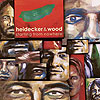
Anyone familiar with Pusswhip Banggang—the band which started as a sketch on Tim & Eric Awesome Show, Great Job! and later became a real band in Tim & Eric live shows—should not be surprised by the ’70s vibe of Starting From Nowhere, the debut album from Tim Heidecker and Davin Wood (who is also a member of Pusswhip).
(more…)
Comments Off on Heidecker & Wood, Starting From Nowhere