A Manufactured Image With No Philosophies: The Rock Band Sitcom
Published on July 30th, 2011 in: Issues, Music, My Dream Is On The Screen, TV |By Cait Brennan
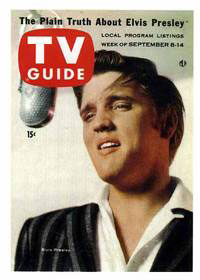
It’s no coincidence that television and rock and roll came of age together. Starting in the American ’50s, a demographic tsunami of young people eager to embrace new technologies and new sounds launched one hell of a cultural transformation. Postwar advances in affordable electronics put television’s sitcoms in every home. Cultural cross-pollination put rock and roll records into the hands of eager teen listeners. When that revolutionary new sound met that unprecedented distribution medium, it’s only natural that those two great tastes ended up tasting great together.
(more…)
Comments Off on A Manufactured Image With No Philosophies: The Rock Band Sitcom
Shonen Knife, Osaka Ramones: Tribute To The Ramones
Published on July 19th, 2011 in: Culture Shock, Current Faves, Feminism, Music, Music Reviews, Reviews |By Matt Keeley
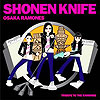
Sometimes the redundant can be awesome. Shonen Knife‘s own music is quite Ramonesy, so some out there might not see the point of them doing a full album of Ramones covers. Those people who I may have just made up are stupid. Shonen Knife are awesome, as are the Ramones. How can you go wrong with an album of Shonen Knife—a band that was dubbed the “Osaka Ramones” by a Ramone himself—doing Ramones covers? You can’t. QED.
(more…)
Comments Off on Shonen Knife, Osaka Ramones: Tribute To The Ramones
NRBQ, Keep This Love Goin’
Published on July 19th, 2011 in: Current Faves, Music, Music Reviews, Reviews |By Danny R. Phillips
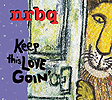
NRBQ is the beast that refuses to die. Formed in the ’60s by Terry Adams, the band has been making good ol’ bar party music ever since, despite numerous lineup changes, a bout with throat cancer, changing times, and changing flavors. With Keep This Love Goin’ NRBQ are back doing the same as they always have, and that’s just fine.
(more…)
Comments Off on NRBQ, Keep This Love Goin’
Tony Bennett, The Best Of The Improv Recordings
Published on July 12th, 2011 in: Current Faves, Music, Music Reviews, Reviews |By Paul Casey
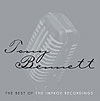
“For my money, Tony Bennett is the best singer in the business. He excites me when I watch him. He moves me. He’s the singer who gets across what the composer has in mind, and probably a little more. There’s a feeling in back of it.”
—Frank Sinatra in Life magazine, 1965
Comments Off on Tony Bennett, The Best Of The Improv Recordings
Bill Evans Trio, Explorations
Published on July 5th, 2011 in: Current Faves, Music, Music Reviews, Reviews |By Paul Casey
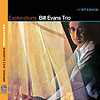
Explorations was Bill Evans‘ second album with his most famous trio. It was recorded in one day, on February 2, 1961, in between recording Know What I Mean? with Cannonball Adderley. Explorations was a follow-up to the seminal Portrait in Jazz, Evans’ vision of a three piece that spoke as if with one voice. This was also the last studio recording to feature Scott LaFaro as bassist, as he died tragically in a car crash in the summer of ’61. He was 25.
Comments Off on Bill Evans Trio, Explorations
Cannonball Adderley with Bill Evans, Know What I Mean?
Published on July 5th, 2011 in: Current Faves, Music, Music Reviews, Reviews |By Paul Casey
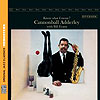
Cannonball Adderley and Bill Evans worked together on Miles Davis’s Kind of Blue. That should be enough of a reason for you to seek out and listen to Know What I Mean? As the cover reminds us, Bill Evans accompanies that fearsomely moustachioed fellow, Cannonball Adderley, who first transfixed me with his earlier Somethin’ Else album.
(more…)
Comments Off on Cannonball Adderley with Bill Evans, Know What I Mean?
Spectacle: Elvis Costello with . . . (Season Two DVD)
Published on July 5th, 2011 in: Current Faves, DVD, DVD/Blu-Ray Reviews, Music, Reviews, TV |By Danny R. Phillips
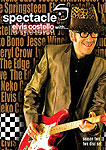
Elvis Costello has been good at many things throughout his career as a musician. From the snot-nosed, pissed off, former IBM employee who gave us “Accidents Will Happen,” “Alison,” “New Lace Sleeves,” and “Radio, Radio” to the still-much-loved, still-bitchy-at-times entertainer that he is today, his career has run the gamut. But it seems that some of his most curious work has been as host of the love fest known as Spectacle: Elvis Costello with . . .
(more…)
Martin Rushent: 1948 – 2011
Published on June 28th, 2011 in: Eulogy, Music |By Emily Carney

I am shocked to learn that Martin Rushent, perhaps one of the most iconic Punk/New Wave producers of the late 1970s and early 1980s, died on June 4 of this year. I was supposed to interview Martin via Skype a couple of years back; as it was, our extremely busy schedules prevented this from happening. Although I didn’t know him well, Martin gave the impression of being a personable, eminently cool man who just happened to have produced some of the best, most seminal records of the New Wave era. Martin was more than willing to discuss his interests with his fans and followers, which I find admirable.
(more…)
Comments Off on Martin Rushent: 1948 – 2011
Chet Baker In New York
Published on June 28th, 2011 in: Current Faves, Music, Music Reviews, Reviews |By Paul Casey
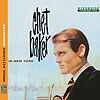
I was drawn to Chet Baker in the same way as so many others: By his voice. A copy of the essential compilation, The Best of Chet Baker Sings, was my companion on the kinds of nights where only a special performer can turn solipsism into artful indulgence. It was not a long haul until his instrumentals joined his whisper voice and became the backdrop to these low and human moments.
The Chain Gang Of 1974, Wayward Fire
Published on June 21st, 2011 in: Current Faves, Music, Music Reviews, Reviews |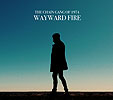
Based on “Undercover”—the first song I heard by The Chain Gang Of 1974—I was excited, fully expecting the album Wayward Fire to be crammed with lush, moody, ’80s-influenced synthy dance pop. (Even the cover art reminds me of Echo and The Bunnymen’s Songs To Learn And Sing.) Since my teen years were spent listening to the original incarnation of that style of music, I’m glad that so many bands are redefining the sound as a genre of its own, not just some passing fad. Yet, Wayward Fire is not what I expected.