Big Black Delta, Tour EP
Published on August 30th, 2012 in: Current Faves, Music, Music Reviews, Reviews |
While Big Black Delta might seem like the name of a blues band, the new musical incarnation of former Mellowdrone and touring M83 member Jonathan Bates sounds nothing like that genre.
The new four-song EP from the band—created for their recent tour—sounds more like the soundtrack to an apocalyptic Blade Runner sequel; you can almost visualize Rachael smoking in the Tyrell Corporation building. Fitting, as Big Black Delta is actually a reference to UFO folklore.
Even with its vaguely retro synths, “Betamax” isn’t some Kraftwerk retread. The drums are too booming, and Bates’s voice is too romantic for that. What’s striking is how warm and sensual his voice is against the coldness of keyboard explosions, especially when he breaks out the falsetto. The end ushers in some Hans Zimmer-ish synthy strings before ending abruptly.
Comments Off on Big Black Delta, Tour EP
Harry Shearer, Can’t Take A Hint
Published on August 28th, 2012 in: Music, Music Reviews, New Music Tuesday, Reviews |By Melissa B.
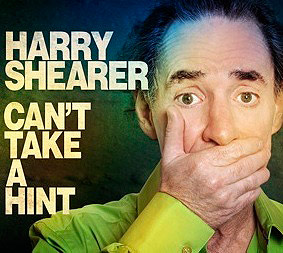
Can a record that relies as heavily on current events as Harry Shearer‘s Can’t Take A Hint stand the test of time? Political humor is almost ephemeral, and the political climate and players mercifully change so quickly. Songs about Herbert Hoover, for example, are so rarely sung today, and sea shanties about the Great Fire of London have fallen out of favor. So how does one approach a record in 2012 that has songs about the 2008 election, the 2010 Deepwater Horizon oil disaster, and the Iraq war? If this album had arrived two years ago, it might have been cutting in its satire. At this point, however, it feels a bit creaky.
Comments Off on Harry Shearer, Can’t Take A Hint
Booker T. & The M.G.s: A Sweet, Sweet Serving of Green Onions
Published on August 28th, 2012 in: Current Faves, Music, Music Reviews, New Music Tuesday, Retrovirus, Reviews |By John Lane
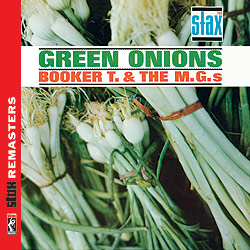
Yes, Virginia, back in the ancient times of the mystical 1960s, there was a universe that expanded far beyond The Beatles, even though they were heaven-sent. While The Beatles were decompressing after playing to a kajillion people at Shea Stadium or elsewhere, I guarantee you that somewhere in their collective mind were the righteous sounds of Booker T. & The M.G.s taking them to a soulful place.
Comments Off on Booker T. & The M.G.s: A Sweet, Sweet Serving of Green Onions
Sleepies, Weird Wild World
Published on August 23rd, 2012 in: Current Faves, Music, Music Reviews, Reviews |
Sleepies have a deceptively lazy name. If their music makes you sleepy, something’s wrong with you. According to a recent Noisey interview, they also considered Tires & Skunks as a name. That alone should be enough to pique your interest. Oh, and their new album Weird Wild World is fantastic, by the way.
Right off, there are going to be a lot of people comparing them to Nirvana with accusatory tones in their voices, but come on, didn’t that critique go out of style a few years ago? Sleepies are more reminiscent of Flipper (a huge influence on Nirvana) and Flop (who also happen to be an early ’90s Seattle band). If this means nothing to you, you should look up those two bands on YouTube immediately.
Comments Off on Sleepies, Weird Wild World
Nude Beach, II
Published on August 22nd, 2012 in: Music, Music Reviews, Reviews |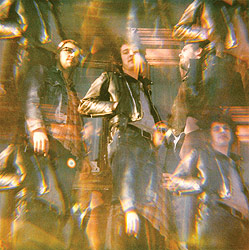
When MTV premiered in 1981, it was astonishingly free form. You’d see a wide range of musical styles represented. New wave, rap, and heavy metal hadn’t taken over the mainstream yet, so there was still a lot of straight-up rock & roll interspersed between U2, Gary Numan, and Adam and the Ants videos. Had they existed back in the day, Brookyln’s three-piece Nude Beach would have been on heavy rotation.
The band sounds like they’d fit perfectly on the soundtrack to a never-released Amy Heckerling or Martha Coolidge movie from the early ’80s, successfully straddling that precipice between pure rock and power pop. This description might cause some to grumble about “Brooklyn hipsters” but Nude Beach’s three members—Chuck Betz, Jim Shelton, and Ryan Naideau—look and sound completely unpretentious. Sure they borrow heavily from the past, but when it’s done in such a non-self-conscious way, it’s refreshing.
Comments Off on Nude Beach, II
Los Lobos, Kiko 20th Anniversary Edition: featuring Kiko Live, Kiko Live DVD/Blu-Ray
Published on August 21st, 2012 in: Blu-Ray, Current Faves, DVD, Music, Music Reviews, New Music Tuesday, Reviews |By J Howell

Los Lobos, photo © Drew Reynolds
It’s funny how time flies, and frankly a bit unnerving to think that Los Lobos‘ masterpiece, Kiko, is almost old enough to drink legally. In celebration of the benchmark album’s twentieth anniversary, Shout! Factory has a whole lot of Kiko for Lobos fans new and old to enjoy.
Comments Off on Los Lobos, Kiko 20th Anniversary Edition: featuring Kiko Live, Kiko Live DVD/Blu-Ray
Maxïmo Park, The National Health
Published on August 21st, 2012 in: Music, Music Reviews, New Music Tuesday, Reviews |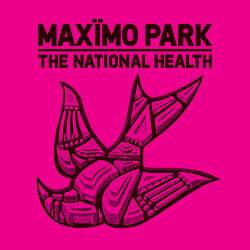
On Maxïmo Park‘s Wikipedia entry there’s a great quote about singer Paul Smith: “When he first joined we didn’t know if he could [sing]; just that he was a lunatic jumping around in a suit, it felt like the last piece of the jigsaw.” When listening to The National Health, it’s immediately obvious that serendipity was on their side. At times Smith exhibits close, sensual vocals similar to those of Martin Gore (but minus the vibrato); other times, his soaring voice has flashes of Midge Ure.
The National Health is the band’s fourth album since their debut release in 2005, but it’s my introduction to them. There are thirteen songs included, all evidence of a self-assured bunch. Maxïmo Park’s songs are buoyant and radio-friendly, boasting interesting lyrics as well as first-class musicianship.
Comments Off on Maxïmo Park, The National Health
Bad Lucy, Bad Lucy EP
Published on August 15th, 2012 in: Current Faves, Music, Music Reviews, Reviews |By Cait Brennan
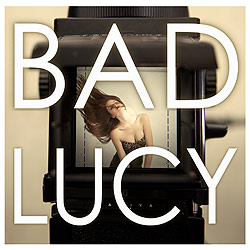
The Internet is a magical place. A few nights back, I muted Bob “Olympus Interruptus” Costas and took a random gander at the live web feed of one of my favorite watering holes—Tempe, Arizona’s historic Tempe Tavern. A suitably vibrant crowd was on hand to revel in the music of some fine local bands. It was all good stuff, but one band stood out so much that I had to track them down. The band is called Bad Lucy, and their gorgeous, melodic songs and energetic live show blasted right through the off-kilter webcam and livestream hiccups—and into my heart. Shut up, I’m serious.
Comments Off on Bad Lucy, Bad Lucy EP
Shoes, Ignition
Published on August 14th, 2012 in: Current Faves, Music, Music Reviews, New Music Tuesday, Reviews |By Cait Brennan
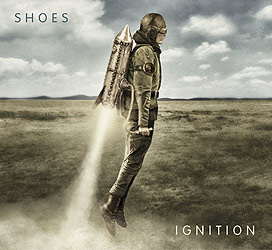
Zion, Illinois hardly seems like the kind of place to jumpstart a music revolution. But in the dark days of 1974, this tasty bit of spicy mustard in the middle of a Waukegan/Kenosha sandwich found itself with not one but two seemingly endless power sources. Say what you will about nuclear fission, but the Zion Nuclear Power Plant had nothing on the thousand-megawatt power pop of brothers John and Jeff Murphy and their high school pal Gary Klebe—the creative soul of Shoes. Pioneers of both power pop and DIY home recording, the band made their mark with 1977’s self-released Black Vinyl Shoes, released three gorgeous albums on Elektra from ’79-82, and over the next 30-plus years, blazed a fiercely independent trail with a series of critically-acclaimed albums (1984’s Silhouette, 1990’s Stolen Wishes, ‘94’s Propeller, and a ton of rarities and reissues).
Comments Off on Shoes, Ignition
Jezzy & the Belles, Compasses & Maps
Published on August 8th, 2012 in: Music, Music Reviews, Reviews |
One of the reasons why I got into music criticism was to discover and herald to the world up and coming artists. Thus, writing less than positive reviews of new artists’ self-released work causes me a small amount of pain. Someone took great time and expense to write, arrange, record, and press an album, and I don’t want to downplay their hard work by speaking ill of them in public. However, once in a while the dirty task of shrugging off a self-released album must be done.
And so it came to pass that Jezzy & the Belles‘ debut album, Compasses & Maps, came into my possession. I volunteered to review it on the strength of a few YouTube clips that established Jessica Eisenberg’s strong musical and lyrical abilities, and had looked forward to hearing a rising star for the first time. Sadly, the balance of the album’s nine tracks left a bland impression.
Comments Off on Jezzy & the Belles, Compasses & Maps