Cannonball Adderley with Bill Evans, Know What I Mean?
Published on July 5th, 2011 in: Current Faves, Music, Music Reviews, Reviews |By Paul Casey
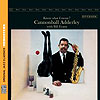
Cannonball Adderley and Bill Evans worked together on Miles Davis’s Kind of Blue. That should be enough of a reason for you to seek out and listen to Know What I Mean? As the cover reminds us, Bill Evans accompanies that fearsomely moustachioed fellow, Cannonball Adderley, who first transfixed me with his earlier Somethin’ Else album.
(more…)
Comments Off on Cannonball Adderley with Bill Evans, Know What I Mean?
Chet Baker In New York
Published on June 28th, 2011 in: Current Faves, Music, Music Reviews, Reviews |By Paul Casey
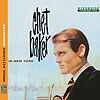
I was drawn to Chet Baker in the same way as so many others: By his voice. A copy of the essential compilation, The Best of Chet Baker Sings, was my companion on the kinds of nights where only a special performer can turn solipsism into artful indulgence. It was not a long haul until his instrumentals joined his whisper voice and became the backdrop to these low and human moments.
The Chain Gang Of 1974, Wayward Fire
Published on June 21st, 2011 in: Current Faves, Music, Music Reviews, Reviews |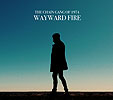
Based on “Undercover”—the first song I heard by The Chain Gang Of 1974—I was excited, fully expecting the album Wayward Fire to be crammed with lush, moody, ’80s-influenced synthy dance pop. (Even the cover art reminds me of Echo and The Bunnymen’s Songs To Learn And Sing.) Since my teen years were spent listening to the original incarnation of that style of music, I’m glad that so many bands are redefining the sound as a genre of its own, not just some passing fad. Yet, Wayward Fire is not what I expected.
Iceage, New Brigade
Published on June 21st, 2011 in: Current Faves, Music, Music Reviews, Reviews |
Iceage is the kind of band that music critics slobber all over (and if you read music blogs, you’ll have heard about them already). This probably sounds like I’m insulting Iceage and music critics in one hastily written sentence, but be patient with me; I had to put that out there to get it out of the way.
Hearing “White Rune” for the first time was invigorating, to say the least. And to be fair to music critics, in part because I am one, there’s an awful lot of crappy music out there, so any hint of potential non-crap is pretty damn exciting to us.
Wild Beasts, Smother
Published on June 14th, 2011 in: Current Faves, Music, Music Reviews, Reviews |By Ann Clarke
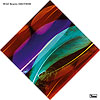
I was quite fond of last year’s release by Wild Beasts—Two Dancers—so I was quite surprised that they had a brand new album out so quickly thereafter. So does Smother hold up to its predecessor? The short response is: Yes, it does!
(more…)
Comments Off on Wild Beasts, Smother
Chris Difford, Cashmere If You Can
Published on June 14th, 2011 in: Current Faves, Music, Music Reviews, Reviews |By Kai Shuart
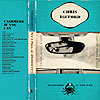
This outing from the former Squeeze member finds him in a very reflective mode .The opening song, “1975,” could be taken as a collection of incidents from various periods of the protagonist’s life. This feeling of a walk down Memory Lane is bolstered by the second song, “Back in the Day,” whose protagonist recounts a misspent youth of getting into trouble and hanging with a rough crowd, not sparing unflattering details such as mugging the elderly and accidentally urinating in bed.
(more…)
Comments Off on Chris Difford, Cashmere If You Can
Elysian Fields, Last Night On Earth
Published on June 14th, 2011 in: Current Faves, Music, Music Reviews, Reviews |By J Howell
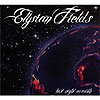
Jennifer Charles made me a fan the first time I heard “Mr. Cardiac,” a song she sang on the first Firewater record, Get Off The Cross, We Need The Wood For The Fire.
Charles’ breathy, sultry singing paired with Tod Ashley’s brilliant, incisive lyrics was one of many high points on that record, and I had to hear more. A couple of years later, I found an EP of her band, Elysian Fields, a collaboration with Oren Bloedow and a revolving cast of Downtown New York luminaries, including Marc Ribot.
(more…)
Comments Off on Elysian Fields, Last Night On Earth
Sea Of Bees, Songs For The Ravens
Published on June 7th, 2011 in: Current Faves, Music, Music Reviews, Reviews |By J Howell
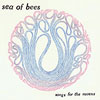
I became instantly curious about Julie Baenziger’s Sea of Bees a couple of months ago, after seeing a half-page ad for Songs For The Ravens in every audio geek’s bimonthly bible, Tape Op magazine. Being an almost-obsessive Sparklehorse fan, I knew any band compared to Sparklehorse would quickly make the top of my must-check-out list. After reading a bit about Sea of Bees and checking out a YouTube clip of “Skinnybone,” I had to hear more.
As it turns out, there’s more of a connection between Tape Op and Sea of Bees than an ad.
(more…)
Comments Off on Sea Of Bees, Songs For The Ravens
Flogging Molly, Speed Of Darkness
Published on May 31st, 2011 in: Current Faves, Music, Music Reviews, Reviews |By Magda Underdown-DuBois
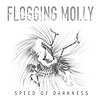
Speed of Darkness, the fifth album by Flogging Molly comes in low, Perfect Circle-style, for a full 30 seconds and then crashes into one’s ears like a comet of sound.
Full of working contradiction, the band is a proud member of the new Celtic rock music generation along with The Pogues or The Secret Commonwealth. From their own record label Borstal Beat, Speed of Darkness is a self-professed concept album in an age of MP3s and singles, with the pounding rhythm of punk, but the articulated lyrical message of traditional Irish music.
(more…)
Comments Off on Flogging Molly, Speed Of Darkness
Tindersticks, Claire Denis Film Scores 1996 – 2009
Published on May 24th, 2011 in: Current Faves, Music, Music Reviews, Reviews, Soundtracks and Scores |By Michelle Patterson
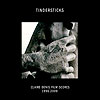
How I judge whether or not a soundtrack feels organic to its cinematic equal is whether or not it can stand on its own. This does not determine whether or not it is good—the apparent strength of the music isn’t a question—but if it can genuinely remind me of the film when I am listening to it in the quiet of my own bedroom or on the chaotic bus to work.
The clearest role of the soundtracks as experienced in the Tindersticks‘ Claire Denis Film Scores box set is as passive listener. This music stands on its own, without its marriage to the visuals; better yet, it imports another sense of value when associated with an entirely new set of identifiers, all depending on the situation of the listener.
(more…)
Comments Off on Tindersticks, Claire Denis Film Scores 1996 – 2009