Turing Machine, What Is The Meaning Of What
Published on May 8th, 2012 in: Current Faves, Music, Music Reviews, Reviews |By Less Lee Moore
In fact, Turing machines are not intended to model computers, but rather they are intended to model computation itself . . .
—Wikipedia, “Turing Machine”
Perhaps there are those who, unfamiliar with minimalist, drone, or ambient music, may lobby the complaint that it doesn’t go anywhere. Nothing could be further from the truth. These styles of music can certainly take you places, but to paraphrase Dr. Crane in The Dark Knight, they might not be places you wanted to go. This is certainly true of Demdike Stare, who reside at the disturbing end of that particular spectrum. As Turing Machine’s new album What Is The Meaning Of What reveals however, these places may simply be the ones to which you didn’t expect to go. And the ride there is invigorating.
(more…)
Comments Off on Turing Machine, What Is The Meaning Of What
Dave Martin, Natural Selection
Published on May 4th, 2012 in: Current Faves, Music, Music Reviews, Reviews, Upcoming Events |By Chelsea Spear
In the ’80s and ’90s, Dave Martin cut his teeth as a member of the beloved Boston rock band O Positive. His role as a sort of band factotum—in which he played numerous instruments and worked on the band’s onstage sound—filled out the quintet’s angular, shimmering, new wave arrangements. Since O Pos disbanded in 1995, Martin has put forth a prolific solo career, recording a trio of solid, folk rock-influenced solo records. His most recent album, Natural Selection, mines the contemplative vein of his previous albums, and also finds him introducing some new sounds and arrangements.
(more…)
Comments Off on Dave Martin, Natural Selection
The Lake Effect, Expect Delays EP
Published on May 2nd, 2012 in: Canadian Content, Music, Music Reviews, Reviews |By Kai Shuart

The four tracks on The Lake Effect‘s debut EP, Expect Delays, tell of a band that seems too chilled out for its own good. While this does make for some lovely, atmospheric music, such as the always-wonderful combination of warm keyboards and acoustic guitars found throughout Expect Delays, the muted atmosphere made it difficult for me to attach myself to the emotions being conveyed in the lyrics.
(more…)
Comments Off on The Lake Effect, Expect Delays EP
Portland Cello Project, Homage
Published on May 1st, 2012 in: Current Faves, Music, Music Reviews, Reviews |By Jemiah Jefferson

While the sparkly and joyous “Hey Ya!” has long been a part of Portland Cello Project‘s live repertoire, Homage is their first full-length release of cover versions of hip-hop songs (they have done hip-hop covers before, but never a full album). In every case, PCP’s arrangement and performance of the melodies and rhythms found in these chart-smashing hits brings new delight to the listener, both in the chuckle-inducing recognition of the original and in admiration for how smoothly these tracks have been adapted.
(more…)
Comments Off on Portland Cello Project, Homage
Chelle Rose, Ghost Of Browder Holler
Published on May 1st, 2012 in: Current Faves, Feminism, Music, Music Reviews, Reviews |By Kai Shuart
Ghost Of Browder Holler is the latest release from Chelle Rose, and was recorded using the contributions of many. The album is the product of a bunch of musicians gathering around the table and deciding which of Rose’s songs they wanted to record. Yet for all the collaborative efforts, Ghost Of Browder Holler is extremely cohesive, giving the feeling that the primary artistic voice is Chelle Rose’s alone.
(more…)
Comments Off on Chelle Rose, Ghost Of Browder Holler
Theresa Andersson, Street Parade
Published on April 24th, 2012 in: Current Faves, Feminism, Music, Music Reviews, Reviews |By Chelsea Spear
Theresa Andersson’s 2008 breakthrough album Hummingbird, Go! was no small accomplishment. Serving as a one-woman band, Andersson spun hummable, soulful tunes brimming with hard-won optimism. The straightforward production and elaborate arrangements became even more impressive once listeners knew that she’d performed all the instruments herself, using effects pedals to create loops. (The video for her song “Na Na Na,” in which she demonstrates her one-woman band setup, attracted 1.2 million views on YouTube.) How do you top a left-field critical and artistic success like this?
(more…)
Comments Off on Theresa Andersson, Street Parade
Rick Springfield’s Beginnings: Younger Than Tomorrow, Wise As Yesterday
Published on April 23rd, 2012 in: Current Faves, Music, Music Reviews, Reviews |By Cait Brennan
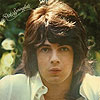
I can’t prove this, but I suspect Rick Springfield‘s career began with the discovery of a magic lamp. A magic lamp with a particularly devious Jinn contained therein. Since he was a teenager, Springfield has been on the receiving end of some of the luckiest breaks a young rocker could’ve wished for in his wildest dreams. Yet too many of them went inexplicably off the rails despite his formidable talents. Such was his major-label debut, the indispensable, shoulda-been-a-smash Beginnings, released in 1972 on Capitol and recently reissued by a great new label called Real Gone Music. It’s one of 1972’s best albums, and one of the best you’ll hear in 2012, too.
(more…)
Johnny Headband, Who Cooks For You?
Published on April 17th, 2012 in: Current Faves, Music, Music Reviews, Reviews |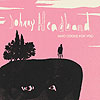
Who Cooks For You? is the latest release from Detroit’s Johnny Headband, featuring brothers Chad and Keith Thompson (the latter of Electric Six), plus Gerald Roesser and and Robbie Saunders. Like the music itself, Who Cooks For You? poses an unanswered (or unanswerable) question: Who (or what) is Johnny Headband? Who Cooks For You? seems familiar yet it’s not beholden to current “indie” music trends; it refuses to be pigeonholed but all the same, it is one ridiculously enjoyable album. Who Cooks For You? crams a lot of flavor into its 35 minutes.
Comments Off on Johnny Headband, Who Cooks For You?
Mark Lindsay, The Complete Columbia Singles
Published on April 3rd, 2012 in: Music, Music Reviews, New Music Tuesday, Retrovirus, Reviews |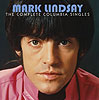
Mark Lindsay will ever be known as the dreamy, ponytailed lead singer of Paul Revere and the Raiders. He left the band to begin a solo career and recorded a series of albums for Columbia Records in the 1970s. The Complete Columbia Singles thoughtfully gathers his singles for the label into a handy chronological package.
Comments Off on Mark Lindsay, The Complete Columbia Singles
The Red Bird Girls: very first time in true Stereo 1964-1966 (Various Artists)
Published on April 3rd, 2012 in: Current Faves, Feminism, Music, Music Reviews, Reviews | 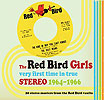
There are few moments that can’t be improved upon by a good song from a girl group. Happiness is magnified, heartbreak is more monumental, a pretty summer day shines with sweet harmonies, “yeah yeahs,” and fantastic hairdos. I’m pretty sure that’s a scientific fact.
Comments Off on The Red Bird Girls: very first time in true Stereo 1964-1966 (Various Artists)