Dent May, Do Things
Published on June 12th, 2012 in: Music, Music Reviews, Reviews |By Chelsea Spear
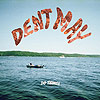
Over the past few years, the ukulele has become to pop music what corn syrup is to soft drinks—a cloyingly sweet element used to thicken and over-sweeten a product of questionable quality. In comparison to his brodora-rocking peers, Dent May’s music is a glass of raw sugar-sweetened lemonade on a hot summer afternoon. His music shares a catchy, melodic quality, but his cracked baritone, lo-fi production values, and grounded lyrical perspective give his music a tart, refreshing quality.
(more…)
Comments Off on Dent May, Do Things
John Singer Sergeant
Published on June 7th, 2012 in: Current Faves, Music, Music Reviews, Reviews |By Jemiah Jefferson
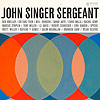
Riffing on the name of the famous 19th Century painter, this intriguing solo project by Apples in stereo alum John Dufilho is a delightfully mixed bag of influences and styles, with each song featuring a singer other than himself. Most of the other instruments are performed by him, though, and as befitting his Elephant 6 associations, he’s good-to-excellent at all of them.
(more…)
Comments Off on John Singer Sergeant
New Band: Sad Baby Wolf
Published on June 6th, 2012 in: MP3s, Music, Music Reviews, Reviews |By Kai Shuart
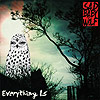
Sad Baby Wolf is the Albuquerque-based result of the collaborative efforts of Marty Crandall and Neal Langford, formerly of The Shins, Marty’s brother Maury Crandall, and their friends Jason Ward and Sean McCullough. To test the waters, the newly formed band has decided to take their show on the road. They played the Noise Pop festival in February, and are slated to play several music festivals this summer. To whet everyone’s appetite, the band has released their version of the Neutral Milk Hotel tune “Everything Is” to the public.
(more…)
Comments Off on New Band: Sad Baby Wolf
Jherek Bischoff, Composed
Published on June 5th, 2012 in: Current Faves, Music, Music Reviews, Reviews |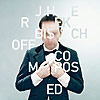
Singer/songwriter/producer/etc. Jherek Bischoff spent years working on Composed, which makes its brevity perhaps surprising. The album is fewer than 40 minutes in length, yet it’s anything but slight. Each composition is quite literally bursting with ideas.
Even though Bischoff wrote most of the music (with the exception of an arresting cover of English folk-pop singer Bob Lind’s “Counting”), Composed is an exceptionally collaborative effort. Most of the singers wrote their own lyrics and the 20+ musicians who contributed to the album didn’t even perform in the same room together; the liner notes indicate that many of their instrumental tracks were recorded at their homes or various studios individually.
Comments Off on Jherek Bischoff, Composed
The dB’s, Falling Off The Sky
Published on June 5th, 2012 in: Current Faves, Music, Music Reviews, Reviews |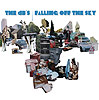
It’s been 25 years since the dB’s recorded an album; it’s been 30 years since they recorded one with the band’s original lineup of Peter Holsapple, Chris Stamey, Gene Holder, and Will Rigby. Understandably, expectations run high and the urge to compare this new album to their previous ones is strong. As a fan, I wanted to try and avoid this in my review, but damn it if each song on Falling Off The Sky doesn’t sound exactly like the dB’s! Which is a good thing, trust me.
Let’s be clear: the songs on Falling Off The Sky aren’t those of old fogeys. Okay, maybe Holsapple and Stamey can’t hit the high notes like they did in the early ’80s, but there is not one boring or stodgy moment on this album.
Charlie Parker; Dizzy Gillespie; Bud Powell; Max Roach; Charles Mingus; The Quintet: Jazz at Massey Hall
Published on May 22nd, 2012 in: Current Faves, Music, Music Reviews, Reviews |By Jemiah Jefferson
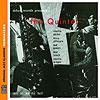
This new remaster of The Quintet: Jazz At Massey Hall—a truly historic convergence of five of the most celebrated musicians in jazz—is so classic, so iconic, that at first it’s hard to understand what’s so special about it. It really does take some schooling, and some careful and studied listening, before the true magic trick is revealed. For anyone with an interest in jazz, however, this album is essential listening, and can be enjoyed without knowledge of its importance.
(more…)
Comments Off on Charlie Parker; Dizzy Gillespie; Bud Powell; Max Roach; Charles Mingus; The Quintet: Jazz at Massey Hall
Thelonious Monk, Misterioso
Published on May 15th, 2012 in: Current Faves, Music, Music Reviews, Reviews |By Jemiah Jefferson
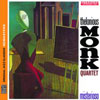
It must have been a thrill for audiences in 1958 to imagine that the performances they witnessed in smoky nightclubs could be recorded and released as brilliant record albums to be savored and studied at home by those less lucky than they. I doubt that many of them could have imagined that more than fifty years later, those same performances would be captured on a shiny silver disk, played back by a laser beam, and savored and studied just as avidly. It’s also possible that the audience listening to what would be titled Misteriso, the live performance by the Thelonious Monk Quartet at the Five Spot Café in New York had no idea of future audiences or listening technologies at all, being entirely too occupied in experiencing the delights of a genius at the peak of his abilities.
(more…)
Comments Off on Thelonious Monk, Misterioso
The Bill Evans Trio, Moon Beams
Published on May 14th, 2012 in: Music, Music Reviews, Reviews |By Emily Carney
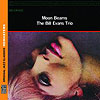
By 1962, jazz pianist Bill Evans was emotionally bereft by the car crash death of his bassist, Scott LaFaro. Indeed he was so devastated, he wouldn’t perform for months. He was already in the grips of a powerful addiction to heroin, which he wouldn’t overcome until the end of the 1960s; however, this addiction would be replaced by another: cocaine. No one was shocked by Evans’s death in September 1980, characterized by one of his peers as “the longest suicide in history.”
After LaFaro’s death, Evans had reformed his trio, adding new bassist Chuck Israels. While Evans and his distinctive style of piano playing—hunched directly over the keys—may be a ghost in the machine, this reissue of 1962’s Moon Beams takes the listener back to his melancholy brilliance.
(more…)
Tyburn Saints, You And I In Heaven EP
Published on May 10th, 2012 in: Current Faves, Music, Music Reviews, Reviews |By Less Lee Moore
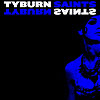
Can we just go ahead and define ’80s music as a genre? I think enough great music was made during that decade and enough time has passed that it qualifies. Especially when so many bands continue to profess their love for the ’80s through amazing music (School of Seven Bells, The Chain Gang of 1974, Weep, White Lies, etc.). With their latest EP, You and I in Heaven, Tyburn Saints carry the torch with a firm grip and full hearts.
(more…)
Comments Off on Tyburn Saints, You And I In Heaven EP
Little Richard, Here’s Little Richard
Published on May 9th, 2012 in: Current Faves, Music, Music Reviews, Reviews |By Hanna
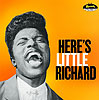
For the 55th anniversary of the original release of Here’s Little Richard, Concord Music Group has reissued a remaster of his debut on Specialty Records. This reissue also features a bunch of extras to put the album into context and provide some information on its meaning and background (and make total nerds like me wig out, of course). I wish I could just shout my review, but here it is in written form.
(more…)