Music Review: Peggy Sue Play The Songs Of Scorpio Rising
Published on October 9th, 2012 in: Current Faves, Music, Music Reviews, New Music Tuesday, Reviews |By J Howell
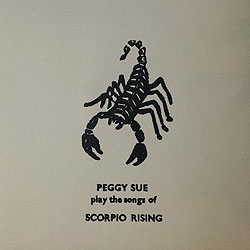
Following Peggy Sue‘s brilliant first two records, listeners may be a bit surprised by the band’s choice to (mostly) recreate the soundtrack from Kenneth Anger’s 1963 film Scorpio Rising as a next move. Somewhat predictably, though, the record is flat-out brilliant.
Modern music fans with a Phil Spector bent should take especial heed: Peggy Sue recreates, perhaps most importantly, the spirit of the original tracks while finding a sonic space for them to exist in that feels a bit more like alternate-universe versions of familiar songs than slavish imitation or heavy-handed “updating”. The band deftly walks the fine line between reproducing the original songs and making them their own, somehow managing to treat the “teenage drama” factor of many of the tracks with a respectful empathy that feels less melodramatic than urgent. Elsewhere, Scorpio Rising is just plain fun.
Comments Off on Music Review: Peggy Sue Play The Songs Of Scorpio Rising
Music Review: Merchandise, Children Of Desire
Published on October 9th, 2012 in: Music, Music Reviews, New Music Tuesday, Reviews |
As much as I loathe music reviews featuring lazy equations like, “take one part [name of band] plus one part [name of other band] . . . ” in the case of Merchandise‘s Children of Desire, it does make for a good jumping off point. What separates Children of Desire from bands that are just a formulaic rehashing of previous, and far superior bands, is how they merge these styles and sounds to create something unique and bracing that doesn’t actually sound like anything else.
The album opens with “Thin Air,” a short, yet yearning piece that feels like an introduction for what’s to come. “Time” is longer, but still somewhat freeform in that it doesn’t rely on shopworn riffs or rhyming couplets. Singer Carson Cox has a rather idiosyncratic voice and delivery, ranging from falsetto to a deeper baritone; no matter how he’s singing, what registers is a sincerity and frankness that is offset by a combination of feedback, synths, processed drums, and subtle basslines that give these songs an oddly retro yet completely modern feeling.
Comments Off on Music Review: Merchandise, Children Of Desire
Music Review: Holly Golightly & The Brokeoffs, Sunday Run Me Over
Published on October 9th, 2012 in: Current Faves, Feminism, Music, Music Reviews, New Music Tuesday, Reviews |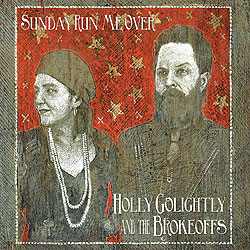
Country music—as a genre—has been a crapshoot for the last decade or so. For every Wayne Hancock or Justin Townes Earle that wade into the deep end of true country song craft, there’s a Kenny Chesney, Carrie Underwood, or Sugarland that claim the country mantle but are merely pop acts with lap steel.
That’s why I find a group like Holly Golightly & The Brokeoffs to be such a kick in the pants; they embrace instrumentation as if they were recording with the Carter Family, and give bear hugs to tradition. Holly, an Englishwoman by birth, delivers more twang than Loretta Lynn. Two songs in, you’d swear she just walked down from The Blue Ridge Mountains with her flour sack dress on, well-worn Bible tightly in her hand. It is a respite from the everyday, manufactured “country” backwash.
Sunday Run Me Over is the perfect companion to last year’s fantastic (and my #2 album of the year behind Foo Fighters’ Wasting Light) No Help Coming (reviewed here).
Comments Off on Music Review: Holly Golightly & The Brokeoffs, Sunday Run Me Over
Music Review: Ty Segall, Twins
Published on October 9th, 2012 in: Current Faves, Music, Music Reviews, New Music Tuesday, Reviews |
Despite being astonishingly prolific, I’ve only gotten wise to Ty Segall‘s musical output recently; my album intro was June’s Slaughterhouse, performed with Segall’s touring band (reviewed here). Hearing Twins, recorded almost entirely by Segall himself, has proved he’s not a one trick pony. Twins hits the sweet spot between heavy guitar fuzz and pretty melodies and is immediately, deliriously enjoyable.
That’s not to say Twins is full of disposable pop songs. In these post-post-ironic times, it’s not uncommon for music fans to feel distrustful of something they like immediately, concerned about being manipulated by both our nostalgia and the desire for something that’s not a rip-off.
Comments Off on Music Review: Ty Segall, Twins
Music Review: Dark Dark Dark, Who Needs Who
Published on October 2nd, 2012 in: Current Faves, Feminism, Music, Music Reviews, New Music Tuesday, Reviews |
If Who Needs Who dropped in the early 1990s, Dark Dark Dark would have appeared in Sassy magazine’s “One to Watch” column. This band is the real deal. Frontwoman Nona Marie Imrie has a striking voice, their songs are catchy and insightful, and their arrangements and the spare production cast a spell over the listener. This Minneapolis-based quintet has a great album in them. The band’s third long-player isn’t quite that album.
Comments Off on Music Review: Dark Dark Dark, Who Needs Who
Music Review: John Cale, Shifty Adventures in Nookie Wood
Published on October 2nd, 2012 in: Current Faves, Music, Music Reviews, New Music Tuesday, Reviews |By Emily Carney
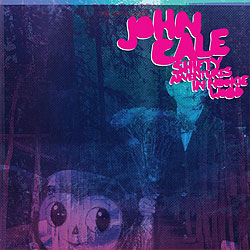
John Cale turned 70 in March; however, his music proves to be age-proof with his new album, Shifty Adventures in Nookie Wood. Don’t ask; I have no idea about the title, either. Cale does have typically inscrutable album titles.
Usually when musical artists of any sort turn 70, they do endless “farewell” or “greatest hits” tours, or they engage in embarrassing collaborations with a very 1990s-sounding Metallica (I’m looking at you, Lou Reed. Yeah, I said it). Cale is doing neither, refuses to give into age, and is turning out impressive original compositions that aren’t at all dated or misguided. He’s only gotten better and more experimental as he’s gotten older.
Comments Off on Music Review: John Cale, Shifty Adventures in Nookie Wood
Music Review: Timi Yuro, The Complete Liberty Singles
Published on September 25th, 2012 in: Feminism, Music, Music Reviews, New Music Tuesday, Retrovirus, Reviews |By Emily Carney

American singer Timi Yuro was described as “the little girl with the big voice,” lending her legacy nicely to future blue-eyed soul singers such as the late Amy Winehouse, Duffy, and Adele. However, Yuro’s influence spread like tree roots on both sides of the ocean; artists as disparate as Elvis and Morrissey considered themselves Timi Yuro fans. Her voice was also heard all over Northern Soul dance floors during the 1970s. Her career ended in the late 1960s with her marriage, but she had some impressive celebrity fans. Excellence never goes away, though.
Comments Off on Music Review: Timi Yuro, The Complete Liberty Singles
Music Review: The Very Best of Vince Guaraldi and The Very Best of The Bill Evans Trio
Published on September 25th, 2012 in: Current Faves, Music, Music Reviews, New Music Tuesday, Retrovirus, Reviews |By Emily Carney
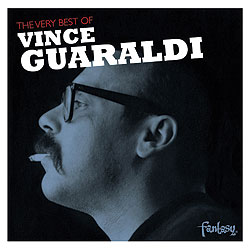
In the last six months, Fantasy Records and Riverside Records (through Concord Music Group) released compilations detailing the best selections of jazz behemoths, including Vince Guaraldi (on Fantasy) and The Bill Evans Trio (on Riverside). Both compilations are great primers for those interested in getting a feel for both artists.
Vince Guaraldi was a jazz pianist and immortally associated with “Linus and Lucy,” otherwise known as the music from the Charlie Brown TV specials. This disc, featuring 14 of his best cuts, reflects that fame and has the iconic songs from those shows (“Linus…” as well as “Charlie Brown Theme,” “Christmas is Coming,” and “Christmas Time is Here”).
Music Review: Gemma Ray, Island Fire
Published on September 25th, 2012 in: Current Faves, Feminism, Music, Music Reviews, New Music Tuesday, Reviews |By Julie Finley

I stumbled upon Gemma Ray a few years ago by taking a listen to her album, Lights Out Zoltar!. It was actually her second full-length album, but the first I ever heard of her. That album was rock-solid, and mighty impressive.
So, its only natural that I’ve followed her career somewhat. I am no expert on Ms. Ray, but I do know this: She writes and performs her own music. She isn’t some pretty face template with a producer and bankroll. Granted, Gemma does have a pretty face, but there is clearly more going on with her creatively, compared to the many other current female performers she has been compared to. Her skills are even impressing fellow musicians who actually have some taste and skills themselves.
Comments Off on Music Review: Gemma Ray, Island Fire
Coal Porters, Find The One
Published on September 19th, 2012 in: Current Faves, Music, Music Reviews, Reviews |By Cait Brennan

Sid Griffin is one of the great, unheralded musicians of the last 30 years.
How unheralded? Wikipedia, that self-styled arbiter of “notability,” doesn’t even have a page for him. If it did, it would do well to start by calling him one of the most important founding fathers of alternative country.
In the early ’80s, Griffin’s outfit the Long Ryders was a good decade ahead of the alt-country movement. Combining Gram Parsons-style Cosmic American Music with hard-edged, punk-influenced rock, Griffin, with guitarist Stephen McCarthy, drummer Greg Sowders, and a succession of bass players (notably Tom Stevens) brought a much-needed boot-kick in the pants to L.A.’s Paisley Underground scene, and influenced a generation of bands that followed.
Comments Off on Coal Porters, Find The One