Music Review: Orenda Fink, Blue Dream
Published on August 22nd, 2014 in: Feminism, Music, Music Reviews, Reviews |
To call Orenda Fink’s Blue Dream meditative isn’t at all a stretch. It’s an exploration of the meaning of love, death, and spirituality, all filtered through a dreamy, gauzy haze and sung in an incredibly intimate way. Listening to Blue Dream is like walking into someone else’s slumber: a place where you’re welcome, but it’s all a bit disorienting and dark and a little eerie. It’s a captivating record.
Comments Off on Music Review: Orenda Fink, Blue Dream
Music Review: Lower, Seek Warmer Climes
Published on August 8th, 2014 in: Current Faves, Music, Music Reviews, Reviews |
“Cause fancy disguises deceive no one
But yourself.”
—Lower, “Arrows”
Recently I’ve realized that I’d prefer to watch a movie that doesn’t arrive at any sort of definite conclusion. I’d rather sit during the credits wondering what exactly it was I saw and trying desperately to figure it out for the next few days, and if it takes me that long to decide if I actually liked the movie or not, even better. The same goes for music. Hearing so many of the same types of bands over and over again, from disposable, EDM-influenced Top 40 pop to the kind of beardy and/or tremulous music found in commercials for Apple products, it’s become increasingly difficult to find something that has genuine staying power.
And that’s where Lower comes in. Rarely does a band subvert, confound, and exceed expectations as much as this. I can honestly say that I’ve never heard anything like Lower. For the last few weeks, I’ve vacillated between whether I loved or hated them. Such an extreme reaction can only signify one thing: Lower is doing something genuinely unorthodox and you need to hear them for yourselves to figure out upon which part of the spectrum you reside.
Comments Off on Music Review: Lower, Seek Warmer Climes
Music Review: Billy Joe Shaver, Long In The Tooth
Published on August 8th, 2014 in: Current Faves, Music, Music Reviews, Reviews |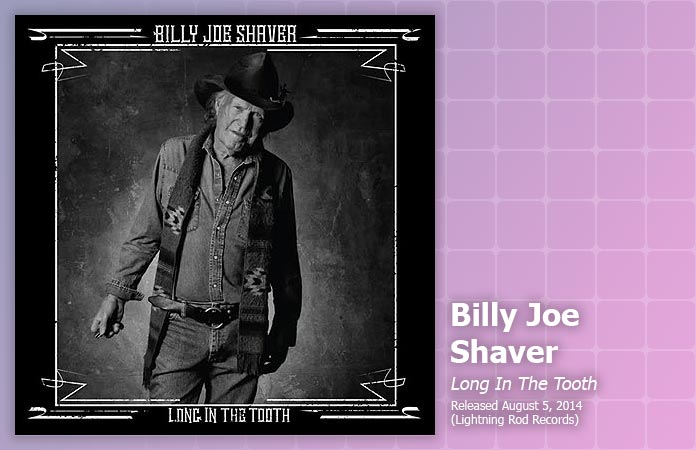
Billy Joe Shaver is quite a character. His songs have become classics (“I’m Just An Old Chunk Of Coal,” “Ain’t No God In Mexico”); he was the spiritual advisor to Texas gubernatorial candidate Kinky Friedman (who is himself a character); he’s acted in The Apostle; and he even sings the theme for Adult Swim’s The Squidbillies. He’s kicked against the country music establishment, recording what is regarded as the first “outlaw” country album, and he shows no signs of giving up his prickliness just yet.
Comments Off on Music Review: Billy Joe Shaver, Long In The Tooth
Music Review: Brian Reitzell, Auto Music
Published on August 1st, 2014 in: Current Faves, Music, Music Reviews, Reviews |
While Fannibals will know about Brian Reitzell because of his spectacular and spooky music for NBC’s Hannibal, he’s so much more than that. Besides serving as the music supervisor on several Sofia Coppola films (Lost In Translation, Marie Antoinette), scoring film and television (30 Days of Night, Peacock, Red Riding Hood, Friday Night Lights, Boss), and video games (Watch Dogs), Reitzell also recorded and performed with both Redd Kross and Air and was a member of terrific one-off projects like TV Eyes and Logan’s Sanctuary.
The genesis for this album was literally just Brian Reitzell messing around in the studio, exploring ideas for his soundtrack work. Even though Auto Music was about a decade in the making, it doesn’t sound either too studied or haphazardly slapped together. It’s subtle yet self-assured, even on the more bombastic tracks. Despite what you might think about instrumental albums, it’s anything but boring. Inspired by films and filmmakers themselves, it creates a perhaps unsurprising visual world.
Comments Off on Music Review: Brian Reitzell, Auto Music
Music Review: Dub Thompson, 9 Songs
Published on August 1st, 2014 in: Current Faves, Music, Music Reviews, Reviews |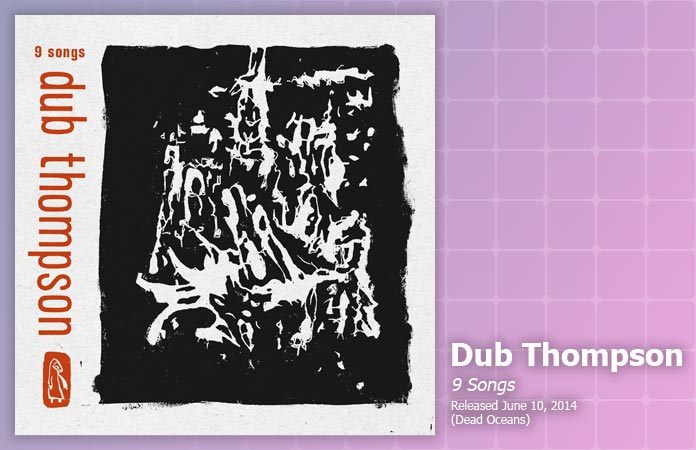
At first blush, you might think Dub Thompson is punking you. The tracks on their debut, 9 Songs (which has eight songs, by the way), sound a lot like demos. These aren’t songs with actual verses and choruses. These are songs made up of tonally conflicting sections that rub up against each other, variations on a theme of impetuous, mischievous energy. The guitars have a jittery bravado and the drums and bass are turned up so that you feel them in your guts. Dub Thompson seem like they’re taking the piss but the music is seriously fantastic.
Comments Off on Music Review: Dub Thompson, 9 Songs
Music Review: Various Artists, Country Funk II, 1967 – 1974
Published on August 1st, 2014 in: Culture Shock, Current Faves, Music, Music Reviews, Retrovirus, Reviews |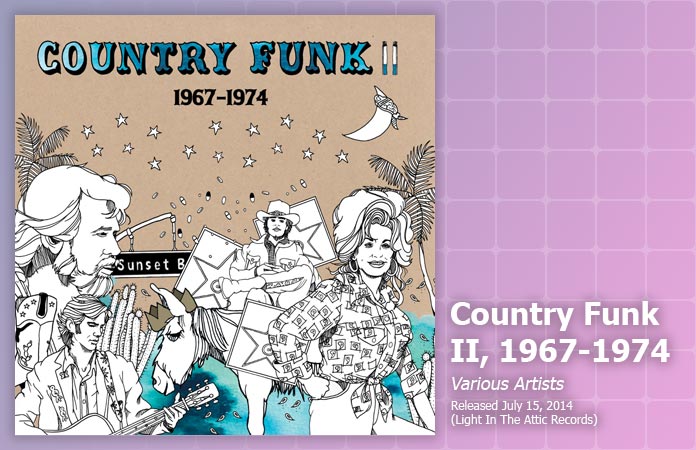
If you’re like me, the first thing you think when you hear the name “Kenny Rogers” is “that guy sure does bring the funk.” Perhaps, though, you don’t, and honestly, I didn’t either until I heard his track (with The First Edition) “Tulsa Turnaround” on Country Funk II, 1967-1974. “Tulsa Turnaround” is a swoony slow ride about an “Omaha honey” who learned the Tulsa Turnaround from someone called “Funkybutt,” I believe. I never did learn exactly what the Tulsa Turnaround is, but I did glean this nugget of information from the song: “If a man’s gonna eat fried chicken/he’s gonna get greasy.” It’s a pretty damned amazing song, and would be great on a soundtrack for a movie where there are car chases and someone is called “Rooster.”
Comments Off on Music Review: Various Artists, Country Funk II, 1967 – 1974
Music Review: The Muffs, Whoop Dee Doo
Published on August 1st, 2014 in: Current Faves, Feminism, Music, Music Reviews, Reviews |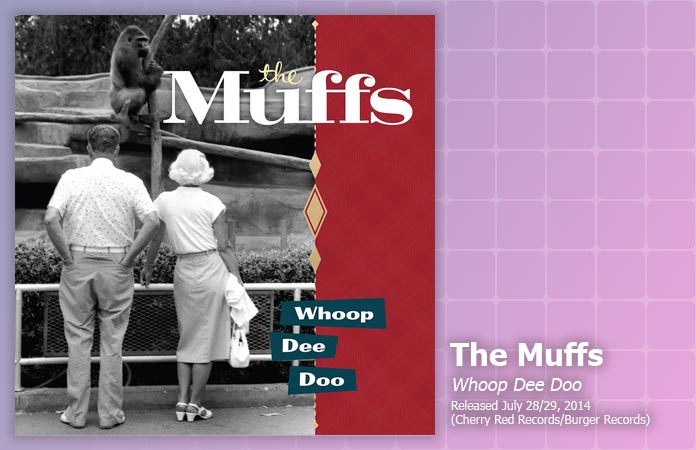
The Muffs have released Whoop Dee Doo, their first album in a decade, and for one musical moment all is right with the world. Long time friends and bandmates Kim Shattuck (guitars, vocals, organ), Roy McDonald (drums, percussion), and Ronnie Barnett (bass, vocals) bring excellent musicianship and songwriting as well as a spirit of fun every time, so it’s no surprise that Whoop Dee Doo follows suit. Six albums into their career, what band hasn’t released a clunker or put a bit of filler on a couple of albums? The Muffs, that’s who. The Muffs move in, kick your ass, and move out in under four minutes.
Comments Off on Music Review: The Muffs, Whoop Dee Doo
Music Review: The Danse Society, Seduction: The Society Collection
Published on July 25th, 2014 in: Current Faves, Music, Music Reviews, Reissues, Reviews |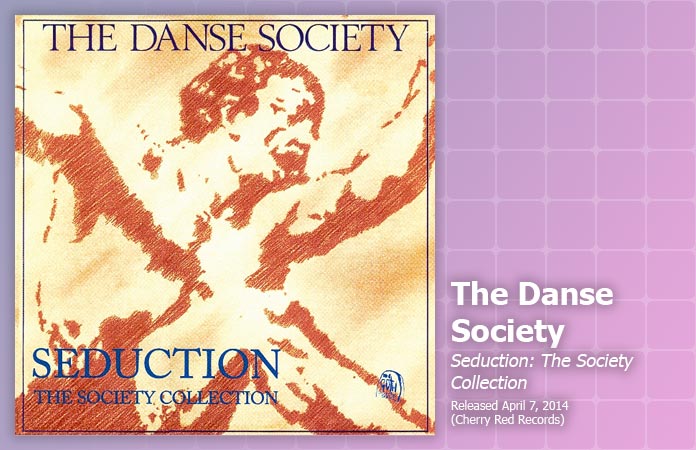
If all you’ve ever heard from The Danse Society was their excellent 1985 single “Say It Again,” congratulations! You and I have something in common. It was with curiosity and anticipation that I decided to review Seduction: The Society Collection, and I was both surprised and pleased.
Comments Off on Music Review: The Danse Society, Seduction: The Society Collection
Music Review: Midnight Faces, The Fire Is Gone
Published on July 25th, 2014 in: Current Faves, Music, Music Reviews, Reviews |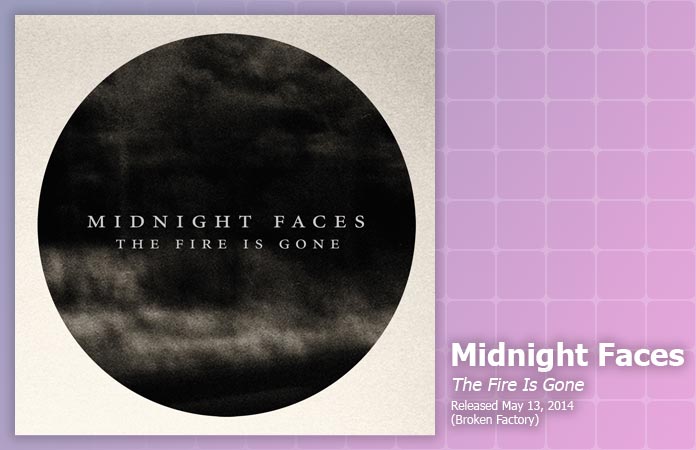
The dreamy, ’80s pop of “Wake Me” opens Midnight Faces’ sophomore album, sounding like the sunnier end of The Cure’s multicolored musical spectrum. Philip Stancil’s voice, however, is nothing like Robert Smith’s, and has a gritty, reedy edge that helps ground the songs on The Fire Is Gone.
“Over Again” has a darker vibe, albeit with that same reverbed guitar, and proves to ’80s naysayers how versatile that sound can be. The slow hush of “Shadows” features anxious harmonies and a heavy bassline.
But if you think Midnight Faces are just another wanna-be shoegaze band, think again. The soaring, joyous “Hold Tight” veers into actual power pop territory, with a chorus that could easily fit in amongst Taylor Hanson’s finest, while the whistling melody of “This Time” is ridiculously infectious.
The album switches gears again with the R&B dance flavored “Give It Up” and the electronic drums of “Animal,” which could easily be a forgotten hit from 1986. Coming full circle for the final track, “The Fire Is Gone” is another melancholy gem with some thoughtful lyrics and a fantastic chorus.
For those looking for something a little unexpected in their dream pop, I guarantee Midnight Faces will hit the spot.
The Fire Is Gone was released by Broken Factory on May 13.
Comments Off on Music Review: Midnight Faces, The Fire Is Gone
Music Review: Various Artists, A Classic Rock Salute to The Doors: Light My Fire
Published on July 25th, 2014 in: Music, Music Reviews, Retrovirus, Reviews |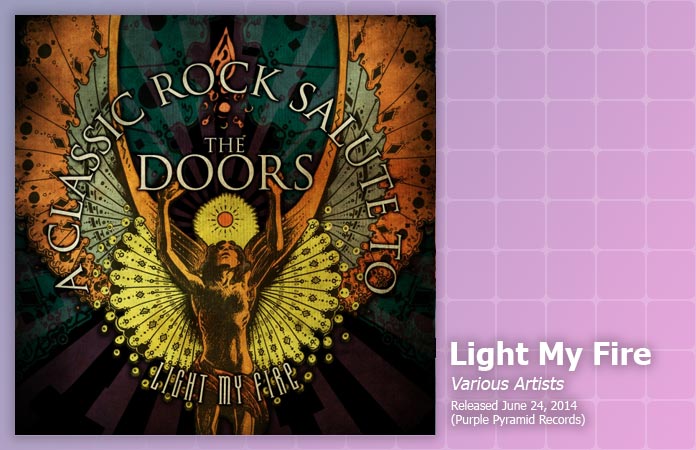
It’s one of those burning musical questions, the kind of thing that keeps you up at night, losing sleep. What exactly would it sound like if a bunch of classic rock artists covered the songs of a classic rock band they were never members of? It’s a staggering premise, to be sure. I mean, is that even legal? Won’t that push the limits of rockitude past its previously agreed upon limits?
Short answer: no, it won’t. The good news is, it doesn’t completely suck.
Comments Off on Music Review: Various Artists, A Classic Rock Salute to The Doors: Light My Fire