Music Review: Laetitia Sadier, Something Shines
Published on September 26th, 2014 in: Current Faves, Feminism, Music, Music Reviews, Reviews |
On her third solo album, Stereolab’s Laetitia Sadier treads her accustomed ground, while also shaking things up. Something Shines sounds like a Stereolab record, with space rock, jittering ‘60s tropicalia, and her trademark rich, distant alto. It also shatters song structure, abruptly changing to another style of music whilst in the middle of a song, like a collage. It’s a sometimes-frustrating album, with moments of brilliance.
Comments Off on Music Review: Laetitia Sadier, Something Shines
Music Review: The Turtles, 45 RPM Singles Collection
Published on September 26th, 2014 in: Current Faves, Music, Music Reviews, Retrovirus, Reviews |
One of the things that makes listening to music on vinyl different is how much attention must be paid to it. Putting an iPod on shuffle is easy, but not interactive. Listening to an album, or better yet, singles, makes me slow down, sit down, and actually listen to the music. It’s no longer background noise. It’s an experience.
Comments Off on Music Review: The Turtles, 45 RPM Singles Collection
Music Review: The Asteroids Galaxy Tour, Bring Us Together
Published on September 19th, 2014 in: Current Faves, Feminism, Music, Music Reviews, Reviews |
Danish pop group The Asteroids Galaxy Tour have returned with a spacey (as one might expect with a name like The Asteroids Galaxy Tour), but still danceable, musical collage that breaks new ground for them and still sticks to their signature style. The duo of singer Mette Lindberg and instrumentalist Lars Iversen makes evocative electronic music that is made warmer by Lindberg’s delightful singing voice. She sings like Björk and Billie Holiday and Christina Amphlett were put in a juicer with a little honey. Kind of.
Comments Off on Music Review: The Asteroids Galaxy Tour, Bring Us Together
Music Review: Utopia, POV (Reissue)
Published on September 19th, 2014 in: Music, Music Reviews, Reissues, Retrovirus, Reviews |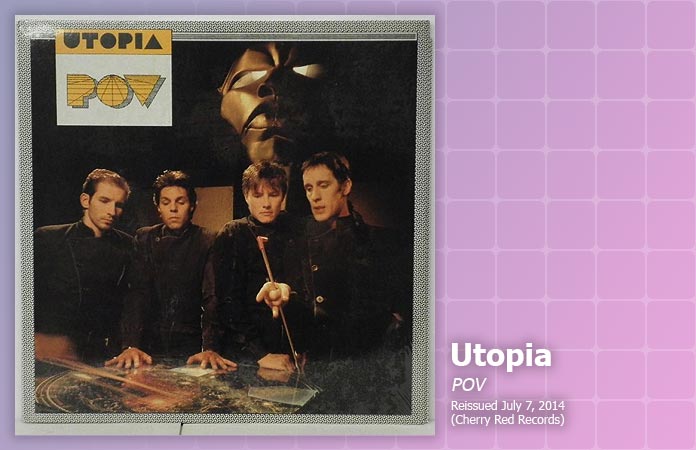
Todd Rundgren’s music has always been an acquired taste. His chart hits have felt like flukes, strange cracks in the system. You aren’t supposed to know who Todd Rundgren is. He leads a cult that resides so far underground, they may as well be Morlocks.
One of the reasons for this status is Rundgren’s musical twitchiness. He jumps from style to style, from Philly white-boy blues to synth-pop, from down and dirty rock and roll to salsa. Never knowing what he’ll do next is exciting for some, laborious for others.
In the late Seventies, Rundgren formed a band called Utopia. It was designed to be his big foray into progressive rock, exploring grand concepts and incorporating deep philosophical lyrics. As it gradually shrank from seven members to four, Utopia became one of the sharpest New Wave bands of its time, delivering perfect three-minute pop songs, deliciously textured with soaring, shifting harmonies.
Comments Off on Music Review: Utopia, POV (Reissue)
Music Review: Stephen Emmer, International Blue
Published on September 19th, 2014 in: Current Faves, Music, Music Reviews, Reviews |
It is difficult to categorize Stephen Emmer’s International Blue (produced by Tony Visconti). It’s an orchestral chamber pop album that showcases some of the finest baritone singers currently in the UK (Ultravox’s Midge Ure, Heaven 17’s Glenn Gregory, Furlined’s Neil Crossley, and Cousteau’s Liam McKahey). It’s not exactly orchestra music, and it’s not exactly pop, but what it really sounds like is a soundtrack for a moody mid-1960s film, the kind where the actors wear amazingly fashionable clothes in primary colors and stare seriously off into the distance. It’s a fine album to mark the slide from late summer into autumn.
Comments Off on Music Review: Stephen Emmer, International Blue
Music Review: Jesse Winchester, A Reasonable Amount Of Trouble
Published on September 19th, 2014 in: Current Faves, Music, Music Reviews, Reviews |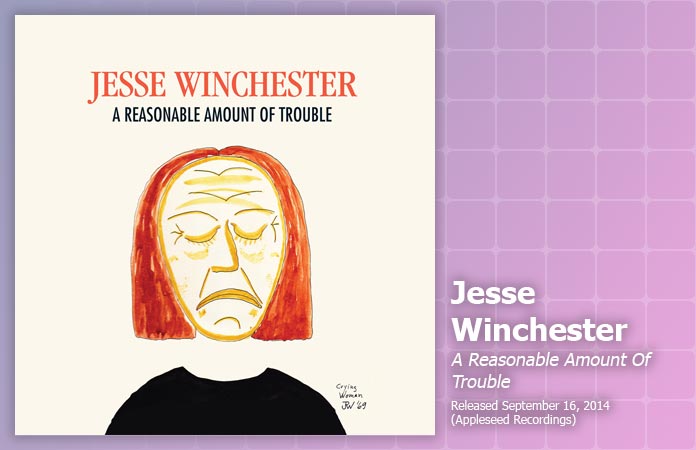
I turned on Elvis Costello’s Spectacle for Neko Case, but after it was over, I was a Jesse Winchester fan. Like so many who found him from Spectacle, Jesse Winchester felt like my own special secret, this wonderful, warm singer who drew me in and disarmed me with his completely singular voice.
No one sounds like Jesse Winchester. Warmth is the word I keep coming back to when describing his voice, like a warm blanket and a cup of tea, or strong reliable windows against a storm. He’s soothing. His voice is buoyant and gentle. He imbues his songs with honesty and can take simple phrases and make them magical. Unfortunately, he passed away in April of this year. He was one of a kind.
Comments Off on Music Review: Jesse Winchester, A Reasonable Amount Of Trouble
Music Review: The Fauntleroys, Below The Pink Pony
Published on September 19th, 2014 in: Current Faves, Feminism, Music, Music Reviews, Reviews |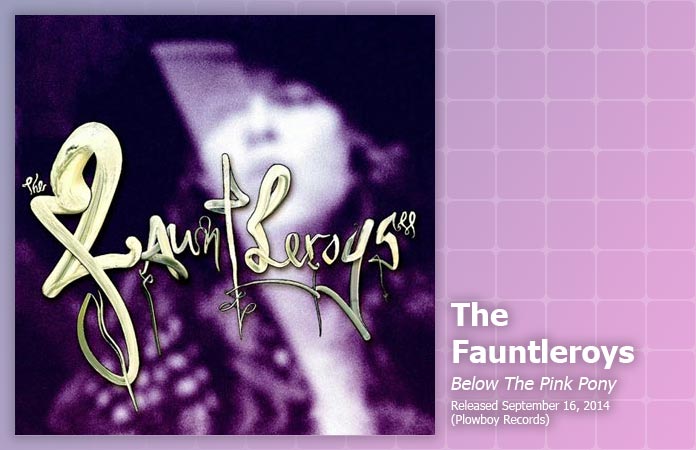
I fully expected to enjoy the debut EP from The Fauntleroys, a new collaboration (I’m not using the word “supergroup” because it’s just embarrassing on principle) from Ivan Julian (founding member of the Voidoids), Linda Pitmon (Zuzu’s Petals, The Baseball Project), Nicholas Tremulis (Chicago-based soul iconoclast), and Alejandro Escovedo (Rank and File, The Nuns, and an amazing solo career). What I didn’t expect was to love Below The Pink Pony as much as I do. It’s six fantastic, loose, throwback songs done by stellar musicians who are obviously having a great time.
Music Review: Tiny Moving Parts, Pleasant Living
Published on September 19th, 2014 in: Music, Music Reviews, Reviews |
When I was a youngster, I had Gordon Gano and John Lydon’s voices to express my angst and loathing. I’m sure my parents haaaaaated hearing their adenoidal tones blaring from my room. Times haven’t changed, and there are still frontmen with hateable voices.
Tiny Moving Parts’ Dylan Mattheisen is a fantastic guitarist. He pulls textures and richness from his guitar in ways that truly boggle. As a lead singer, though, his voice made me want to put my fist through a wall. Perhaps that was what he was going for. In that case, well done.
Comments Off on Music Review: Tiny Moving Parts, Pleasant Living
Music Review: The Low Countries, A Prize Every Time – The Greatest Bits
Published on September 12th, 2014 in: Music, Music Reviews, Reviews |
There’s something to be said for Sunday morning music: the music you put on because the hangover hat is so heavy you can’t raise your head, or the music that goes nicely with coffee and the Sunday paper. The Low Countries’ Greatest Hits compilation A Prize Every Time – The Greatest Bits is truly a Sunday morning record. It’s quiet; it’s packed with tidy, short songs; and is so restrained that it is almost painful. An Anglo-Flemish duo comprised of Nigel Parrington and Els D’hooge, The Low Countries have been turning out twee, thinky, folky music since 2007 and A Prize Every Time gives a nice overview of their brand of ever-so-gentle music.
Comments Off on Music Review: The Low Countries, A Prize Every Time – The Greatest Bits
Music Review: Better Than Ezra, All Together Now
Published on September 12th, 2014 in: Music, Music Reviews, Reviews |
Better Than Ezra deserves credit for being one of the few bands to make it through the Nineties with their personnel and integrity intact. Lead singer Kevin Griffin has one of the most recognizable voices in the business and the band’s standard blend of light ska and clever catchy choruses is time-tested and successful. At the very least, Better Than Ezra has always been less painful to listen to than Train.