Look Who’s Growling, Too: Our Deep, Abiding Love of Roman Polanski’s Rosemary’s Baby
Published on September 29th, 2008 in: Halloween, Horror, Issues, Movie Reviews, Movies, Retrovirus |By John Lane and Less Lee Moore
Hands-down, Polanski’s Rosemary’s Baby is one of our favorite horror movies of all time. We love it as much for what it doesn’t do as for what it does do. It seems that there’s a storm cloud of creepiness that settled upon this movie before, during, and after which makes it all the more fascinating. Like a lot of other things from the late sixties, it is a sinister relic from a haunted time. So here are our reasons why Rosemary’s Baby—behind and in front of the camera—is one of the most enduring, complex horror films ever committed to celluloid.
Comments Off on Look Who’s Growling, Too: Our Deep, Abiding Love of Roman Polanski’s Rosemary’s Baby
The Zombified’s Hallowhaus: Q & A with Artist Krystal Fancey Beck
Published on September 29th, 2008 in: Art, Comics, Current Faves, Halloween, Horror, Issues, Q&A |By Less Lee Moore
Hallowhaus tells the tale “of a newly undead girl, risen from the grave on one Halloween midnight, soon to discover she’s not quite as alone as she’d first assumed.” In this issue of Popshifter, we chat with artist and creator Krystal Fancey Beck about the comic as well as The Zombified website.
(more…)
Comments Off on The Zombified’s Hallowhaus: Q & A with Artist Krystal Fancey Beck
Getting With The Program: Q & A With The Spook Lights
Published on September 29th, 2008 in: Halloween, Horror, Issues, Music, Q&A, Underground/Cult |By Less Lee Moore
From Legends of America:
According to the legend, the spook light was first seen by Indians along the infamous Trail of Tears in 1836; however, the first “official” report occurred in 1881 in a publication called the Ozark Spook Light.
(more…)
Comments Off on Getting With The Program: Q & A With The Spook Lights
The Dawn Of The Living Dead: I Walked With A Zombie
Published on September 29th, 2008 in: Halloween, Horror, Issues, Movie Reviews, Movies, Retrovirus |By Chelsea Spear
The year was 1942, and the producer/director team of Val Lewton and Jacques Tourneur were riding high. Cat People, the first feature released through Lewton’s B-horror division at RKO, had saved the studio from bankruptcy and was on its way to becoming a cornerstone of contemporary horror. Before they’d finished counting the receipts, RKO studio heads gave the pair their next assignment.
(more…)
Comments Off on The Dawn Of The Living Dead: I Walked With A Zombie
Legendary Halloween Costumes: Tom Baker, Doctor Who (1973–1980)
Published on September 29th, 2008 in: Halloween, Holidays, Horror, Issues, TV, Underground/Cult |By Emily Carney
When I was a kid growing up in the 1980s, American public broadcasting stations (PBS) played episodes of the English cult TV series Doctor Who. Personally, as a young child I couldn’t really get into the show; I thought the episodes of Monty Python’s Flying Circus were much funnier, and the guys on that show seemed less freakishly scary than the star of DW, Tom Baker. (Of course, I ask myself now why my parents let me watch Monty Python at age 4. That show could get a bit adult-oriented to say the very least). As a child I found Baker less engaging than other TV characters, and more frightening and unusual than anything. Peter Davison (the next Doctor after Tom Baker) was far more “cuddly” and seemed more tailored to smaller children with his wan, handsome smile and cricket clothes.
(more…)
Comments Off on Legendary Halloween Costumes: Tom Baker, Doctor Who (1973–1980)
Don’t Hate the Cannibal, Hate the Game: The Texas Chainsaw Massacre
Published on September 29th, 2008 in: Halloween, Horror, Issues, Movie Reviews, Movies, Retrovirus |By Jesse Roth
Looking back on my movie-viewing history, I can think of few films that have really bothered me. Most of the time, unless an animal dies or there is excessive torture, I won’t even flinch. Murder and cruelty can pass before my eyes and be acknowledged the same way as a car chase or moment of truly exceptional dialogue between two characters: interesting, but certainly nothing that impacts me on a deep, emotional level.
(more…)
Comments Off on Don’t Hate the Cannibal, Hate the Game: The Texas Chainsaw Massacre
Farley Wacken’s Gonna Get Ya! The Chester Haunted School
Published on September 29th, 2008 in: Halloween, Horror, Issues, Q&A |With Cindy Chinn of the Center of Creativity
Intro by Less Lee Moore
The Chester Haunted School in Chester, NE is not your run-of-the-mill haunted house. Like radio shows from the 1950s, it utilizes narration to scare its listeners, but also adds a modern touch: an ingenious light show which depicts the action. Instead of monsters jumping out at you, however, your imagination is allowed to run wild with what you think you see: Farley Wacken, the evil headmaster, roaming the halls with his deadly yardstick.
(more…)
Comments Off on Farley Wacken’s Gonna Get Ya! The Chester Haunted School
The Abyss Gazes Into Thee: Batman, The Dark Knight, and Modern Gothic
Published on September 29th, 2008 in: Books, Comics, Halloween, Horror, Issues, Movies |By Less Lee Moore
“He who fights with monsters should be careful lest he thereby become a monster. And if thou gaze long into an abyss, the abyss will also gaze into thee.”
Frederick Nietzsche, Beyond Good & Evil: Prelude to a Philosophy of the Future
Comments Off on The Abyss Gazes Into Thee: Batman, The Dark Knight, and Modern Gothic
Now Let Us Praise Famous Monsters
Published on September 29th, 2008 in: Editorial, Halloween, Horror, Issues |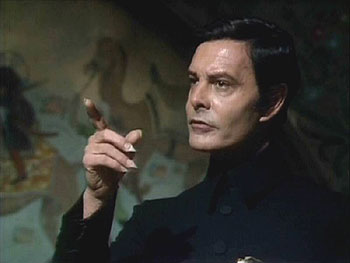
Count Dracula, 1977
In reviewing a series of horror and ghost story anthologies, literary critic Edmund Wilson wrote that the “sudden revival of the appetite” for such tales arose in part from:
“. . . the instinct to inoculate ourselves against panic at the real horrors loose on the earth. . . by injections of imaginary horrors, which soothe us with the momentary illusion that the forces of madness and murder may be tamed and compelled to provide us with mere dramatic entertainment.”
—From Classics and Commercials, 1950
Cherchez La Femme: My Affair with The Black Dahlia
Published on September 29th, 2008 in: Books, Halloween, Horror, Issues, Movies, True Crime |The Black Dahlia was the first James Ellroy novel I read and I loved it. I had become a fan of the hardboiled detective fiction genre after being introduced to the pulp novels of Jim Thompson in a Film Noir class. Then, seeking more books in that vein, I soon devoured all the books of Raymond Chandler and James M. Cain. Since Thompson, Chandler, and Cain were all deceased, I was thrilled that Ellroy was still alive and kicking.
But it was more than that.
Comments Off on Cherchez La Femme: My Affair with The Black Dahlia