Searching For Sugar Man
Published on August 13th, 2012 in: Current Faves, Movie Reviews, Movies, Reviews, Underground/Cult |Who is, or was, Sixto Diaz Rodriguez? A lifelong resident of Detroit, and the son of Mexican immigrants who moved to the Midwest to work for Ford. A “prophet, “a wise man”, and a “wandering spirit” in the eyes of his coworkers on construction crews. A social activist who ran for office in his hometown, and who brought his five daughters to protests. A man of modest means who lives an ascetic life.
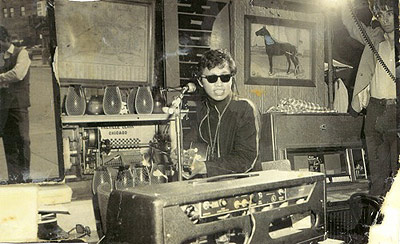
For a brief period in the 1970s, Rodriguez was a solo artist who released two remarkable albums—Cold Fact and Coming From Reality—that reached an audience so small, the cliché “cult hero” would overestimate it. While the albums sold an estimated six copies in America and quickly lapsed out of print, Cold Fact made it to South Africa not long after it came out here. Rodriguez’s anti-establishment lyrics, combined with his driving melodies and funky arrangements, made him a folk hero to South Africans bristling under apartheid. That Rodriguez was rumored to have committed a grisly suicide before a live audience only deepened his legend.
Comments Off on Searching For Sugar Man
The Tubes, Young And Rich and Now
Published on August 7th, 2012 in: Current Faves, Music, Music Reviews, New Music Tuesday, Reviews |By Cait Brennan
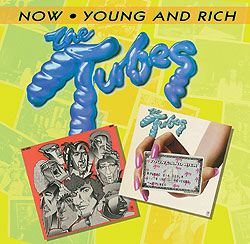
One of the most adventurous, imaginative, and irreverent bands of the 1970s and ’80s, The Tubes made a career—a whole new art form, really—out of being much too much.
The band existed in an alternate reality, almost inconceivable from our point of view, when bands could attack all different kinds of music, from every angle and attitude, in every genre now known or yet to be invented. In their time they were avant-garde madmen, merry pranksters, X-rated performance artists, art school punks, agents provocateurs, AOR gods, and—in a fitting twist of irony—actual Top 40 pop stars, becoming for a brief moment the very thing they were always sending up. Whether it was high concept or low pop, innovative composition and brilliant musicianship was the order of the day.
Now Real Gone Records has reissued two of the group’s essential yet long out-of-print early albums, Young And Rich and Now, the latter of which has never been issued on CD in the US, ever. It’s a welcome and wonderful addition to the Tubes’ catalog.
Redd Kross, Researching The Blues
Published on August 7th, 2012 in: Current Faves, Music, Music Reviews, New Music Tuesday, Reviews |” . . . there’s nothing more comforting than being in a room with my brother where him and our drummer are just talking endlessly about Bob Dylan bootlegs and we have stupid inside jokes about public access shows from 1984. With them I can just turn my brain off and I don’t need to worry about the social aspect of this environment—that’s sorted.”
—Steven McDonald, interviewed in Stereogum, July 30, 2012
Disclaimer: Redd Kross has been an integral part of my life for almost 20 years, so I can’t promise that this review will be 100% objective. I can, however, promise that it will be 100% sincere.
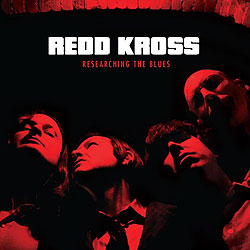
Redd Kross. Oh, where to start? So much history that I can’t cram it all into one review, but chew on this: The band has been around for more than 30 years. Despite various lineup changes, two members have remained steadfast—brothers Jeff and Steven McDonald, now both in their 40s. (Your math is correct; Jeff and Steven started the band at ages 15 and 11, respectively.) And yes, they have been integral to my life, something that can’t be overstated; after all, the name of this website was inspired by the name of one of their albums.
Throughout the band’s existence, Redd Kross may not have released as many “proper” albums as other bands, but they’ve been no less prolific, participating in various soundtracks, tribute albums, singles, EPs, and at least two alter egos (how else do you describe Anarchy Sixx or Tater Totz?). Although their sound has never been what purists might consider punk rock, their attitude has always been. Even the bubblegum pop of 1990’s Third Eye contains a metal tribute to Japanese girl group Shonen Knife. Thus, answering the question, “so what does Redd Kross sound like?” has always been tricky.
Comments Off on Redd Kross, Researching The Blues
The Very Best of Sonny Rollins
Published on July 30th, 2012 in: Current Faves, Music, Music Reviews, Retrovirus, Reviews |By Paul Casey

“What was beginning to happen to me was that I was being expected to really deliver great music all the time. In other words my name was bigger than I thought I could support with what I was doing. I remember one particular job that I had, when I just felt I wasn’t really playing well enough, you know? And everybody was really so excited to see me and I really felt I let the people down. I was really frustrated with myself, you know? That was really the genesis of this thing on the bridge. That’s what really it was all about.
I was out walking two blocks from where I lived at, actually, and I looked up and I saw these steps, you know, going up. And I walked over the street and I walked up those steps and there was this big beautiful expanse of bridge, you know? Nobody up there.
Usually I don’t pay too much attention to the trains. Usually absorbed in what I’m doing. But in a way it adds, you know it’s part of the atmospheric noise, and it adds to your playing in a way, you know? All these sounds, you see, because I’m sure subconsciously I change what I’m playing to blend with the sound of the train. It all has its effect.”
—Sonny Rollins from BBC Arena’s Beyond the Notes documentary
A striking image in the history of the 20th Century Jazz. A powerfully gifted man, having given up a professional life in music, plays his saxophone atop the Williamsburg Bridge, between Manhattan and Brooklyn, New York. Sonny Rollins, music, and the world. Moving with the trains, with the earth moving as they pass by, and the earth moving to the sounds of his saxophone.
Comments Off on The Very Best of Sonny Rollins
The Very Best of Wes Montgomery
Published on July 27th, 2012 in: Current Faves, Music, Music Reviews, Retrovirus, Reviews |By Paul Casey
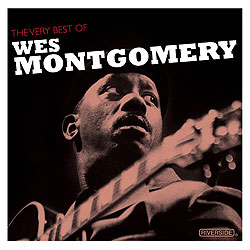
“His playing transcended the instrument. Other Jazz guitarists, you know they’re playing the guitar but Wes and his whole approach, the way he phrased, his sense of swing, you kind of lost a sense that he was playing the guitar. He played the guitar like a horn, for instance. He phrased like a horn player and it just really caught people’s imaginations. It was really different.”
—Jim Ferguson from NPR’s The Life and Music of Wes Montgomery
The guitar was rarely a dominant instrument in Jazz. Relegated to a back-up, or to flesh out a sound, the guitar did not have the sparkly flair of a lead instrument. With the exception of Benny Goodman Sextet member Charlie Christian, or the Gypsy Jazz of Django Reinhardt, there were few guitarists in Jazz who were considered to be serious figures in the genre. Through his recordings and performances, Wes Montgomery did much to legitimize the guitar in Jazz, as well as influence a whole heap of musicians. The fracturing of the genre into Free and Fusion guaranteed its place, as well as the legacy of Wes Montgomery.
On The Airwaves, Postmeridian: Q&A with Glenn di Benedetto of Parlour Bells
Published on July 26th, 2012 in: Current Faves, Music, Q&A |By Chelsea Spear

Nate Leavitt, Glenn di Benedetto of Parlour Bells
Photo © Derek Kouyoumjian
After the Parlour Bells ended an epic set at the funeral for Boston radio station WFNX, former ‘FNX program director Paul Driscoll was heard to say “I think I have a crush on the whole band!” It’s not hard to see why one would become besotted with the rising Boston quartet. Their darkly romantic pop songs engage the listener with anthemic melodies, cinematic arrangements, and seductive vocals. Fans of Orange Juice, Peter Murphy, and Sparks might find room in their hearts for these up-and-comers.
On a balmy mid-July day, I called up charismatic vocalist Glenn di Benedetto to learn more about the Parlour Bells. (more…)
Comments Off on On The Airwaves, Postmeridian: Q&A with Glenn di Benedetto of Parlour Bells
Laetitia Sadier, Silencio
Published on July 24th, 2012 in: Current Faves, Music, Music Reviews, New Music Tuesday, Reviews |By Jemiah Jefferson

The chanteuse of compassionate socialism hasn’t changed much since the earliest days of legendary agit-pop group Stereolab, and this is a very good thing; Laetitia Sadier‘s cool, clear-eyed voice, alternately crisp and authoritative and velvety-dreamy, is one of the greatest resources in music. As a songwriter, too, she only develops further complexities while keeping the core characteristics intact. Sadier has always created intensely listenable tunes to transmit messages of the political and the personal, and Silencio is no exception. (more…)
Comments Off on Laetitia Sadier, Silencio
The Dark Knight Rises
Published on July 20th, 2012 in: Comics, Current Faves, Movie Reviews, Movies, Reviews |
Photo © Warner Bros. via ScreenCrush
Let’s be honest: The Dark Knight Rises doesn’t need my review. People are going to see it anyway. But I need to write a review. After the midnight showing I felt overwhelmed, exuberant, humbled. I couldn’t stop talking and thinking about the movie. I got home after 3 a.m., exhausted but unable to sleep. That hasn’t happened since the first night I saw Fight Club in 1999. Before that, it was in 1998, because of the movie Velvet Goldmine, with none other than Christian Bale—but I’m getting ahead of (behind?) myself. You want to know about The Dark Knight Rises.
All You Got To Do Is Swing: Joe Jackson’s The Duke
Published on July 17th, 2012 in: Current Faves, Music, Music Reviews, New Music Tuesday, Reviews |By Cait Brennan
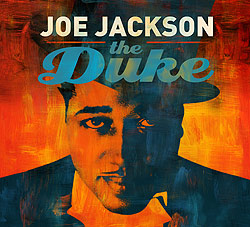
From the very beginning of his professional career, Joe Jackson has been one of the most driven, creative, and eclectic artists in popular music. His debut album, Look Sharp, was one of the New Wave’s first smash hits, and over his first three albums Jackson and his band ruled the airwaves with catchy, intelligent pop with strong punk, reggae and pub-rock influences. (more…)
Comments Off on All You Got To Do Is Swing: Joe Jackson’s The Duke
Cure for Pain: The Mark Sandman Story
Published on July 17th, 2012 in: Current Faves, Documentaries, DVD, Movie Reviews, Movies, Music, Reviews |By Chelsea Spear

Photo © Mark Ostow
Throughout the 1980s and ’90s, Mark Sandman cut a wide swath through the Boston music scene. His first band, Treat Her Right, scored a local radio hit with the deadpan, eerie single “I Think She Likes Me.” The various bands with whom Sandman played—most notably Supergroup, Candybar, and Morphine—played two sets a night at the shoebox-shaped bar Plough and Stars. Even as Morphine ascended to a renowned trio with a devoted following, Sandman could be found playing at the annual Central Square World’s Fair, talking with elementary school classes about his handmade musical instruments, converting his loft apartment into a recording studio, or just hanging out in the back booth at the Middle East nightclub. His sudden, tragic death in Italy in 1999 left a huge hole, both in the music world where he made his mark, and within the Boston arts community. (more…)
Comments Off on Cure for Pain: The Mark Sandman Story