Delivered Poetry: Jenny Lewis’s “Rabbit Fur Coat”
Published on August 24th, 2011 in: Music |By AJ Wood
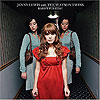
I’m not much into music. Top 40, R&B, jazz, indie rock, punk: It’s mostly just background sound to driving or typing. I can freely admit that. The trouble is that I’ve always found myself hanging out with, dating, and loving very musical people. Since moving to Portland, OR this has only gotten worse, what with indie music being the lifeblood of this town, like movies are in my home of Los Angeles. Invariably, there is that time in a relationship where I am subjected to a long string of “OMG you HAVE to hear this SONG, it’s so GREAT”s and thanks to YouTube, I’m subjected to just that. For hours.
I’m not saying I’m above such antics: I’ve kept many a fourth date pinned and wriggling to the couch doing dramatic readings of writings I enjoy, or forcing him to listen to spoken word, or—no doubt worst of all—demanding he read something while I watch him read it. I know it: I’m not better, just different.
But I live in a music world and find myself having to defend why exactly I like one song when I really cannot stand to listen to anything Joanna Newsom or P.J. Harvey has ever managed to adhere to vinyl. “But can you HEAR this CHORD PROGRESSION!?” he’ll kindly explain when my face scrunches up. “The sheer LYRICISM!” he’ll suggest, red-faced with exasperation.
I’ll sigh and say, honestly, that I don’t. I hear screeching, trite cliches, a lack of imagery, or even worse than that still: An inside joke. In my defense—in the music person’s defense too, as I don’t doubt I’m music-deaf; it’s just that I like what I like—I’ll have us listen to one of my favorite songs.
The last time this happened, I played Jenny Lewis’s “Rabbit Fur Coat,” the eponymous song from her 2006 album with the Watson Twins. I personally have always found this song heart-wrenching and honest and, well, just sheer lyricism. After the third verse played, he said, “This is like songwriting 101. This is awful.” “No!” I pleaded, “You just aren’t getting it!” “Oh,” he replied, “Now that I’ve been schooled . . . ”
My initial reaction—not being much of a oral debater—was to sock him on the nose, but since he’s a bleeder and he was sitting on my couch, I stifled myself. I do better in writing, and so the next day while waiting for him to get off work before we went out, I decided to detail why exactly this song—p pun excused?—sings to me. As with any favorite song, it comes down to how I hear music: Delivered poetry. I know others hear some rich cacophony of melodies and rhythms and other such musical flourishes, but for me, the erstwhile and failed English Lit major, I just hear the words and the tone in which they’re delivered.
If you haven’t heard the song, or haven’t in a while, don’t. It’s a lazy waltz beat with just an acoustic guitar for back up. All you need to know, really: With that alone you can hear the song through my ears.
I was of poor folk
But my mother had a rabbit fur coat
I was poor, but my mother . . . The narrator seems to be saying that this my tale from my mother’s POV. We were of this, and she had this. This sets up the narrative structure for us. Also, rabbit fur: Is it really THAT great? Isn’t it something that poor people buy to make themselves feel rich?
Then a girl of less character pushed her down the L.A. River
“Hand over that rabbit fur coat.”
“Girl of less character” introduces us to what will be a long line of dated terms, as though this is more of an anecdote from the mother’s POV and not “my” story. Also, of how much “less character” is this girl if they are in the L.A. river (which is basically a large concrete gutter) and she is demanding a rabbit fur coat (not mink or sable)?
She put a knife to her throat
“Hand over that rabbit fur coat.”
When my ma refused, the girl kicked dirt on her blouse
“Stay away from my mansion house.”
This reveals the casual violence of lower-class kids, with little in the way of real follow-up, except to disgrace in name. Here is the first mention of a “mansion house” but in a land of rabbit fur coats, what is a “mansion”?
My mother really suffered for that
Spent a life in a gold-plated body cast
With the term “gold-plated” we again have this harbinger of cheap living. A body cast would limit your every move, dictate how you live for as long as it’s on you. And this is of just gold-plate, the discount store version of an Egyptian Pharaoh’s sarcophagus. This is a cheap, knock-off copy of something that would normally confine royalty. Mink is to rabbit as sarcophagus is to . . . Also, to use the phrase “really suffered” for one childhood trauma shows how this one incident had a long-term effect on her mother’s, and consequently the narrator’s, own life.
Now, you ask, “did she get that girl back?”
She paid a visit to that mansion house . . .
Here we have another sign that the narrator is telling a story which is more of an anecdote, with such a colloquial phrase as “now you ask.” This renders the audience as a “collaborator” of sorts, getting us in on “my ma’s” level so we will root for her side. “Oh,” we ask ourselves, “Where is this going now?”
She knew the girl was not there
But her father was in cuff links with slicked-back black hair
A couple of things here: 1) The fun word play on “the girl was not there/but her father was” and 2) not just that he was there, but how he was there: cuff links (fancy!) and “slicked-back black hair.” Here, we have the first of what I call the song’s Poe-ian syncopated alliterations. Think of Poe’s “The Raven,” and one of my favorite phrases from it: “Perched upon a pallid bust of Pallis just above my chamber door.” The plosive Ps, Bs, and CHs in that phrase alliterate to great affect, especially when enunciated as I prefer to hear that in my mind like this (think of someone rapping it with real stress):
PERched uPON the PALlid BUst of PALlis just aBOVE my CHamBER door
Here, the quick progression of “slicked-back black hair” provides for me the same sort of energy—which I would associate with the darker, malevolent sort—as that phrase from “The Raven.” This repeats later, but first back to the song:
He invited her in, they never sang a note
But she took off that rabbit fur coat
A few imagey things going on here, to me. One, “he invited her in” is such a lecherous phrase. “Said the spider to the fly,” comes to mind, or the legend that you have to invite the vampire into your home because it cannot come inside uninvited.
“They never sang a note,” clearly means that nothing was spoken, but why mention singing? This is another great thing about this song: It evokes the oral tradition. In the movie Songcatcher, a woman is traveling through 1930s Appalachia, recording the wealth of songs therein. “Where did you learn that?” she asks a young girl who has just belted out a song of great sorrow and joy. “My granny gave it to me,” the girl replies brightly. Perhaps this is just me, but “they never sang a note” reminds me of this, that this song is in that sort of story-song style, which is passed on from generation to generation. In the paradigm of the world in which these words take place, people sing notes as well as speak words.
There is also the innocence lost of the girl taking off the titular coat, to stand there naked, to be taken, if only in revenge. But finally, and perhaps most importantly, the use of “that” instead of “the” to describe the coat seems dismissive and a bit contemptuous. As in, “‘The Victrola is my prized possession,’ Grandma said. ‘That Victrola? Let’s sell it,’ my mother said after grandma died.” It almost can be read as, “that [damn] rabbit fur coat.”
And who do you think came home?
Miss So-and-so
Again, a rhetorical question confirming the sort of anecdotal telling of this story, but also a mention of “the girl of less character” as “Miss so-and-so,” another dated term for “that female person,” which again reinforces the fact that this is a re-told anecdote of her mother’s and not necessarily her own recollection.
She took one look at my ma and what did she say?
“Why are you stealing from our mansion house?”
More rhetorical questions; still an anecdote. Here “stealing” can be read as both, “why are you here taking my nice things?” as well as “why are you here [sexually] taking my father?” (as though assuming the narrator’s mother seduced the man).
“No, I’m in love with Mr. So-and-so,
He invited me in; I’m a girl no more.”
This seems to clarify the meaning to “why are you sexually taking my father?” And then again, it plays on the vampire allusions of “he invited me in” as in “no, he seduced me.”
Then she dragged my ma out by her throat
“Hand over that rabbit fur coat.”
Again, the motif of “the girl of less character” being rough and throwing “my ma” around and demanding the (assumed) one thing of value from her, as when we first met her.
Pages: 1 2
One Response to “Delivered Poetry: Jenny Lewis’s “Rabbit Fur Coat””
April 1st, 2012 at 2:13 pm
Hey, excellent analysis of a fine pop song, thank you.
Time limit is exhausted. Please reload the CAPTCHA.