England, Ireland, And Oliver Cromwell’s Lasting Musical Legacy
Published on January 30th, 2010 in: Culture Shock, Issues, Kiss Me I'm Irish, Music |By Katrina Armstrong
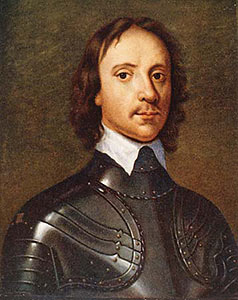
Oliver Cromwell
Oliver Cromwell was the tyrant of English history: the great Lord Protector, the rebellious regicidal egoist, and the hero of none. For a murderous, cruel, coup master who died over 350 years ago, he certainly has a stronghold on some of the 20th (and 21st) century’s best-loved musicians.
First, a little background on our man Ollie. A supposed Tudor cousin (think Henry VIII and Elizabeth I), Cromwell became an active and vocal member of the English Parliament, eventually becoming a strong military leader who helped in the overthrow and execution of Charles I. It was during this tumultuous time that Cromwell built the “New Model Army” (a precursor to the modern English Army) which he marched into Ireland to regain control of lands from already warring Catholic anti-monarchists. The toll was huge in terms of Catholic population and land ownership. To these Catholics, Cromwell was a monster; to the English, a pretender. Why has this man carried such weight in the music of artists such as Elvis Costello, Flogging Molly, and even Morrissey?
Elvis Costello’s “Oliver’s Army” appeared on his 1979 Attractions album Armed Forces. It’s a scathing social commentary on the English imperial control of many of the world’s great cities, the racism of 1970s London, and the tight and painful control that England had over Ireland for hundreds of years. Costello himself has said:
“I made my first trip to Belfast in 1978 and saw mere boys walking around in battle dress with automatic weapons. They were no longer just on the evening news. These snapshot experiences exploded into visions of mercenaries and imperial armies around the world. The song was based on the premise ‘they always get a working class boy to do the killing’.”
—Wikipedia, Oliver’s Army
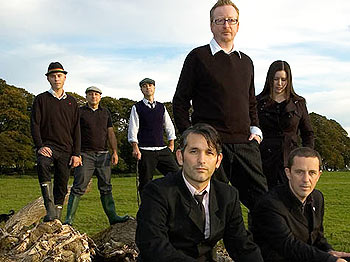
Flogging Molly
But why Cromwell? As mentioned, his New Model Army is the precursor to the modern British military and could be seen as one of the first English imperial campaigns to control outside lands. Cromwell created the full-time career military man with this army, thus putting lower class boys and men to work in the dirty parts of conflict—the work that upper class officers need not do any more.
American Celtic-punk band Flogging Molly has also tread the historical waters with their song “Tobacco Island” off of their Drunk Within a Mile of Home album. The song deals with the hardships that the Irish faced upon the arrival of Cromwell and his army forcing those deposed Catholics into servitude in the new world on plantations. The oppression felt by the Irish for generations in the new world is directly related to this incident as people of the time felt that all people forced into this type of work were of a lower type of human. Some lyrics:
Twas 1659 forgotten now for sure
They dragged us from our homeland
With the musket and their gun
Cromwell and his roundheads
Battered all we know
Shackled hopes of freedom
We’re now but stolen goods
Along the same lines as this Flogging Molly song is a Pogues song entitled “Young Ned of the Hill.” This song is a passionate remembrance of the brutal destruction of Irish birthright, land ownership, and title brought about by Cromwell. This song stands out due to the rousing last few lines:
You have robbed our homes and fortunes
Even drove us from our land
You tried to break our spirit
But you’ll never understand
The love of dear old Ireland
That will forge and iron will
As long as there are gallant men
Like young Ned of the hill
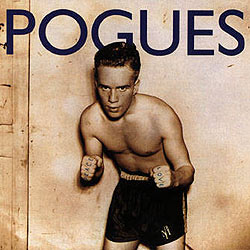
This song seems to be an inspiring battle cry and a reminder to the English that the love of the homeland will never be extinguished in the Irish. Not even when faced with serious adversity.
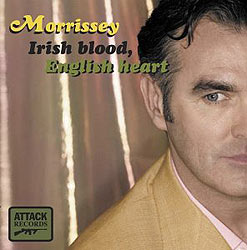
The son of Irish-Catholic Immigrants, Stephen Patrick Morrissey is a cultural icon all his own. On his seminal 2004 album You are the Quarry, Morrissey sang of his life as an Irish-English scrapper in “Irish Blood, English Heart.” The song is one of his most political songs, wherein he laments of dreaming of a future where the English people are “sick to death of Labour, and Tories, and spit upon the name of Oliver Cromwell and denounce the royal line that still salute him. . . ”
This lyric is particularly interesting for a number of reasons. First, he mentions his dislike of two of the major (modern) English political parties; next, Cromwell’s connection to the current monarchy. Due to Cromwell’s tactics, and his Lord Protector status, after his death, a new monarchy eventually took hold of England. The Stuart dynasty held a flimsy grasp on England, Ireland, and Scotland, eventually losing the lands to the Hanover Monarchy of German Kings and Queens that rules to this day. Though the Hanover line has become “The Windsor Family,” they are an outside ruling class lording over the English. Many historians believe the Hanover control of the country is a direct effect of the era of Cromwell.
Morrissey is also clearly directly drawing a line here connecting the modern “Irish Troubles” and Cromwell’s building of the first modern army and an outside monarchy’s tight control over the United Kingdom. The Lord Protector strikes again.
There are a number of other references to Cromwell in modern music. Perhaps most absurd is “The Oliver Cromwell Song” by Monty Python. This song is literally a laundry list of Cromwell’s political achievements, failures, and eventual death. Peppered with humorous notes including the height of Charles I at the start of his reign (5’6″) and the end (4’8″), the song is basically a reading with a semi-sung chorus (the music is Chopin’s Heroic Polonaise): “Oliver Cromwell, Lord Protector of England (and its warts)/Born in 1599 Died in 1658 (September).”
Again, why Cromwell? For people living outside of English commonwealth rule, he may not even register on the radar. . . hell, for non-history buffs, he’s probably a non-existent entity. In terms of artists like Shane McGowan, Moz, Elvis Costello, and Flogging Molly’s Irish-born lead singer Dave King, the Irish tradition of the chantey and the desire to release the demons of the past through song seems to be one of the myriad reasons for discussing Cromwell in their music. Their passion, dedication, and desire to understand injustice lead them to this man, and their respect and love for Ireland, its people, and its history compels them to teach the world about its often brutal, but always interesting, history.
As for John Cleese? I suspect he was just trying to make a buck.
Listen to the songs mentioned in this article here:
Elvis Costello and The Attractions, “Oliver’s Army”
Flogging Molly, “Tobacco Island”
The Pogues, “Young Ned of the Hill”
Morrissey, “Irish Blood, English Heart”
Monty Python, “The Cromwell Song”
For more on this topic, read Oliver’s Army: A History of British Soldiers in Ireland and Other Colonial Conflicts by Aly Renwick (available online in its entirety), and check out the Troops Out Movement website.
Time limit is exhausted. Please reload the CAPTCHA.